A Greek taverna menu can run to a hundred items, transliterated three different ways, with descriptions that assume you already know what everything is. This decoder fixes that. It walks through a typical menu exactly as it is structured - dips, salads, fried starters, grills, oven dishes, seafood, desserts - and explains each classic in a sentence or two, so you can order with confidence instead of pointing hopefully. Every dish below links to a full recipe and story in our Greek specialities collection, if you want to go deeper or recreate it at home.
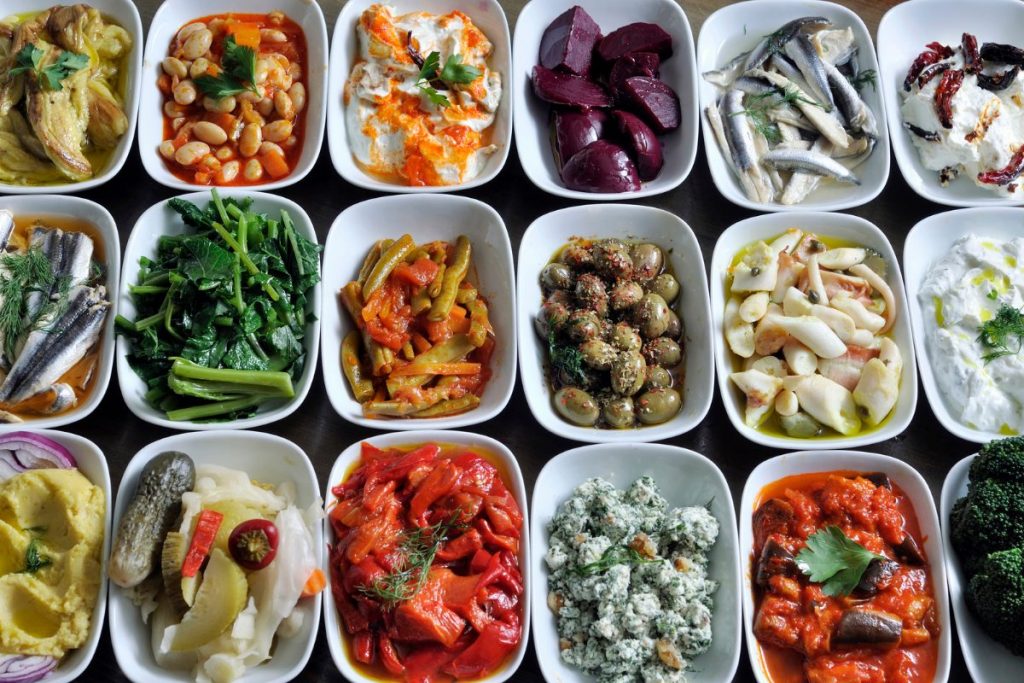
Dips and Spreads (Alifés)
Almost every Greek meal opens with dips, scooped up with bread. Order two or three for the table.
- Tzatziki - the essential: thick strained yoghurt with grated cucumber, garlic and olive oil. Cooling, garlicky, goes with everything.
- Melitzanosaláta - smoky roasted aubergine purée with garlic and oil; the best versions taste of the charcoal fire.
- Taramosaláta - whipped fish-roe spread, salty and silky; authentic versions are pale beige, not neon pink.
- Htipití - spicy whipped feta with roasted red peppers; a northern Greek favourite with real kick.
- Skordaliá - potent garlic-potato purée, traditionally served beside fried salt cod. Not for a first date.
- Olive tapenade - crushed Halkidiki olives with herbs and oil; this peninsula grows Greece's most famous green table olive.
Salads and Vegetable Dishes
Greek vegetable cookery is a cuisine in its own right - much of it naturally plant-based, as our vegetarian and vegan guide explores.
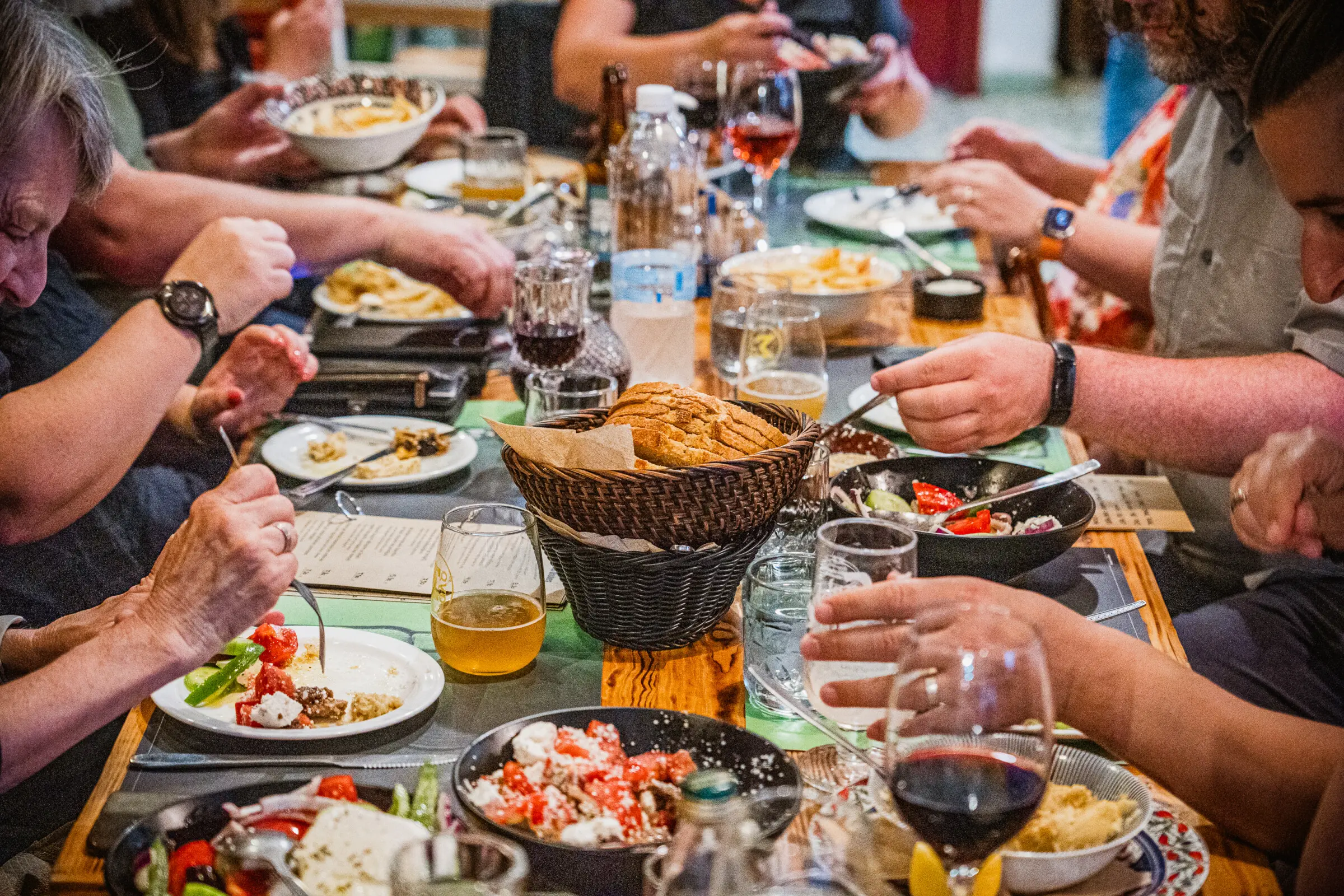
- Greek salad (horiátiki) - tomatoes, cucumber, onion, olives and a whole slab of feta under oregano and oil. No lettuce; that is the point.
- Hórta - boiled wild greens dressed with oil and lemon; bitter, mineral and beloved. Order it to eat like a local.
- Briám - slow-roasted summer vegetables (courgette, aubergine, potato, tomato) collapsing into their own juices.
- Gemistá - tomatoes and peppers stuffed with herbed rice and baked; every Greek grandmother's summer signature.
- Lemon potatoes - wedges roasted in stock, lemon and oregano until creamy inside and sticky outside. The great Greek side dish.
Fried Starters, Pies and Small Bites
- Saganáki - a slab of hard cheese fried crisp in a two-handled pan, finished with lemon. Order it hot, eat it fast.
- Saganáki with honey - the sweet-salty variation, often sesame-crusted and drizzled with thyme honey.
- Kolokythokeftédes - courgette fritters with feta and mint, crisp outside and soft within.
- Keftédes - Greek meatballs scented with mint and oregano; a universal crowd-pleaser and children's favourite.
- Dolmádes - vine leaves rolled around rice and herbs, served cool with lemon or warm with egg-lemon sauce.
- Spanakópita - the great spinach-and-feta pie in crackling phyllo.
- Tirópita - its all-cheese sibling; flaky, buttery, dangerous.
From the Grill (Tis Óras)
Menus often head this section tis óras - of the hour - meaning cooked to order over charcoal.
- Souvláki - skewers of marinated pork (usually) grilled over coals; Greece's defining street-and-taverna food.
- Lamb souvláki - the richer, more festive version of the skewer.
- Gýros - pork or chicken shaved from a vertical spit, folded into pita with tomato, onion, chips and tzatziki.
- Paidákia - lamb chops by the kilo, eaten with the fingers; no shame, only joy.
Oven Dishes and Slow Braises (Magireftá)
Magireftá - cooked dishes - are made in the morning and served all day. This is the soul of taverna cooking.
- Moussakás - layered aubergine, spiced minced meat and béchamel, baked until burnished. The most famous Greek dish for a reason.
- Pastítsio - its pasta cousin: tubular noodles, cinnamon-scented meat sauce, béchamel roof.
- Lamb kléftiko - lamb slow-baked in parchment with garlic and herbs until it collapses; named for the klephts who cooked in sealed pits to hide the smoke.
- Stifádo - beef (traditionally hare) braised with whole baby onions, red wine, cinnamon and clove.
- Youvétsi - meat baked with orzo pasta in tomato sauce, ideally in a clay pot.
- Gígantes plakí - giant white beans baked in tomato and herbs; Greece's great rustic vegetarian main.
- Imám bayildí - whole aubergine stuffed with onions, garlic and tomato, so rich the imam of legend fainted.
- Revithada - chickpeas baked overnight with olive oil and lemon; humble and profound.
- Fasoláda - the white bean soup often called the national dish of Greece.
- Avgolémono - chicken-rice soup finished with whisked egg and lemon: silky, restorative, deceptively simple.
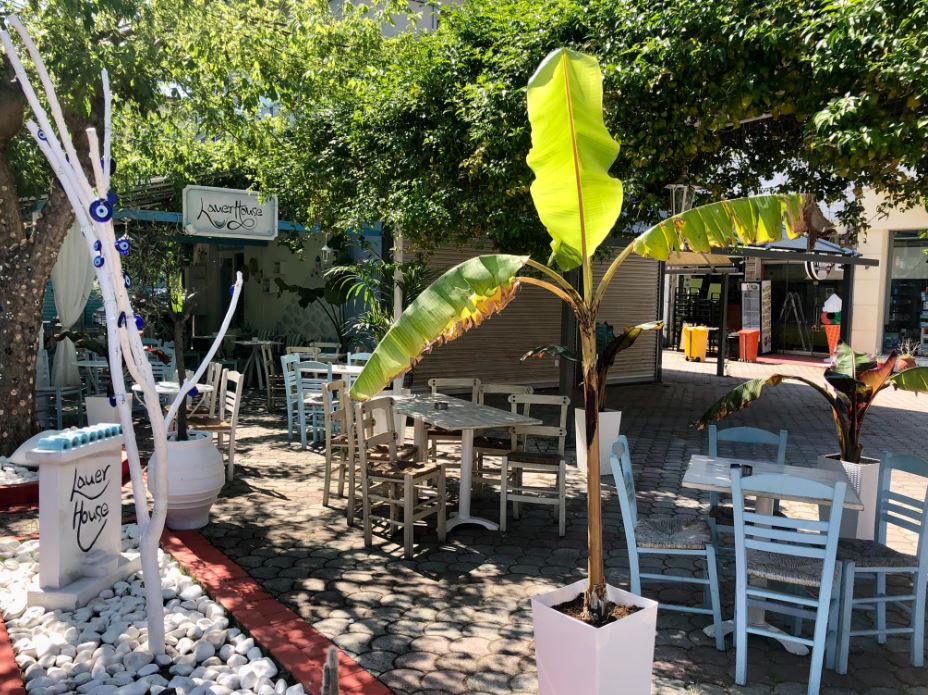
At Lauer House our own magireftó pride is the slow-braised goat shank - cooked low and slow until the meat slips from the bone. It is the dish we would decode first.
Seafood and Desserts
From the sea
- Grilled octopus - sun-dried or slow-simmered, then charred and dressed with oil and vinegar; the classic ouzo companion.
- Kalamarákia tiganitá - fried calamari rings with lemon; fresh squid makes all the difference.
- Sardéles skáras - whole grilled sardines, at their fatty best in summer.
- Shrimp saganáki - prawns baked in spiced tomato sauce under molten feta.
- Mýdia saganáki - mussels in the same irresistible treatment; a northern Greek speciality.
- Psarósoupa - fishermen's soup of whole fish and vegetables. For whole fresh fish priced by the kilo, see our Greek seafood guide.
Something sweet
- Baklavá - phyllo, nuts and syrup in the Ottoman-Greek grand tradition.
- Loukoumádes - hot honey-soaked doughnut puffs with cinnamon and walnuts.
- Galaktoboúreko - semolina custard baked in phyllo, drenched in citrus syrup.
- Portokalópita - the fragrant orange-phyllo cake of southern Greece.
- Kataïfi - shredded-phyllo nests around nuts and syrup.
- Rizógalo - chilled Greek rice pudding under cinnamon; the taste of Greek childhoods. Our Greek desserts guide covers the whole sweet landscape.
The menu is decoded - now comes the enjoyable part. Bring this knowledge to a real table at Lauer House in Sarti: our kitchen cooks most of the classics above daily from 10:00 to 24:00 in season, the full list is always live at menu.lauerhouse.gr, and if you arrive on a Wednesday or Thursday evening, live Greek music starts at 20:00 - the ideal soundtrack for working through the meze section.