Greek meals traditionally end not with elaborate dessert courses but with simple offerings: fresh fruit in season, perhaps a small piece of something sweet with coffee. Yet Greek cuisine includes a rich tradition of desserts and sweets, many dating back centuries and featuring the flavors that define the Mediterranean - honey, nuts, phyllo pastry, and fragrant spices. In Halkidiki, local bakeries and zacharoplasteia (sweet shops) offer these traditional treats alongside modern creations, providing sweet endings to memorable meals at establishments like Lauer House.
Baklava: The Queen of Greek Sweets
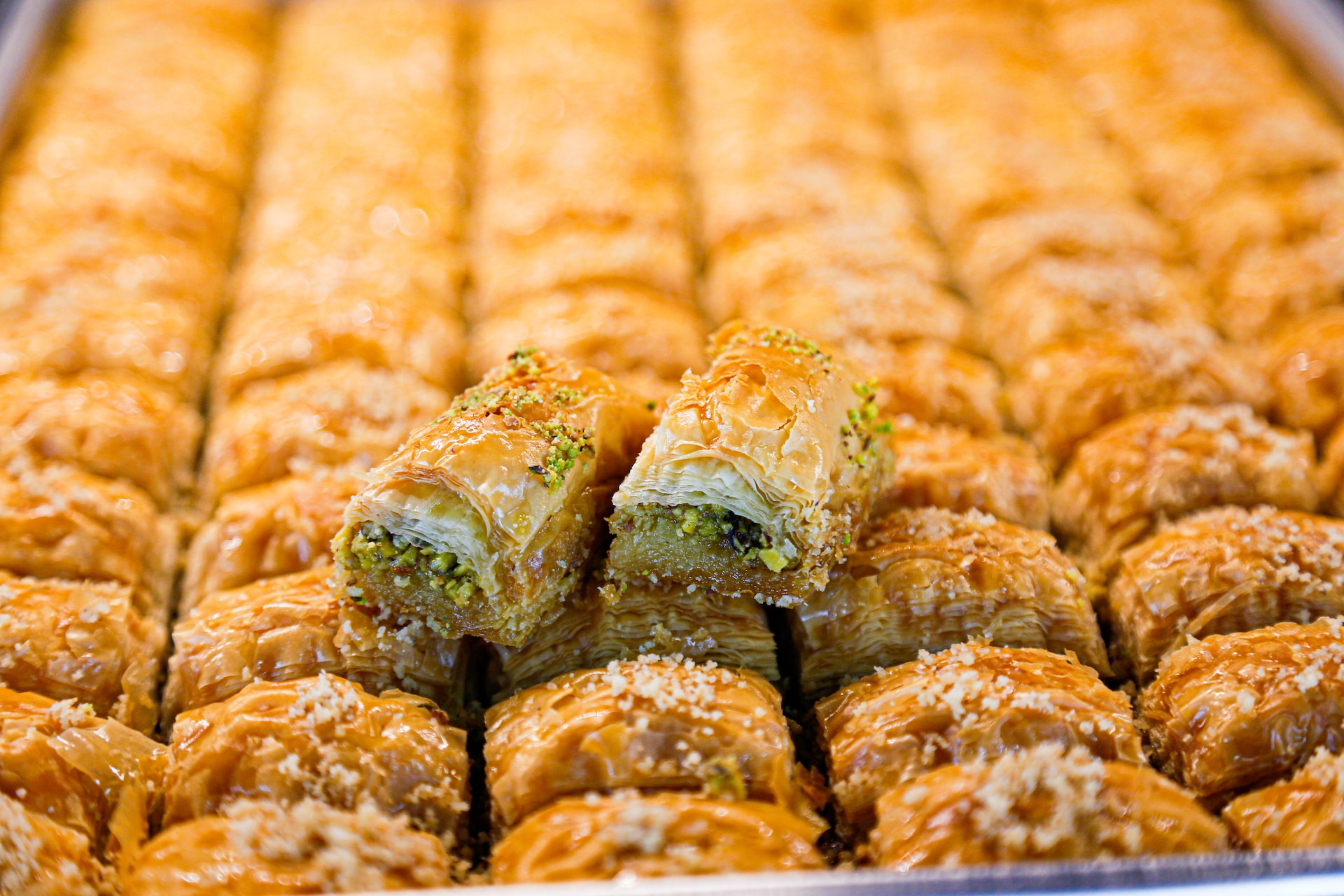
Baklava needs no introduction - layers of buttered phyllo pastry encasing chopped walnuts or almonds, baked until golden and drenched in honey syrup infused with lemon and sometimes cinnamon. While variations appear throughout the Eastern Mediterranean, Greek baklava distinguishes itself through relatively modest sweetness and generous use of honey rather than sugar syrup. The best versions achieve a delicate balance: crisp top layers yielding to soft, nut-filled center, sweetness tempered by nut bitterness and citrus brightness. At quality establishments, baklava is made fresh regularly rather than sitting for days, the phyllo remaining flaky rather than soggy. Beyond the classic diamond-shaped pieces, look for rolled versions (saragli) and individual portions in small cups or cases. Pair baklava with Greek coffee or a small glass of cold water - traditional accompaniments that cleanse the palate between sweet bites.
Syrup-Soaked Pastries: Galaktoboureko, Kataifi, and Revani
Greek cuisine features numerous pastries designed to absorb sweet syrup while maintaining their structure. Galaktoboureko layers phyllo around a thick, vanilla-scented semolina custard, the whole creation soaked in syrup and served in generous portions. Kataifi uses shredded phyllo (resembling shredded wheat) wrapped around nut fillings, creating a texture entirely different from layered phyllo while delivering similar flavor profiles. Revani (or ravani) offers a semolina cake version, its sponge-like texture perfect for absorbing syrup without becoming heavy. These pastries trace their origins to Ottoman influence, refined over centuries into distinctly Greek expressions. Quality matters enormously - poorly made versions are merely sweet, while excellent examples achieve complexity through properly browned butter, well-balanced syrup, and fresh ingredients. At good restaurants and bakeries in Halkidiki, ask what was made today for the freshest selection.
Loukoumades: Greek Doughnuts
These small, round doughnuts represent Greek street food at its most addictive. Yeast-risen dough is dropped into hot oil, emerging as golden puffs with crispy exteriors and airy interiors. While still hot, they're drenched in honey syrup and sprinkled with cinnamon and sometimes chopped walnuts. Modern variations add toppings like Nutella, ice cream, or various sauces, but traditional loukoumades need nothing beyond honey and cinnamon. They're best eaten immediately - the contrast between crispy exterior and soft interior diminishes as they cool and syrup penetrates. You'll find loukoumades at dedicated stands, particularly at festivals and panigiri, where the aroma of frying dough draws crowds. They also appear on dessert menus at restaurants, though the made-to-order versions at street stalls often prove superior.
Spoon Sweets and Preserved Fruits
The tradition of glyko tou koutaliou (spoon sweet) represents Greek hospitality distilled to its essence. Fruits - often sour or bitter varieties unsuited to eating raw - are slowly cooked in sugar syrup until they become jewel-like preserves, intensely flavored and wonderfully textured. Common versions include sour cherry, bergamot, grape, quince, and fig, though creative producers preserve everything from baby eggplants to rose petals. Traditionally, visitors to a Greek home are offered spoon sweet with a glass of cold water and perhaps coffee - accepting this hospitality is considered polite and expected. In restaurants, spoon sweets might accompany yogurt or ice cream, their concentrated sweetness balanced by dairy's richness. When shopping for spoon sweets, look for small-batch producers using traditional methods; industrial versions lack the texture and depth of homemade preserves. A jar of quality spoon sweet makes an excellent souvenir from your Halkidiki visit.
Ice Cream and Summer Refreshments
Greek summer demands cold treats, and the peninsula delivers abundantly. Greek ice cream (pagoto) tends toward intense flavors with dense, creamy textures - look for mastic (a resin with distinctive pine-like flavor), kaimaki (traditional stretchy ice cream flavored with mastic), and seasonal fruit flavors. Granita offers refreshing options for those avoiding dairy. Yogurt with honey and walnuts, while simple, provides a satisfying conclusion to meals - particularly with the thick, strained yogurt Greeks prefer. Coffee-based frozen drinks like freddo espresso and freddoccino blur the line between beverage and dessert. And of course, fresh fruit remains the most traditional Greek dessert - watermelon especially, often served with feta cheese in a combination that surprises and delights visitors. At Lauer House, we offer both traditional desserts and seasonal fruit, letting guests choose their preferred sweet ending to a memorable meal.