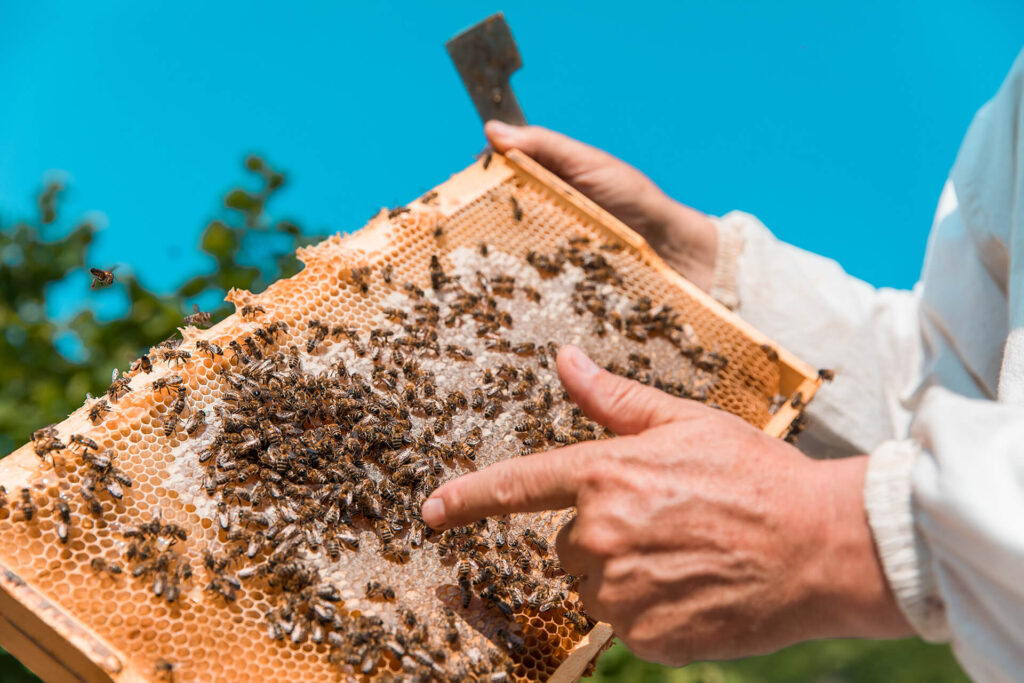
Drive the coast roads of Sithonia and sooner or later you will spot them: clusters of painted wooden boxes standing in the shade of the pines, a hand-lettered sign reading MELI - honey - and often a small roadside stall run by the beekeeper's family. Honey is one of Sithonia's quiet glories. The peninsula's vast pine forests make it prime territory for pine honey, the dark, resinous style that dominates Greek production, and buying a jar directly from the people who made it is one of the best souvenirs Halkidiki offers. Here is what makes it special, how to tell the styles apart, and how to bring some home.
Why Sithonia Is Honey Country
Greece is one of the world's great honey nations - beekeeping here stretches back to antiquity, honey appears in ancient texts as the food of the gods, and modern Greeks eat more honey per person than almost anyone in Europe. The backbone of Greek production is pine honey, which by most estimates accounts for well over half of the country's entire harvest. That is where Sithonia comes in. Unlike its busier sister peninsula Kassandra, Sithonia kept most of its interior wild: ridge after ridge of pine running down the spine of the peninsula, largely free of intensive agriculture. For bees, that means clean forage on an enormous scale; for beekeepers, it means some of the most productive pine-honey territory in northern Greece. Hives are part of the landscape here the way olive groves are elsewhere - tucked into firebreaks, lined up at the forest edge, moved from slope to slope as the season turns.
Pine vs Thyme vs Flower Honey
Greek shops and stalls usually offer several styles, and they are genuinely different products:
- Pine honey (peuko). Technically a honeydew honey: instead of flower nectar, bees collect the sugary secretions that form on pine trees through the work of a tiny scale insect, Marchalina hellenica, that lives on the bark. The result is dark amber, thick, only moderately sweet, with resinous, woody, faintly caramel notes and a high load of minerals and trace elements. Its low glucose content means it crystallises very slowly - a jar can stay liquid for a year or more.
- Thyme honey (thymarisio). The aristocrat of Greek nectar honeys, gathered from wild thyme in bloom. Light to medium amber, intensely aromatic, herbal and long on the finish. Highly prized, and usually priced accordingly.
- Flower honey (anthomelo). A polyfloral nectar honey from whatever blooms nearby - lighter, sweeter and more delicate, and it crystallises faster than pine. Character varies charmingly from producer to producer and from year to year.
Many Sithonian jars are labelled pine-flower blends, capturing both the forest depth and the meadow sweetness. None of the three is 'better' - pine suits people who find most honey too sweet, thyme is for aroma lovers, and flower honey is the crowd-pleaser.
How Pine Honey Is Harvested
Greek beekeeping is famously nomadic. Because pine honeydew flows mainly in early summer and again in autumn, beekeepers move their hives through the year - up to the flowering hillsides in spring, into the pine forests for the flows - chasing the forage the way shepherds once chased grass. When the frames inside the hive are filled and capped with wax, they are lifted, uncapped and spun in a centrifugal extractor; the honey is then simply strained and jarred. Good Greek honey is minimally processed - not pasteurised, not blended in industrial tanks - which is exactly why buying close to the source matters. A small producer's jar is essentially the forest, filtered through bees. Autumn is when you are most likely to see the work itself: smokers drifting between hives at the forest edge and stacks of freshly filled tins waiting beside a pickup. Slow down, wave, and if the stall is open, stop - honey never gets fresher or closer to its forest than this.
Buying Honey in Sithonia
You will find local honey at roadside producer stands, village mini-markets, bakeries and farm shops all over the peninsula. A few pointers:
- Buy producer-direct when you can. The roadside stall with the beekeeper's name on the label is the real thing, and the seller can usually tell you exactly which slope the hives stood on. Tastings are often offered - accept.
- Read the label. Look for the producer's name and location and the honey type. 'Peuko' means pine, 'thymari' thyme, 'anthon' flower.
- Do not fear crystallisation. Crystallised honey is not spoiled or adulterated - it is natural, especially in flower honeys. Stand the jar in warm (not boiling) water to re-liquefy it.
- Thick and dark does not mean old. With pine honey, that is simply the style.
For the full picture of what else belongs in your food-shopping basket - oil, olives, cheese, herbs - see our guide to shopping for local products in Halkidiki.
Honey in the Greek Kitchen
Honey runs through Greek eating from breakfast to midnight - it sweetens where sugar would merely add sweetness, carrying flavour along with it. The iconic start to the day is thick yogurt with honey and walnuts - the anchor of the spread we describe in our traditional Greek breakfast guide. In the dessert canon it is everywhere: hot loukoumades, crisp fried dough puffs drenched in honey syrup with cinnamon and walnuts, are practically a festival food in their own right; baklava layers it between phyllo and nuts; and on the savoury-sweet frontier, cheese saganaki with honey - hot fried cheese under a slick of pine honey and sesame - has become one of the most beloved meze in Greece. Pine honey, being less sweet and more aromatic, is particularly good in that savoury company: over cheese, in marinades and glazes, or simply on good bread with butter.
Taking Honey Home
Honey travels beautifully with a little care. Buy jars with well-sealed lids, wrap them in clothing in the middle of your checked luggage - never hand luggage, as honey counts as a liquid at airport security - and they will survive any flight; our Halkidiki packing guide has more on getting delicate souvenirs home intact. Once home, store it in a cool, dark cupboard, never the fridge. Honey essentially does not spoil, so that jar of Sithonian forest will still taste of pine resin and summer long after your tan has faded.
And while you are still here, taste it at the source. At Lauer House in Sarti we cook traditional Greek dishes and fresh seafood daily from 10:00 to 24:00 in season - ask what is for dessert, look for the honey, and you will understand why the bees of Sithonia have such a good reputation. The full menu is at menu.lauerhouse.gr.