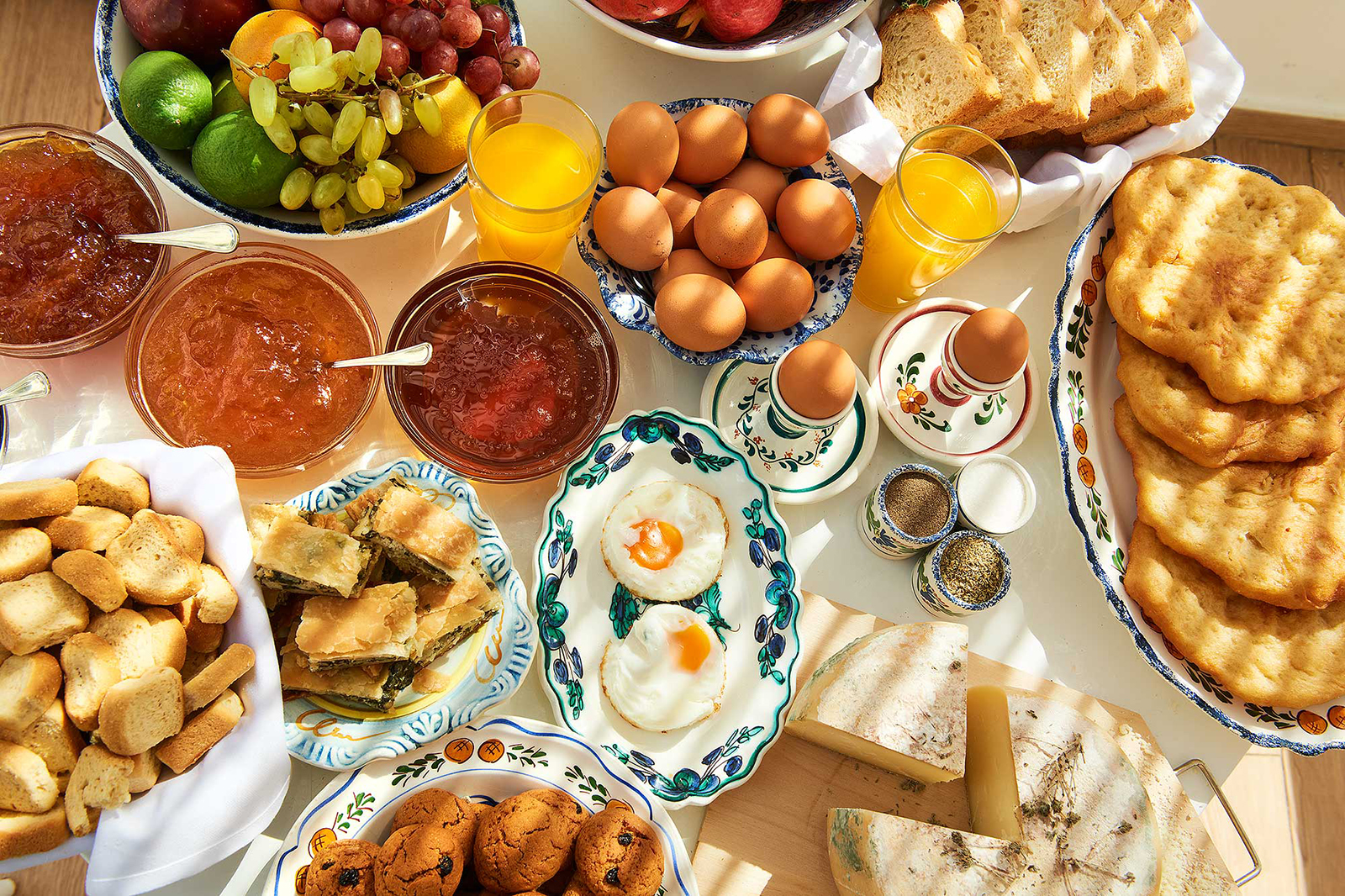
Here is the first thing to understand about Greek breakfast: for most Greeks, it barely exists - at least not in the eggs-bacon-and-orange-juice sense that northern Europeans and Americans picture. The traditional Greek morning is built around coffee, conversation and something small from the bakery, because the serious eating happens later in the day. But small does not mean boring. Between custard-filled bougatsa, sesame-crusted koulouri, warm cheese pies and thick yogurt under a flood of honey, the Greek morning has quiet treasures. This guide explains what Greeks actually eat when they wake up, where breakfast fits in the rhythm of the Greek day, and how to do your mornings like a local on your Halkidiki holiday.
Coffee Comes First - and Sometimes Coffee Is Breakfast
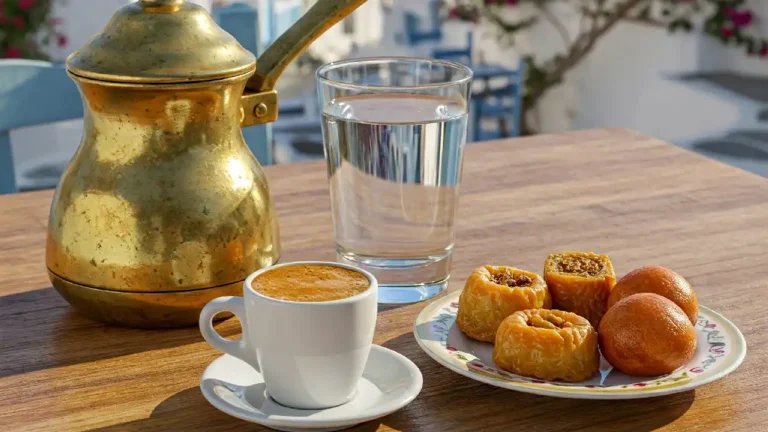
The non-negotiable element of the Greek morning is coffee, and it is as much a social institution as a drink. Traditional ellinikos kafes - thick, unfiltered, brewed slowly in a small pot called a briki - is sipped, never gulped, ideally over an unhurried half hour. In summer the country runs instead on cold coffee: the frothy frappé (instant coffee shaken with ice) and its espresso-based successors, the freddo espresso and freddo cappuccino. Watch any Greek café at 9:00 and you will see people nursing a single cold coffee for an hour while the day organises itself around them. Many Greeks genuinely have nothing else before noon. If you learn one local habit on holiday, make it this one - the slow coffee - and read our Greek coffee culture guide for the full story, including how to order and why you never say the R-word for ellinikos kafes.
The Bakery Run: Bougatsa, Koulouri and Pies
When Greeks do eat in the morning, the food usually comes from the fournos - the bakery - and it is eaten on the move or alongside that coffee. The holy trinity:
- Bougatsa - layers of crisp phyllo around a filling, eaten warm and chopped into squares. The famous version is semolina custard dusted with icing sugar and cinnamon, but cheese and minced-meat versions exist too. Northern Greece - and especially Thessaloniki, just up the road from Halkidiki - considers bougatsa its own invention, and mornings here prove the point.
- Koulouri - the sesame-crusted bread ring sold from bakeries and street carts, chewy inside, crunchy outside, and the cheapest respectable breakfast in Greece. Locals eat it plain, walking.
- Tiropita - the warm cheese pie, phyllo wrapped around a salty feta filling. Its cousin spanakopita swaps in spinach and herbs. Both are morning staples, lunchbox fillers and beach snacks in one. If you fall in love with tiropita on holiday - most people do - our tiropita recipe lets you rebuild the habit at home.
The etiquette is simple: point, pay, eat warm. Bakeries in Halkidiki's villages open early, and the first batch of pies coming out of the oven around sunrise is one of the great smells of a Greek summer morning.
Yogurt, Honey and the Original Greek Superfood Bowl
The healthiest thing on the Greek breakfast table is also the oldest: thick strained yogurt with honey. Real Greek yogurt - dense enough to hold a spoon upright - under a generous pour of local honey, perhaps with walnuts scattered on top, is a breakfast, a dessert and an afternoon restorative all in one. Halkidiki takes its honey seriously: pine and flower honeys from the region's forests and hillsides are sold in every village shop, and they taste noticeably different from supermarket blends. Add whatever fruit the season offers - figs and grapes in late summer, peaches and melons in July, cherries in early summer, oranges in the cooler months - and you have the meal that hotel buffets worldwide imitate and rarely match. It is worth buying a jar of local honey to take home; it packs a Greek morning into your suitcase.
The Sweet Exceptions: When Greek Mornings Go Indulgent
Greeks keep most sweets for the afternoon, but a few cross into morning territory. Rizogalo - cinnamon-dusted rice pudding - is sold in dairy shops and eaten at any hour, mornings included. Loukoumades, the small fried dough puffs drenched in honey syrup, are traditionally a festival and evening treat, but on holiday nobody is checking the clock; our loukoumades recipe shows why they have been beloved since ancient times. And around holidays like Easter and Christmas, breakfast tables fill with tsoureki, the braided sweet bread. If you have a sweet tooth, our guide to traditional Greek desserts maps the whole delicious territory - just know that a Greek would pair any of it with coffee and call it elevenses, not breakfast.
Where Breakfast Fits in the Greek Meal Rhythm
Greek eating runs on a different clock, and breakfast is small precisely because everything else is big and late. The typical rhythm:
- Morning: coffee, perhaps a koulouri or pie. Light by design.
- Midday snack: something from the bakery, fruit, or a quick bite around 11:00-12:00.
- Lunch: the traditional main meal, eaten 14:00-15:00, followed in summer by rest during the hottest hours.
- Evening: coffee or a drink, a stroll - the volta.
- Dinner: late, social and unhurried, starting 21:00 or after, often stretching past midnight.
Once you see this pattern, the small breakfast makes perfect sense: Greeks are saving room. Fight the rhythm and you will be eating dinner alone at 18:30 in an empty taverna; join it and your holiday clicks into place.
Doing Breakfast Like a Local in Sarti
In Sarti, the local-style morning is simple and perfect: a warm pie or bougatsa from a village bakery, a freddo espresso at a café or beach bar, and the first swim of the day while the beach is still quiet and Mount Athos stands sharp across the water. Hotel buffets have their place, but one morning at least, do it the Greek way - slowly, outdoors, with sesame on your fingers.
And when the Greek meal rhythm delivers you, hungry and happy, to the other end of the day - that is where we come in. Lauer House is open daily from 10:00 to 24:00 in season, so we can pour your late-morning coffee and, twelve hours later, serve you fresh seafood and our slow-braised goat shank while live Greek music plays on Wednesday and Thursday evenings. Start the day like a Greek; end it at our table in Sarti.