The first time you sit down at a Greek taverna, the menu can feel like a test you did not study for. Do you order a starter and a main, like at home? Why is the table next to you covered in small plates? And what exactly is that unlabelled jug of wine everyone seems to be drinking? The good news is that taverna ordering follows a logic of its own, and once you understand it, eating out in Greece becomes easier, cheaper and a great deal more fun. This guide walks you through the whole ritual - from the first basket of bread to the dessert you probably will not have to pay for.
Order for the Table, Not for Yourself
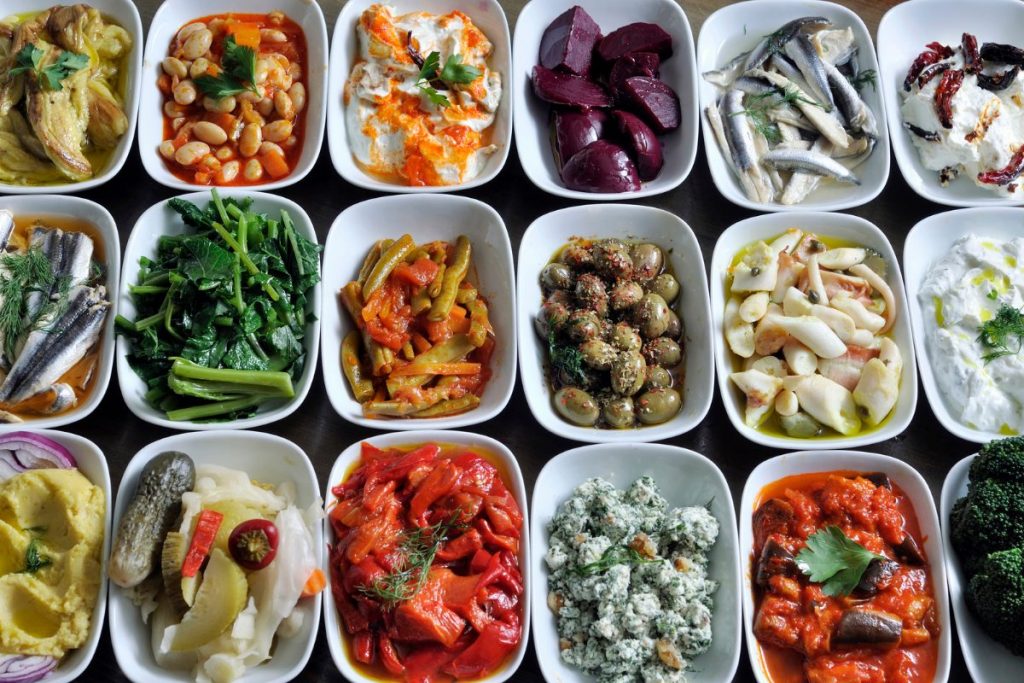
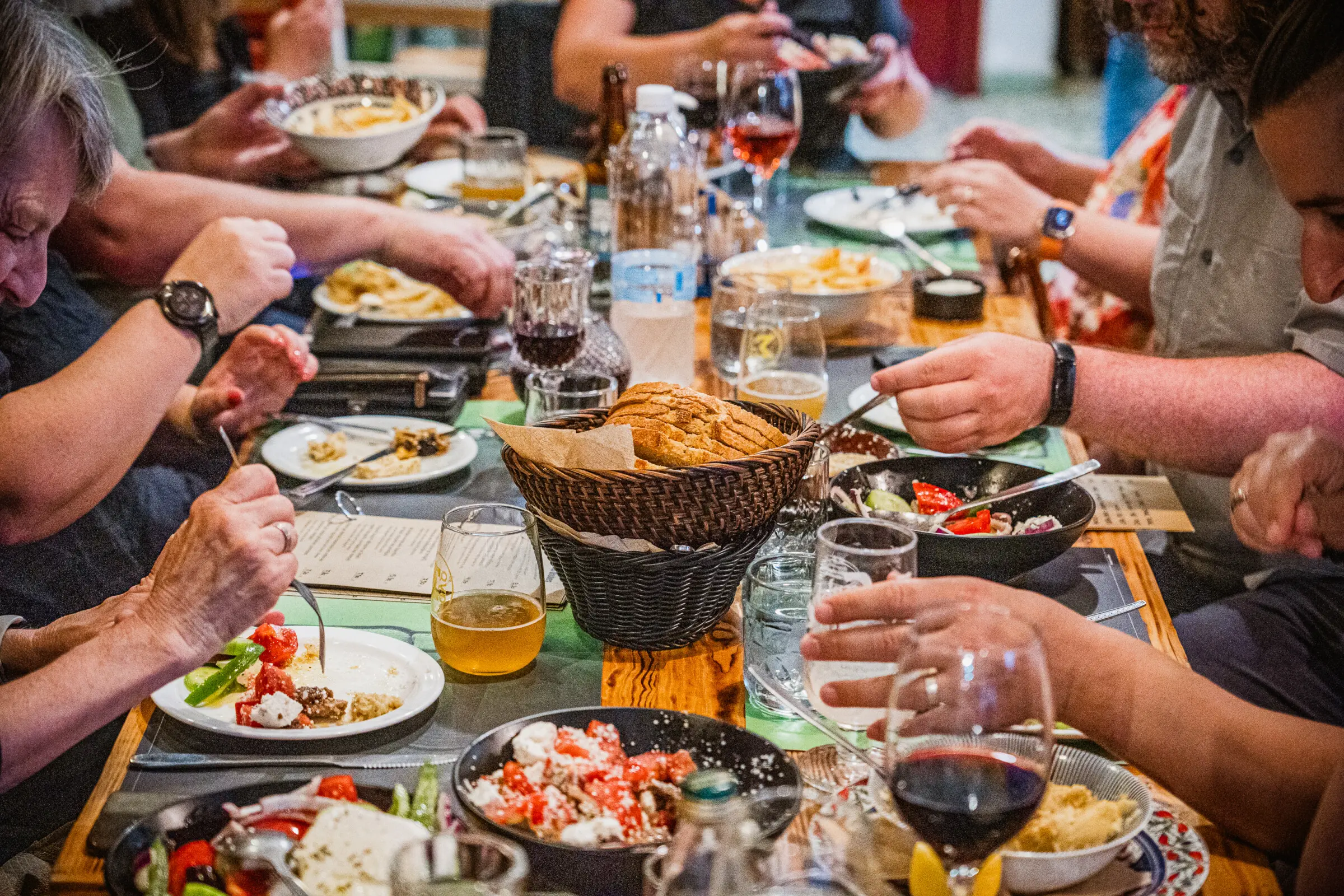
The single biggest difference between a Greek taverna and most restaurants abroad is this: Greeks do not order individual mains. Almost everything arrives on shared plates that go in the middle of the table, and everyone digs in with their own fork. A group of four might order two salads, three or four starters and two larger dishes - and that is a complete, generous meal.
This matters practically. If each person orders a dip, a salad, a starter and a main, you will end up with a table groaning under twice as much food as you can eat. Waiters in tourist areas are used to this and some will gently warn you; a good rule of thumb is to order one dish fewer than feels right, because you can always add more later. Sharing is not just economical - it is the point. A plate of grilled octopus tastes better when six hands are reaching for it.
The Meze Rhythm: Waves, Not Courses
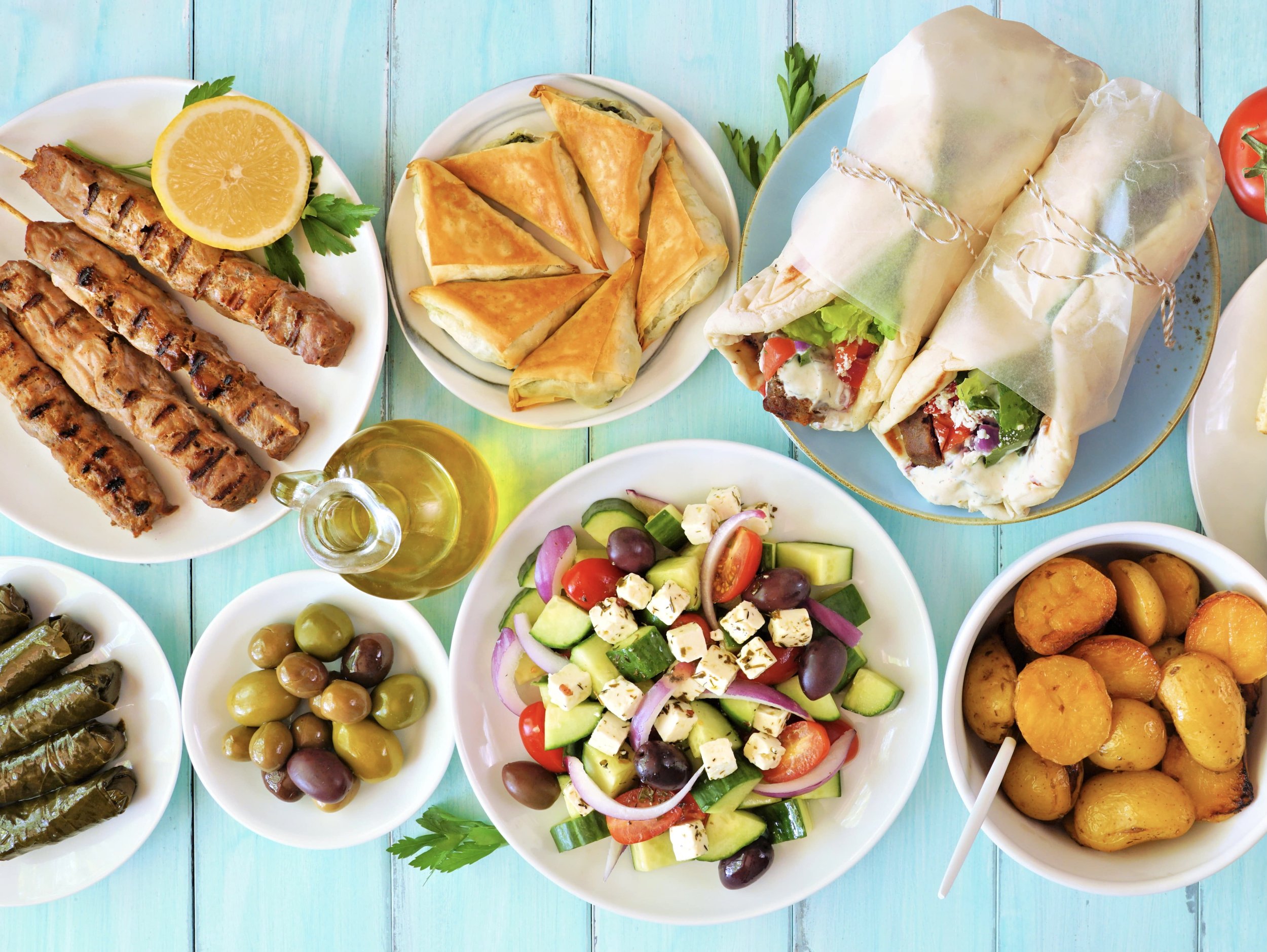
Greek meals do not move in the rigid starter-main-dessert sequence. They move in waves. The first wave is usually dips and salads: a bowl of tzatziki, a proper Greek salad crowned with a slab of feta, perhaps a plate of fried calamari or a square of sizzling saganaki. These arrive fast, more or less together, and nobody worries about the order.
The second wave is the heartier dishes - grills, oven bakes, the day's fish. Here is the local trick: you do not have to order everything at once. It is completely normal to order the first wave, see how hungry the table still is, and call the waiter back for round two. This unhurried, grazing style of eating has deep roots, and if you want to understand it properly, read our full guide to Greek meze culture. The short version: the table is a conversation, and the plates keep it going.
Ask What Is Fresh Today
Menus in Greece are long, but the best things in the kitchen are often not on them - or are listed without fanfare among thirty other dishes. The most useful question you can ask in any taverna is some version of: what do you have fresh today? For seafood tavernas this is essential, because the day's catch changes with the weather and the boats. For the kitchen side, ask about the dish of the day or the slow-cooked specials - the pots that have been simmering since morning are usually where a taverna's heart is. At Lauer House, for example, the dish we would point you to is our slow-braised goat shank, cooked gently until it slips off the bone; it is exactly the kind of dish you find by asking rather than scanning.
Waiters are not upselling when they answer this question - recommending the freshest thing in the house is a matter of pride. If a waiter steers you away from something, take the hint gratefully.
Bread, the Cover Charge and Water
Shortly after you sit down, bread will appear without being ordered, sometimes with a small dish of olives or a dip. This is the kouver - the cover - and it carries a small per-person charge that appears on your bill. It is standard practice across Greece, not a tourist trap, and the charge is modest. If you genuinely do not want it, you can say so when it arrives, but honestly: fresh bread is the essential tool for chasing the last of the melitzanosalata around the bowl, and good Greek bread dressed in local olive oil is a pleasure in itself. If you become curious about that oil - and in Halkidiki you should be - our guide to Greek olive oil explains why it deserves the nickname liquid gold.
Water is usually offered as bottled; you can ask for tap water in most places, though many islands and coastal villages default to bottles.
House Wine by the Kilo
Here is the part that confuses everyone: in a Greek taverna, house wine is ordered by weight, not volume. The menu will list krasi hima - bulk or open wine - in kilos and fractions of a kilo. A kilo is roughly a litre, so a half-kilo carafe is about three glasses and a quarter-kilo is a generous glass and a bit. It arrives in a tin or glass jug, chilled, and it is almost always the cheapest and often the most honest drink in the house - local wine from a barrel, made to be drunk young with food.
Ordering it is simple: ask for misó kiló áspro (half a kilo of white) or kókkino (red). Nobody will judge you for starting small and re-ordering. If you want to graduate from the jug to the region's bottled wines - and Halkidiki has some genuinely exciting ones - our Greek wine guide for Halkidiki covers the local grapes and what to pair them with. Tsipouro and ouzo follow similar carafe logic, usually in 100ml or 200ml measures.
Dessert, the Treat on the House, and Phrases That Help
Do not rush to order dessert with your meal - in fact, often you should not order it at all. In most tavernas, once your plates are cleared, something sweet appears unbidden: sliced watermelon in summer, a spoon sweet, a little halva, sometimes a plate of loukoumades or a square of baklava. This kerasma - the treat - is on the house, a gesture that says thank you for coming. If you have your heart set on a specific dessert, by all means order it, but wait until the savoury plates are done; ordering dessert upfront marks you as a visitor faster than anything else.
A few phrases carry you far: ti échete frésko? (what do you have fresh?), akóma éna (one more), to logariasmó, parakaló (the bill, please), and yamas (cheers). Locals light up when visitors try, however imperfect the accent - our Greek language basics for travellers gives you a full pocket toolkit.
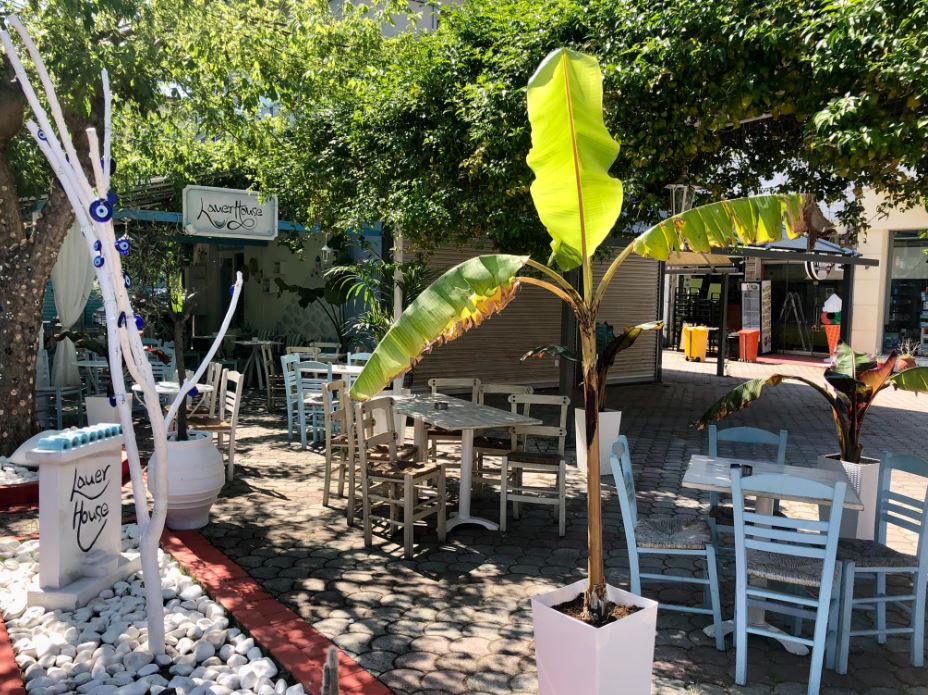
The best way to learn all of this is simply to do it. If your travels bring you to Sarti on the Sithonia peninsula, come practise at Lauer House: we are open daily from 10:00 to 24:00 in season, the day's fresh catch is always worth asking about, and you can preview everything beforehand at menu.lauerhouse.gr. Order in waves, share everything, and stay for the treat at the end.