The southwestern corner of Sithonia packs three very different experiences into a few kilometres of coastline: Toroni, a long sweep of sand with the ruins of an ancient city-state at one end; Porto Koufo, the deepest natural harbour in Greece, ringed by cliffs and home to a small fishing fleet; and the wild headlands of the peninsula's southern tip. Together they make one of the best day trips you can do from Sarti - history in the morning, swimming at midday, fresh fish for lunch, and a spectacular coastal drive to close the loop.
Planning the Loop from Sarti
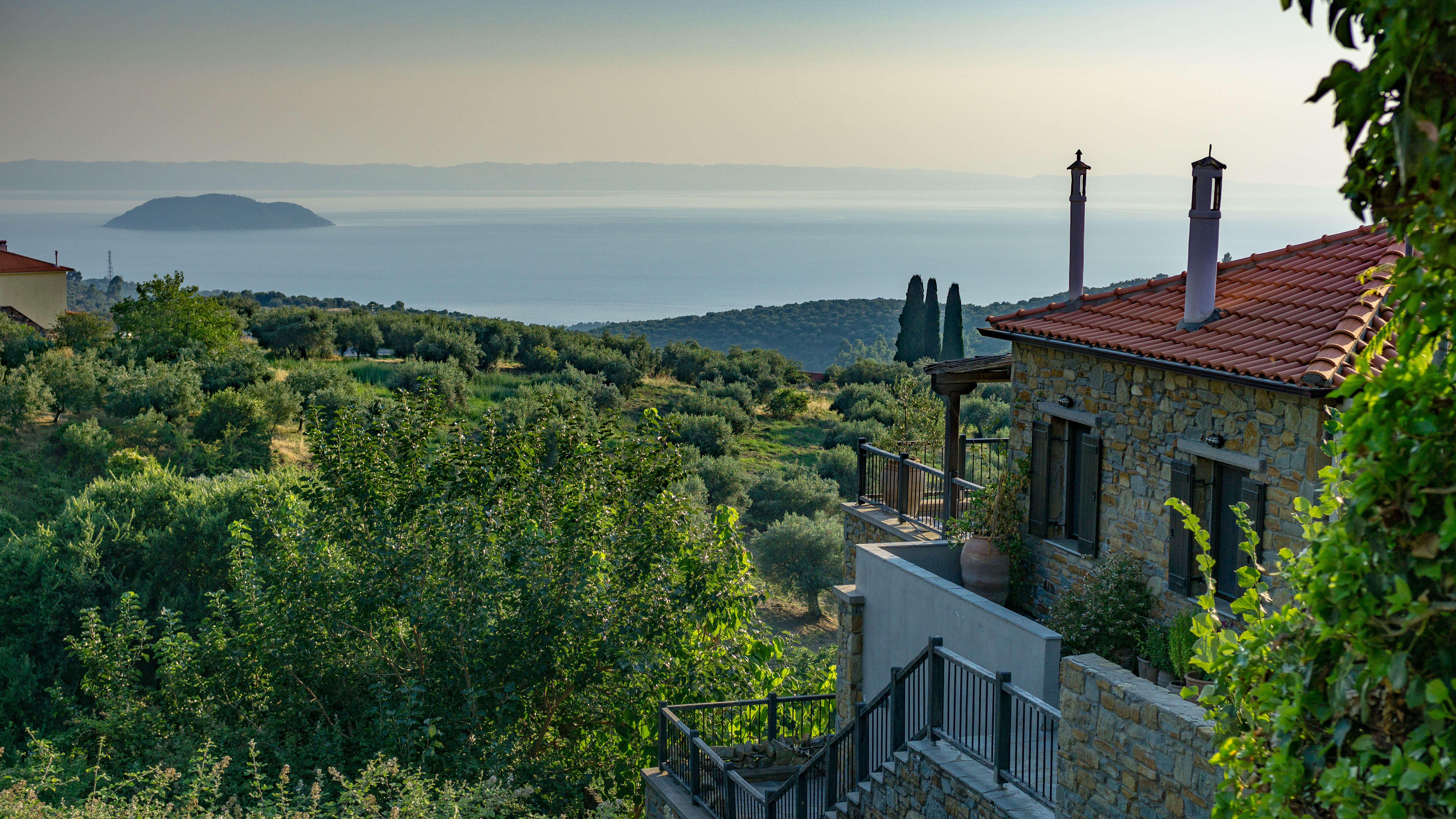
Sithonia's coastal ring road makes this trip simple: you can drive it as a loop in either direction and return to Sarti without retracing your route. Heading south from Sarti, the road climbs and dips along the east coast with constant views across the Singitic Gulf to Mount Athos, rounds the southern tip of the peninsula near Porto Koufo, then runs up the west coast past Toroni. Driving it the other way - across to the west coast first - puts Toroni in the morning and brings you home along the Athos-facing side in the late-afternoon light, which photographers tend to prefer.
Either way, allow a full relaxed day: the distances are short, but the viewpoints, beaches and tavernas will slow you down in the best way. The road is paved and well used, though winding in places - take it easy on the curves. For general driving advice in the region, see our guide to getting around Halkidiki, and for more route ideas, our roundup of day trips from Sarti.
Toroni Beach: Two Kilometres of Sand
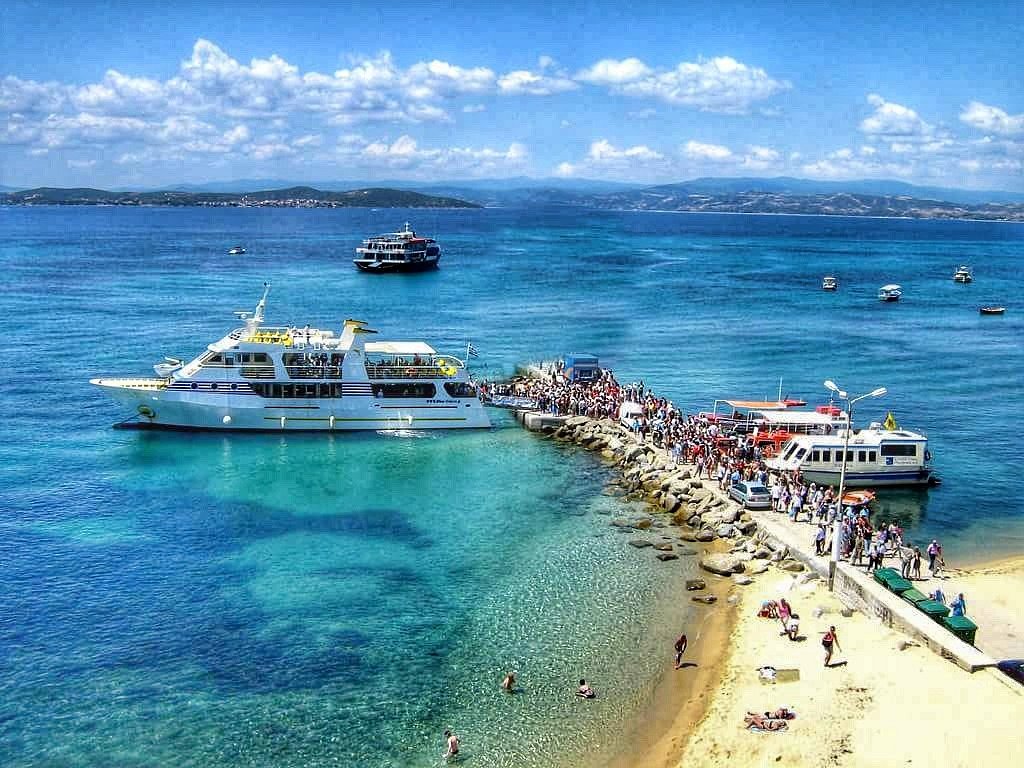
Toroni's beach is one of Sithonia's longest - a broad, gently curving stretch of pale sand facing west across the Toroneos Gulf towards Kassandra. The water deepens gradually, which makes it comfortable for less confident swimmers and families, and the sheer length of the beach means that even in high summer you can walk a few minutes and find space to yourself. A low-key line of tavernas and rooms sits behind the sand, but the beach never feels built-up.
Because it faces west, Toroni also serves the classic open-sea sunset that Sarti's east-facing beach cannot - worth remembering if you decide to stretch the day into the evening. Morning visits have their own logic, though: the water is glassy, the light is soft, and you will have the ruins at the southern end almost to yourself.
Ancient Toroni and the Lekythos Promontory
At the southern end of the beach, a rocky promontory juts into the sea. This is Lekythos, the fortified headland of ancient Toroni - a city-state that was a significant power on this coast for centuries and appears in Thucydides' history of the Peloponnesian War. What survives today is fragmentary but evocative: stretches of fortification wall on the headland, traces of the ancient settlement on the slopes behind, and later Byzantine-era walls layered on top, all sitting unfenced between the sea and the olive groves.
Wandering the promontory takes half an hour or so. Wear closed shoes - the ground is stony and uneven - and treat the remains with care: do not climb on the walls or pocket 'souvenirs'. Standing on stones that have watched over this bay for well over two thousand years, with fishing boats crossing the same water the ancient fleet used, is the kind of quiet history moment Halkidiki does especially well. For the wider story of the region's ancient past, see our guide to Greek history and mythology in Halkidiki.
Porto Koufo: The Deepest Natural Harbour in Greece
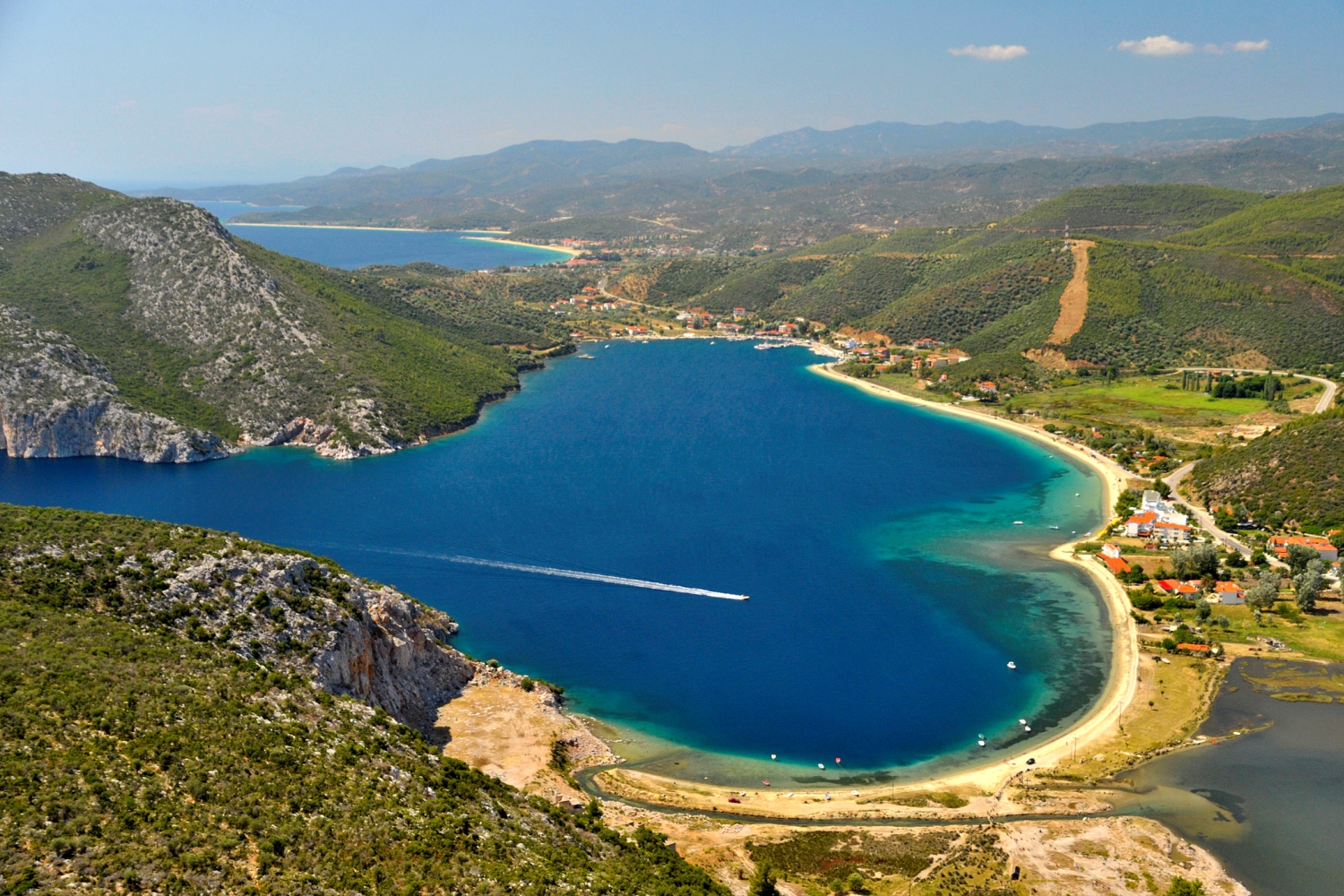
A short drive south of Toroni, the road drops into a sight that stops most first-time visitors: a huge, almost completely enclosed bowl of calm water, ringed by steep hills, with only a narrow cliff-flanked gap connecting it to the open sea. This is Porto Koufo - by common reckoning the deepest and best-protected natural harbour in Greece. The name comes from the Greek word for 'deaf': once inside, you cannot hear the open sea at all, an effect noted since antiquity.
Today Porto Koufo is first and foremost a fishing port. A small fleet works out of the harbour, and the hamlet along the waterfront is known across Halkidiki for exactly one thing: seriously fresh fish. Tavernas here build their menus around what the boats bring in, and locals happily drive across the peninsula for lunch. If you want to understand how a working Greek fishing harbour operates, this is the place - and our guides to Greek fishing culture and Greek seafood will help you read the day's catch like a local. Order simply: grilled whole fish, or a plate of grilled octopus, lemon, good bread.
Sea Cliffs and the Wartime Submarine Story
Porto Koufo's geography - deep water, total shelter, a narrow and easily watched entrance - has attracted more than fishermen. During the Second World War, occupying German forces used the harbour as a naval station for submarines, exploiting the same natural features that make it such a haven today. Traces of wartime fortifications can still be found on the headlands above the entrance, a sobering footnote to such a peaceful place.
The headland walk is worth doing for its own sake. Paths above the harbour mouth lead out towards the capes at Sithonia's southern tip, where sea cliffs drop dramatically into open water and the views run unbroken to the horizon. Keep a sensible distance from unfenced edges, especially on windy afternoons, and carry water - there is no shade out on the point.
Practical Tips for the Day
- Start early. Ruins and headland walks are far more pleasant before the midday heat.
- Pack swim gear and closed shoes both - this day mixes beach time with rocky ground.
- Time lunch around Porto Koufo. The fishing-harbour tavernas are the day's culinary centrepiece.
- Sun protection is non-negotiable: hat, sunscreen, water. Shade is scarce at Lekythos and on the capes.
- Leave the ruins and the sea as you found them. No climbing on ancient walls, and take your litter with you.
By late afternoon the loop delivers you back over the hills to the east coast, with Athos glowing across the gulf as you descend into Sarti. End the day the way locals do: a long dinner. At Lauer House, our family-run taverna in Sarti, the kitchen runs on fresh seafood and traditional Greek cooking - with our signature slow-braised goat shank for anyone who has had enough fish for one day. We are open daily 10:00-24:00 in season; browse the menu at menu.lauerhouse.gr and come hungry.