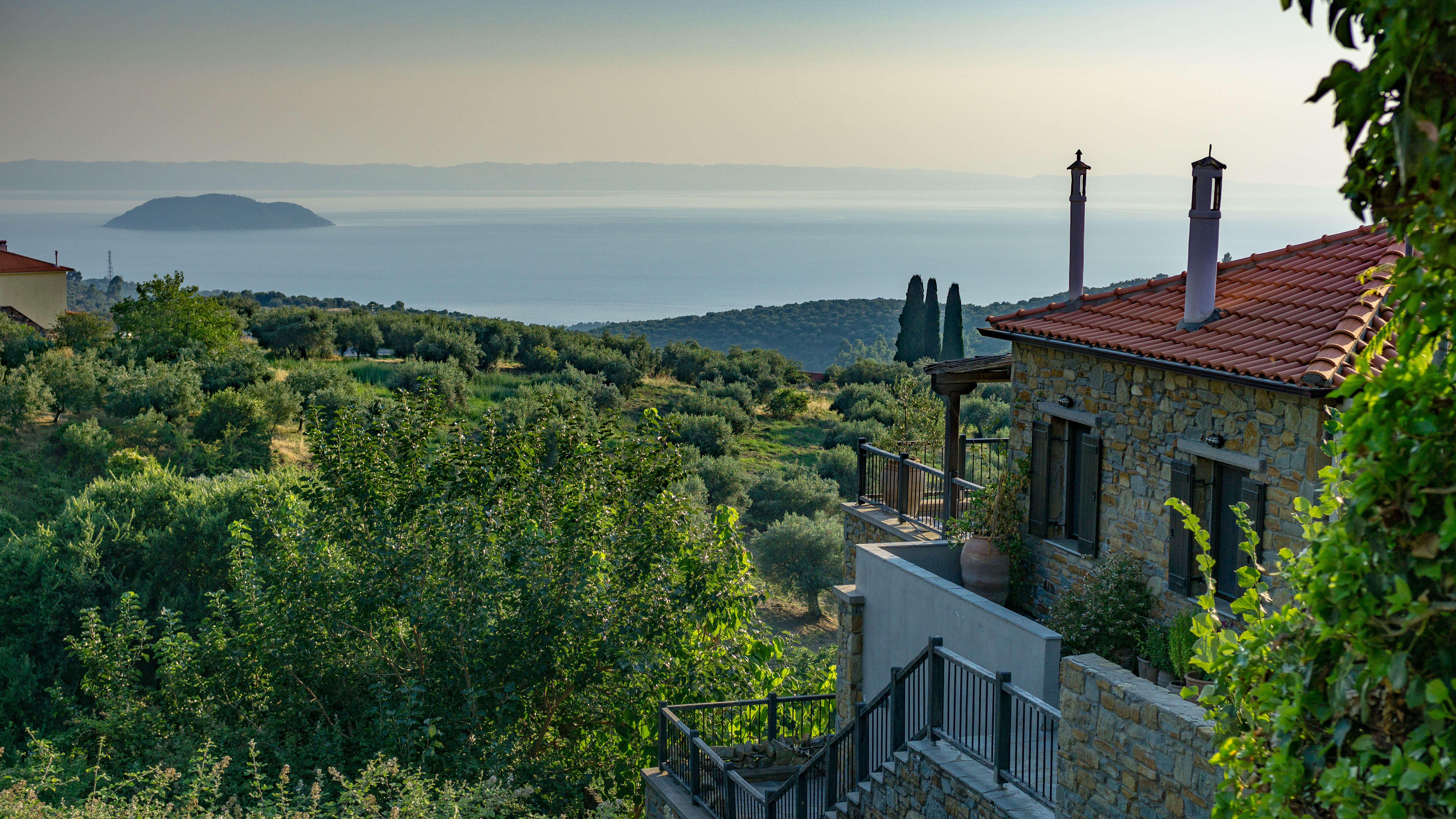
Stand on Sarti beach on a clear morning and Mount Athos fills the eastern horizon - a two-thousand-metre pyramid rising straight from the sea across the Singitic Gulf. It is not just a mountain: the entire peninsula is a self-governing Orthodox monastic state, home to twenty monasteries and a way of life that has continued essentially unchanged for more than a thousand years. Almost no visitor can simply go there. For most people - and for all women - the closest encounter possible is from the deck of a cruise boat, and the boats sail from Ormos Panagias, just up the coast from Sarti. Here is what the trip involves and how to get the most from it.
The Avaton: Why the Boat Is the Only Way for Most Visitors
Mount Athos is governed by a rule called the avaton, in force for roughly a millennium: women are not permitted to set foot on the peninsula at all, under any circumstances. Men may visit, but only with a special entry permit issued in limited numbers, arranged well in advance - a genuine pilgrimage process that we cover in our complete Mount Athos guide. For everyone else, the sea is the viewing gallery.
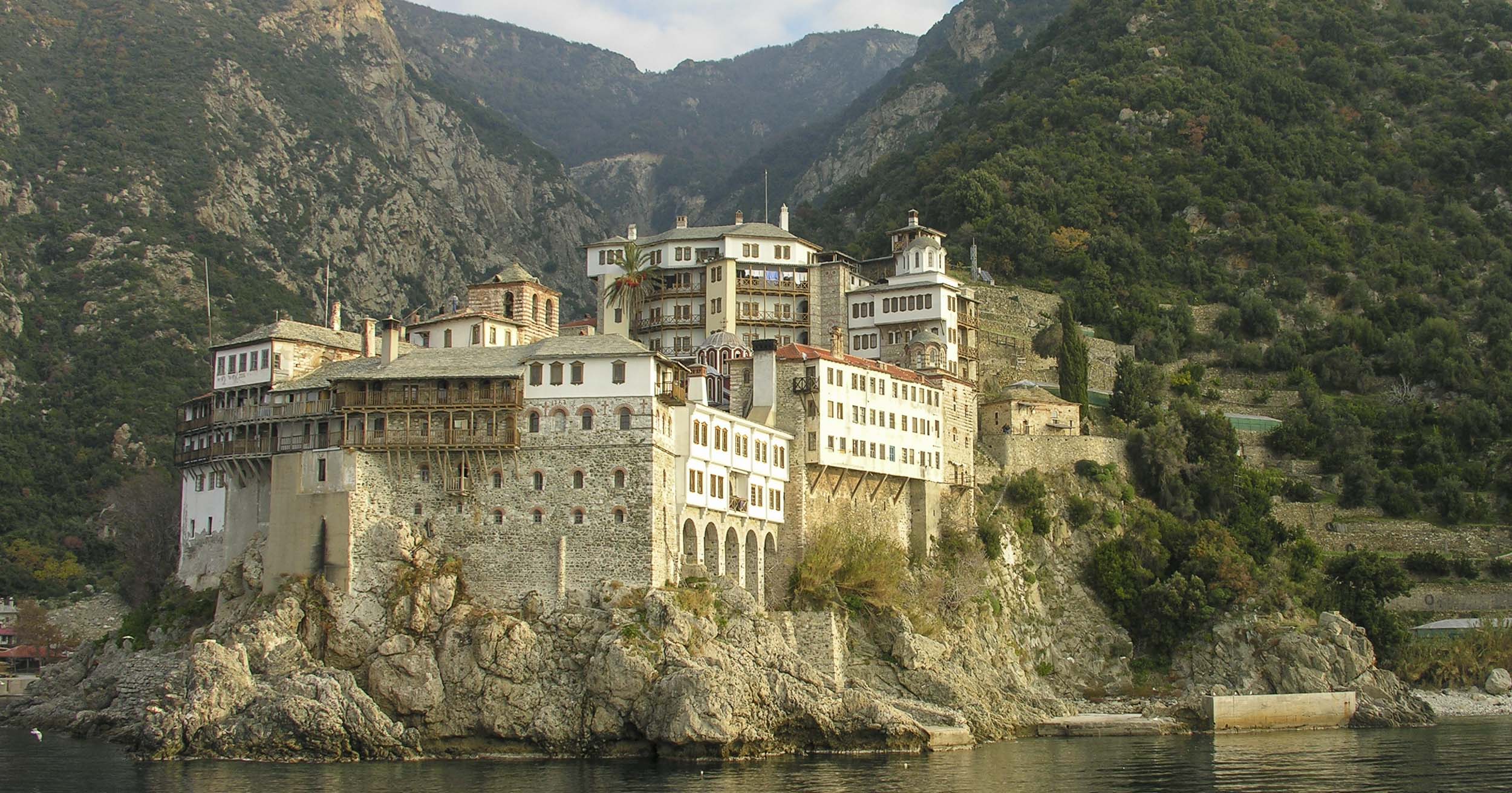
Even the sea has rules. Vessels carrying women must keep a minimum distance of 500 metres from the Athos shoreline, and the licensed cruise boats respect this line precisely. Five hundred metres sounds far, but the monasteries were built to be seen from the water - many rise directly above the shore like fortified sea-castles - and from the boat rail the views are remarkable: multi-storey stone wings, lead-domed churches, crane towers and terraced gardens climbing the slopes, all framed against the mountain. Binoculars or a zoom lens close the remaining distance beautifully.
Departing from Ormos Panagias
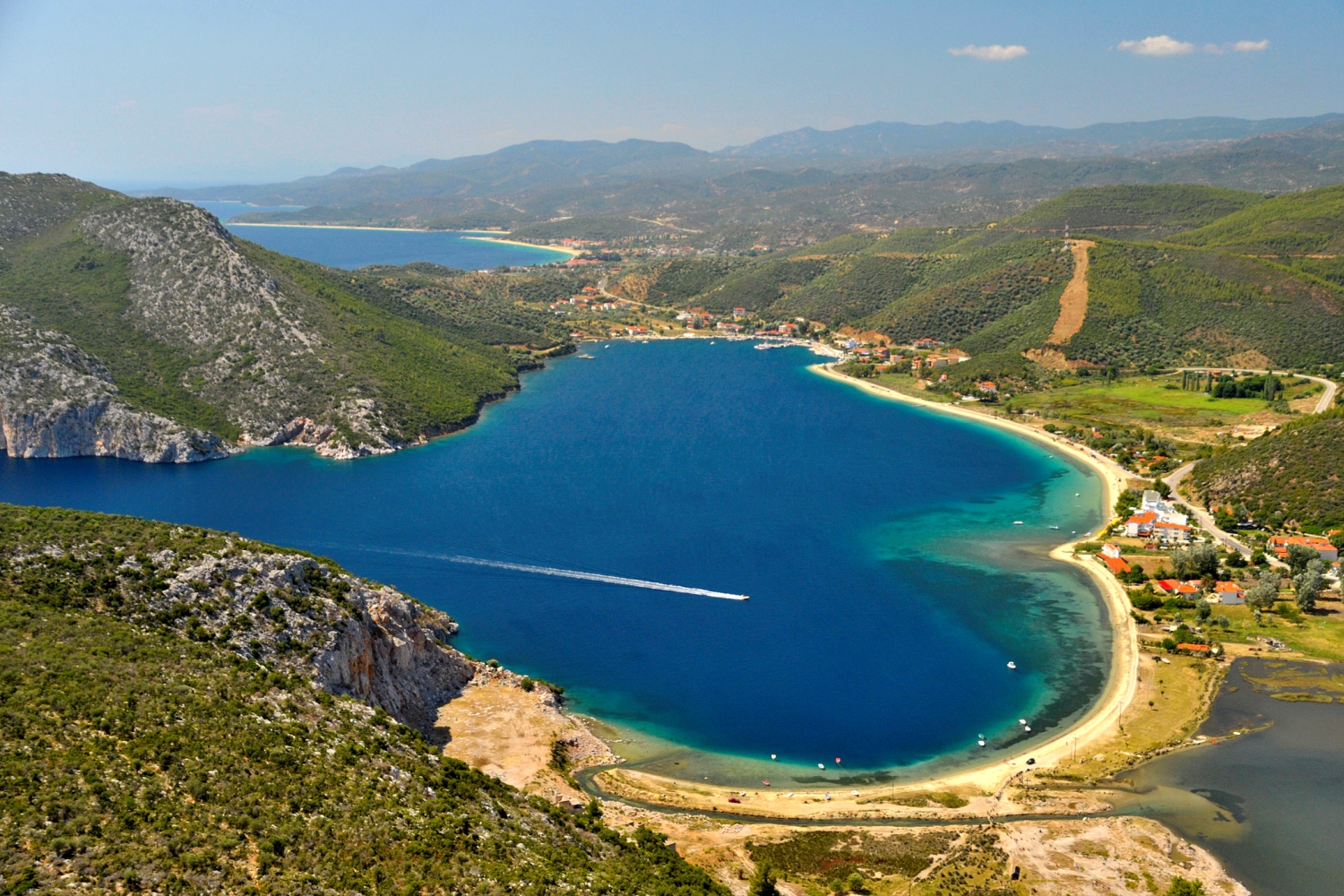
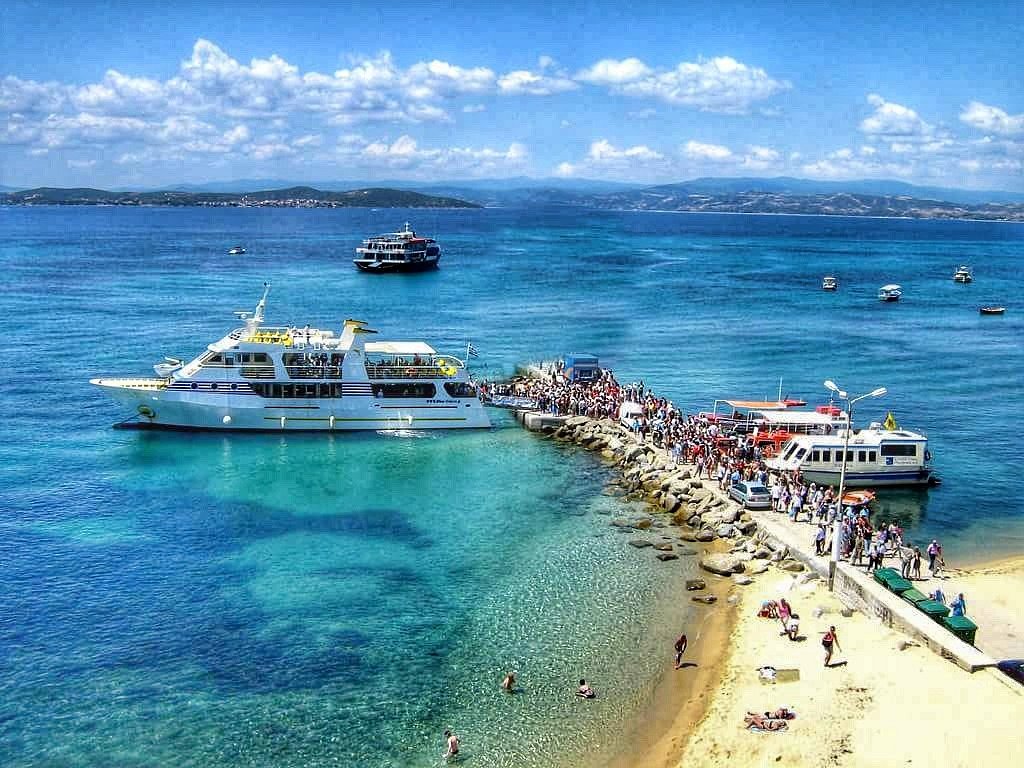
The cruises leave from Ormos Panagias, a small, well-sheltered harbour on Sithonia's northeast coast, an easy drive north of Sarti. In season, boats typically depart in the morning and return in the afternoon - a comfortable half-day-plus outing, and one of the classic day trips from Sarti. Booking a day or two ahead through your accommodation or directly at the harbour is the usual pattern; in peak weeks, earlier is safer.
Arrive with time to spare: parking fills up on busy mornings, and you want a relaxed start rather than a sprint down the quay. Once aboard, position matters - as a rule of thumb, the side of the boat facing the Athos coast during the monastery pass gets the show, and open upper decks beat enclosed seating for photography. Crews generally announce the monasteries as you pass, often in several languages.
The Route: Down the Singitic Gulf, Along the Holy Coast
The shape of the trip is simple and satisfying. From Ormos Panagias the boat runs down the Singitic Gulf - the water between Sithonia and Athos - with Sithonia's pine coast on one side and the Holy Mountain growing steadily larger ahead. The boat then closes to the 500-metre line and cruises slowly along the west coast of the Athos peninsula, where a chain of monasteries stands between the mountain and the sea. After the monastery pass, the boat turns for home across the gulf.
Two moments tend to stay with people. The first is scale: the summit of Athos rises over 2,000 metres almost straight out of the water, and no photograph prepares you for how it looms as you approach. The second is silence - engines slow along the monastic coast, conversation drops, and you drift past communities where the rhythms of prayer have outlasted empires. It feels less like sightseeing and more like being permitted to look at something.
Monasteries You Will See from the Water
Exact viewing depends on the day's route, but the west coast pass typically shows you several of Athos's most spectacular houses, among them:
- Docheiariou and Xenophontos - fortress-like complexes rising directly from the shoreline, among the first you reach.
- Agiou Panteleimonos (St Panteleimon) - the vast Russian monastery, unmistakable for its scale and cluster of green and gold domes.
- Simonopetra - the showstopper: a seven-storey building gripping a sheer rock hundreds of metres above the sea, its wooden balconies hanging over the void. Have your camera ready well in advance.
- Grigoriou, Dionysiou and Agiou Pavlou (St Paul's) - dramatic sea-edge and ravine-mouth monasteries strung beneath the summit cone.
Between the monasteries you will spot hermitages and cells scattered impossibly across the cliffs - solitary white specks that hint at the peninsula's oldest tradition of asceticism. For the history behind what you are seeing, our Halkidiki history and mythology guide makes good pre-trip reading.
What to Bring
- Sun protection: hat, sunglasses, sunscreen. Deck shade is limited and the sea doubles the glare.
- A layer: even in August, the breeze on a moving deck can feel cool.
- Water and snacks, whatever is sold aboard.
- Binoculars: the single biggest upgrade to the experience at 500 metres.
- Camera with zoom - a telephoto lens earns its place today; see our Halkidiki photography guide for settings and framing ideas.
- Motion-sickness remedies if you are susceptible; the gulf is usually gentle, but mornings are calmer than afternoons.
Dress is ordinary boat-trip clothing - you will not be going ashore - though many visitors instinctively keep things modest out of respect. Our packing guide covers the full day-trip kit.
Respectful Photography and Etiquette
You are photographing a living religious community, not a theme park. From 500 metres this is easy to honour: shoot the architecture and landscape freely, keep noise down during the monastery pass, and follow any requests the crew makes - they run this coast daily and know the courtesies. Leave drones packed away; the monastic state guards its seclusion, and launching one from a cruise boat is neither welcome nor permitted by crews. The long lens, the steady rail and a bit of patience will give you better images anyway - Simonopetra in raking morning light needs no gimmicks.
The boats bring you back to Ormos Panagias by late afternoon, which sets up a perfect evening: the short drive south to Sarti, a shower, and a table facing the very mountain you just sailed beneath. Join us at Lauer House, our family-run taverna in Sarti - fresh seafood, traditional Greek dishes and our signature slow-braised goat shank, open daily 10:00-24:00 in season, menu at menu.lauerhouse.gr. Time it for a Wednesday or Thursday and you can end an Athos day the Greek way, with live Greek music from 20:00.