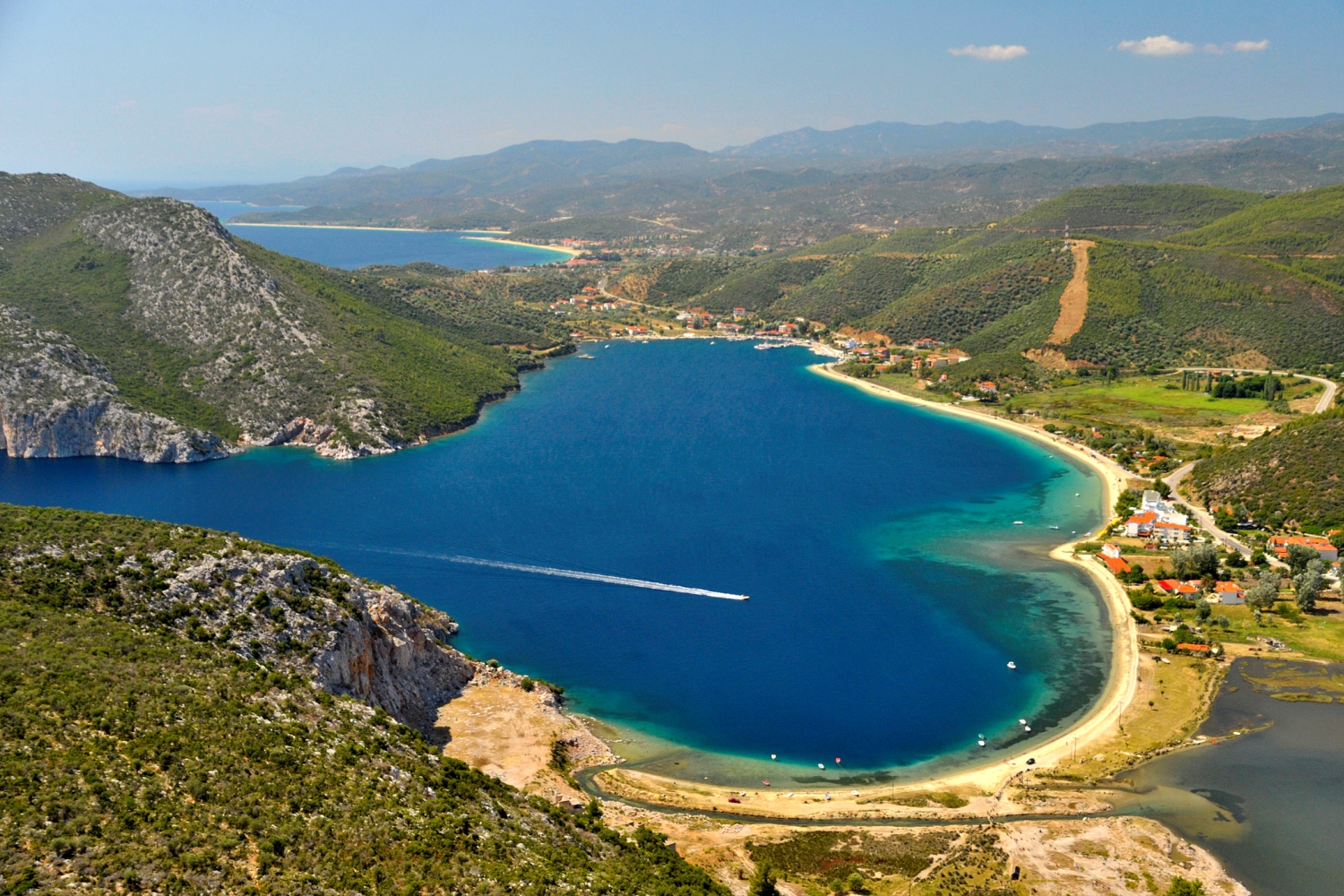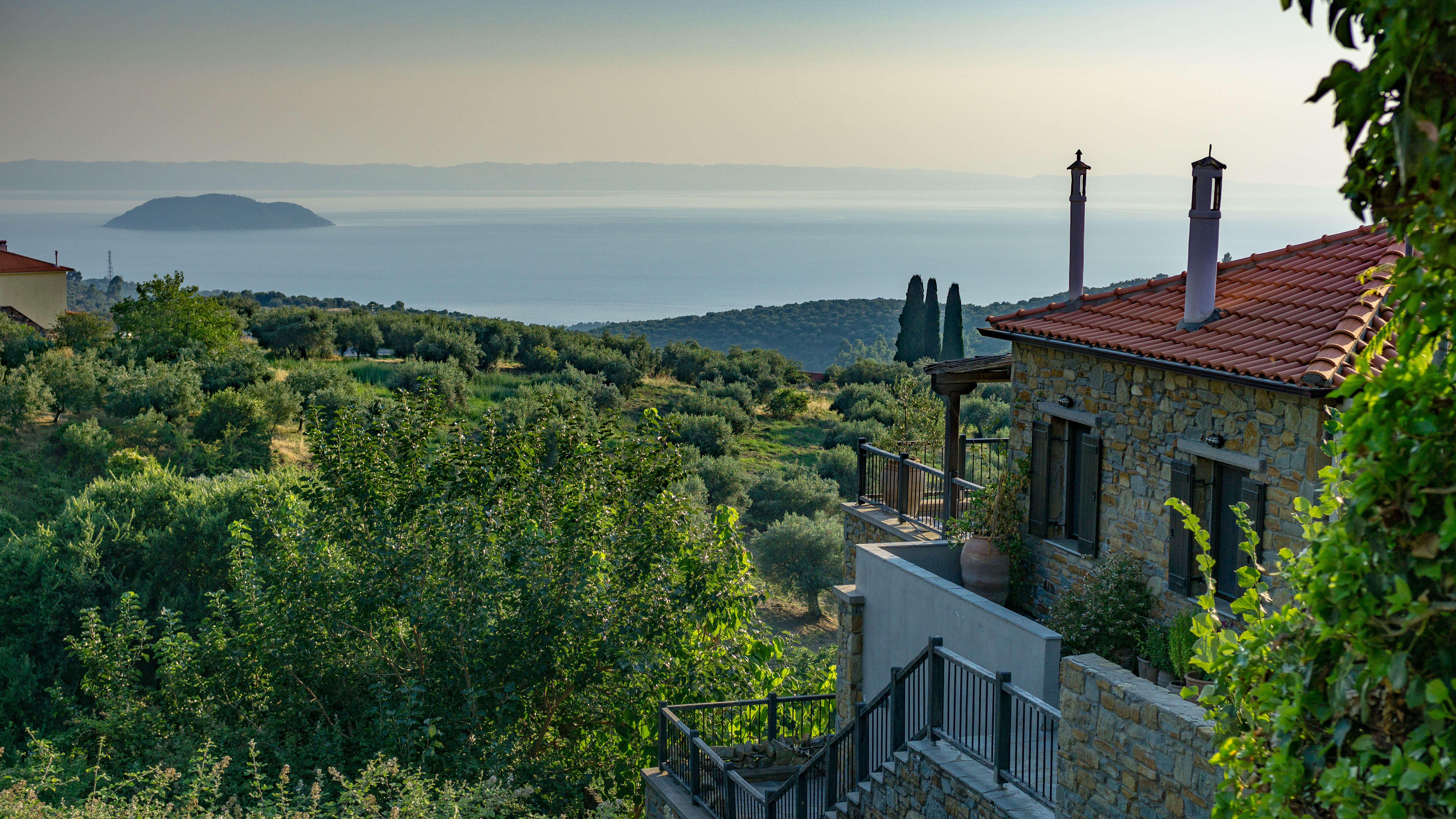
High on the western slopes of Sithonia, a few winding kilometres above the harbour town of Neos Marmaras, sits a village that time very nearly erased - and then, remarkably, gave back. Parthenonas is Sithonia's showcase stone village: cobbled lanes, restored Macedonian houses of stone and timber, and terrace views that sweep across the Toroneos Gulf toward the Kassandra peninsula. It is small enough to explore in an hour and atmospheric enough to hold you for an afternoon, and it makes one of the most rewarding short excursions on the peninsula. Here is its story and how to visit it well.
A Village Nearly Lost
Parthenonas is one of Sithonia's oldest settlements, its name usually traced to a sanctuary of Parthenos - the maiden goddess - said to have stood in these hills in antiquity. For centuries it lived the classic life of a Greek mountain village, perched at around 350 metres on the flank of Mount Itamos: farming, olives, vines and livestock on the slopes, safely above the pirate-troubled coast. Then the twentieth century turned everything around. As coastal Sithonia opened up in the postwar decades and fishing, trade and eventually tourism concentrated by the sea, the villagers moved downhill to Neos Marmaras. By the 1960s and 70s Parthenonas stood essentially abandoned - houses empty, roofs falling in, the village school silent, lanes surrendering to weeds. For a generation it was a ghost village, one of many across rural Greece, and it could easily have crumbled away entirely.
The Revival
What saved Parthenonas was the very thing that emptied it: people fell in love with what modern life had left behind. From the 1970s onward, the village was recognised as a traditional protected settlement, and individuals - Greeks and foreigners alike - began buying the ruined stone houses and restoring them faithfully, stone by stone, under rules that preserved the village's original character. The result today is a rare thing: not a museum piece behind ropes, but a living village brought back within its old skin. Restored houses serve as homes and guesthouses, a handful of tavernas set tables out on stone terraces, and the lanes are cared for again. Crucially, the restoration has stayed honest - no concrete blocks, no neon, no sprawl. Parthenonas looks the way Sithonia's villages looked before tourism, which is exactly why it is now one of the peninsula's most loved destinations. It is a fixture of any deeper exploration of the region - see our complete guide to the Sithonia peninsula for how it fits the bigger picture.
Traditional Macedonian Architecture
The village is an open-air lesson in the architecture of Ottoman-era Macedonia. The classic Parthenonas house has:
- Thick stone walls on the lower floor, built from local rock, holding cellars and storerooms cool through summer.
- Timber-framed upper floors, often gently projecting outward, with wooden balconies and shuttered windows.
- Stone-slab and tile roofs with generous eaves against winter rain.
- Courtyards and terraces walled in stone, shaded by vines, mulberries and plane trees.
Look for the details as you walk: carved lintels over doorways, wooden ceilings glimpsed through open shutters, exterior stone staircases climbing to first-floor entrances. The old village church and the former schoolhouse anchor the settlement, and even the newest restorations follow the old grammar so closely that it takes a practiced eye to tell century-old walls from careful reconstruction.
Walking the Lanes and the Folklore Museum
There is no itinerary to follow in Parthenonas, and that is the point. Park at the edge of the village - the lanes were built for mules, not cars - and simply wander. The cobbled paths loop and climb without pattern, opening every few minutes onto a small square, a flower-hung courtyard, or a sudden gap between houses filled entirely with sea and sky. Like many revived traditional villages in Greece, Parthenonas keeps its memory in a small folklore museum, where household objects, farm tools, textiles and photographs from the village's working past are gathered - a moving counterpoint to the polished restorations outside, and worth a look if you find it open (rural museum hours in Greece are famously flexible, especially outside high season). Beyond the last houses, marked trails lead into the pine and oak forest of Mount Itamos, so walkers can extend the visit into a proper hike. Come in the morning for cool air and soft light, or - better - in the late afternoon, and stay for what comes next.
The View over the Toroneos Gulf
Parthenonas faces west, and its situation on the mountainside gives it one of Sithonia's great panoramas: the whole sweep of the Toroneos Gulf laid out below, with Neos Marmaras and its marina at your feet, and the long profile of the Kassandra peninsula floating across the water. At sunset the gulf turns to hammered gold and the lights of the coast come on one by one - a genuinely spectacular scene, best enjoyed slowly from a taverna terrace with something cold in hand. Photographers should plan around the golden hour here; our Halkidiki photography guide ranks it among the region's finest viewpoints for good reason.
Practicalities: Getting There and Making an Evening of It
Parthenonas sits about 5 kilometres above Neos Marmaras by a winding but well-surfaced road; the drive up takes ten minutes and rewards every bend. From Sarti, on Sithonia's east coast, count on roughly 40-50 minutes by car around the peninsula - an easy half-day outing, and one of several we cover in our guide to day trips from Sarti. A car is realistically essential, as no useful bus climbs to the village; see our Halkidiki transportation guide for rental and driving notes. The classic formula is to pair the village with the town below: explore Parthenonas in the late afternoon, watch the sun drop over the gulf, then wind down to Neos Marmaras for the evening - a harbourfront promenade, busy tavernas and cafés along the marina, and the liveliest after-dark scene on this side of Sithonia (more in our nightlife and evening entertainment guide). Mountain silence at sunset, harbour lights by dinner: few evenings in Halkidiki balance so well.
Parthenonas earns its reputation not by offering things to do but by offering something increasingly rare: an old Greek village that looks, sounds and smells the way its builders intended. Walk its lanes slowly, let the gulf view stop you mid-step, and when you are back on the east coast, come tell us about it over dinner - the mountain and the sea are never far apart on Sithonia, and that is precisely the peninsula's magic.