Nothing marks you as a newly arrived visitor in Greece quite like standing outside a taverna at 18:00, wondering why it is empty, while your stomach insists it is dinnertime. The Greek day runs on a different clock - later, longer and, once you sync with it, far more pleasant in the summer heat. This guide maps the whole rhythm, from the first coffee of the morning to the last plate of a midnight dinner, and shows you exactly how to adapt without going hungry in between.
Morning: Coffee First, Food Later
The Greek morning does not begin with a cooked breakfast; it begins with coffee, and the coffee is an event. A freddo espresso nursed for an hour at a café table, or a traditional Greek coffee brewed slowly in a small pot, is the standard opening move - the full ritual is worth understanding, and our Greek coffee culture guide explains why that tiny cup takes forty-five minutes to drink. Food, when it comes, is modest and often portable: a warm cheese pie like tirópita or a slice of spanakópita from the bakery, a koulouri sesame ring, perhaps yoghurt with honey and walnuts.
The elaborate hotel-style breakfast buffet is a tourism invention, though a happy one - Greek products make it glorious, as our traditional Greek breakfast guide shows. But if you want to eat like a local: coffee at nine, pie at eleven, and save your appetite. Lunch is coming, and it is the day's first serious meal.
Lunch Lands at 14:00-15:00
Greek lunch happens between 14:00 and 15:00 - later than almost anywhere else in Europe - and traditionally it was the main meal of the day: a table of magireftá, the slow-cooked oven dishes, followed by fruit and a rest. In working cities the habit has lightened, but on holiday, and in villages, the old pattern holds. This timing is not laziness; it is climate logic. You swim and walk in the morning, eat when the sun is at its worst, and let the meal carry you into the afternoon pause.
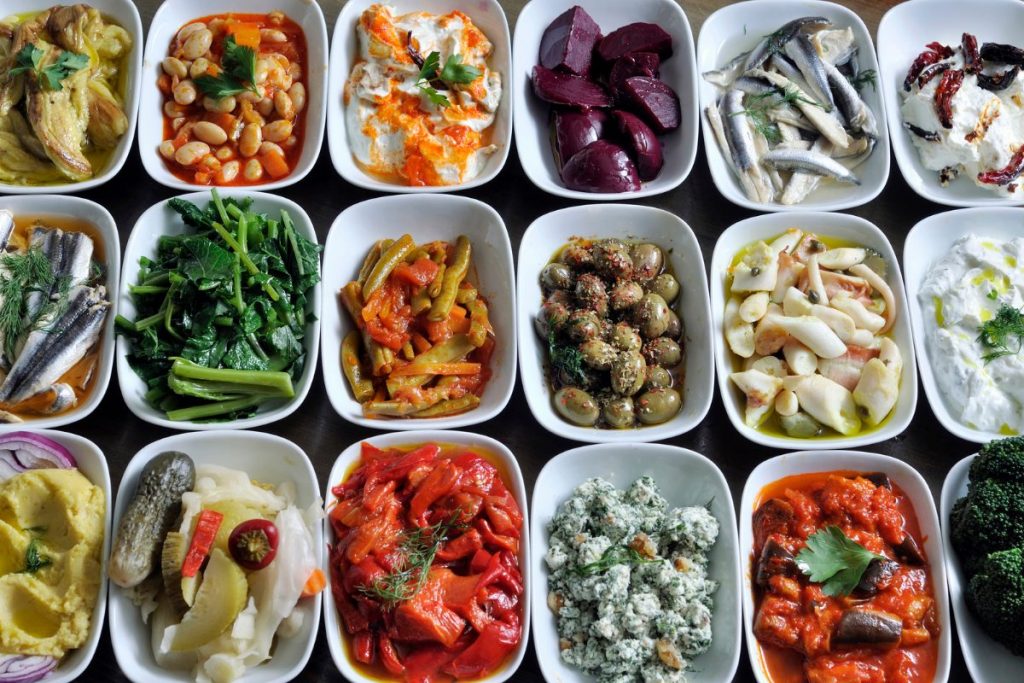
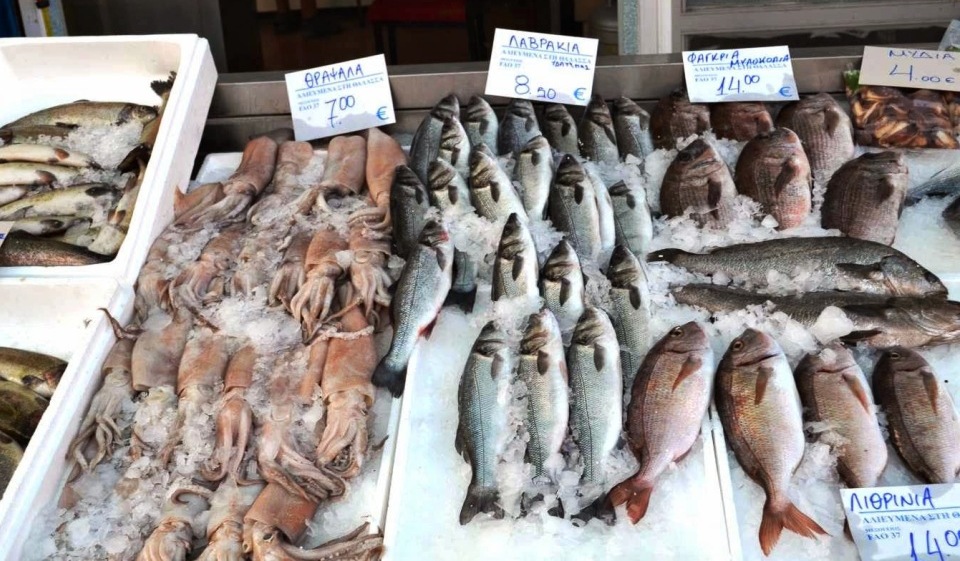
For visitors, a Greek-style lunch is the easiest habit to adopt and the most rewarding: a Greek salad, a plate of grilled sardines or the day's baked dish, bread, and a half-kilo of cold house wine, eaten in the shade around 14:30. Tavernas in resort areas serve continuously, so nobody will turn you away at noon - but at 14:30 you will be eating with the Greeks, and the dish of the day will still exist.
Mesiméri: The Sacred Quiet Hours
What follows lunch explains everything else about the Greek schedule: mesiméri, the midday rest, roughly 15:00 to 17:30. This is not just a nap habit - it is culturally protected quiet time. Villages fall silent, many shops close and reopen in the evening, and phoning someone during these hours is a genuine faux pas, like calling at midnight elsewhere. Common quiet hours are even written into local regulations in summer.
Use it as the Greeks do. Retreat from the worst heat, sleep, read, swim lazily. Fighting the mesiméri - trooping around in the 16:00 sun wondering why everything is shut - is the classic first-timer error. Surrendering to it is the moment your holiday actually starts, and it is the only way you will have the stamina for what the Greek evening expects of you.
The Vólta: Why the Evening Walk Comes Before Dinner
As the light softens, somewhere around 19:00 or 20:00, Greece comes back to life for the vólta - the unhurried evening stroll that is one of the country's loveliest institutions. Families dress a little nicer, promenade along the waterfront, stop for a chat, let the children run, maybe pause for an ice cream or a small snack. In Sarti, the vólta flows along the beachfront road as the sun drops behind the pines and Mount Athos glows across the gulf.
The vólta is not killing time before dinner - it is the appetiser. It rebuilds the appetite after the long lunch and the rest, it is where you see everyone and everyone sees you, and it delivers you to the taverna table at exactly the right hour, genuinely hungry. If hunger strikes mid-stroll, the traditional patch is a gýros or a stick of souvláki eaten standing up - but veterans hold out for the table.
Dinner After 21:00 - and the Taverna's Rhythm
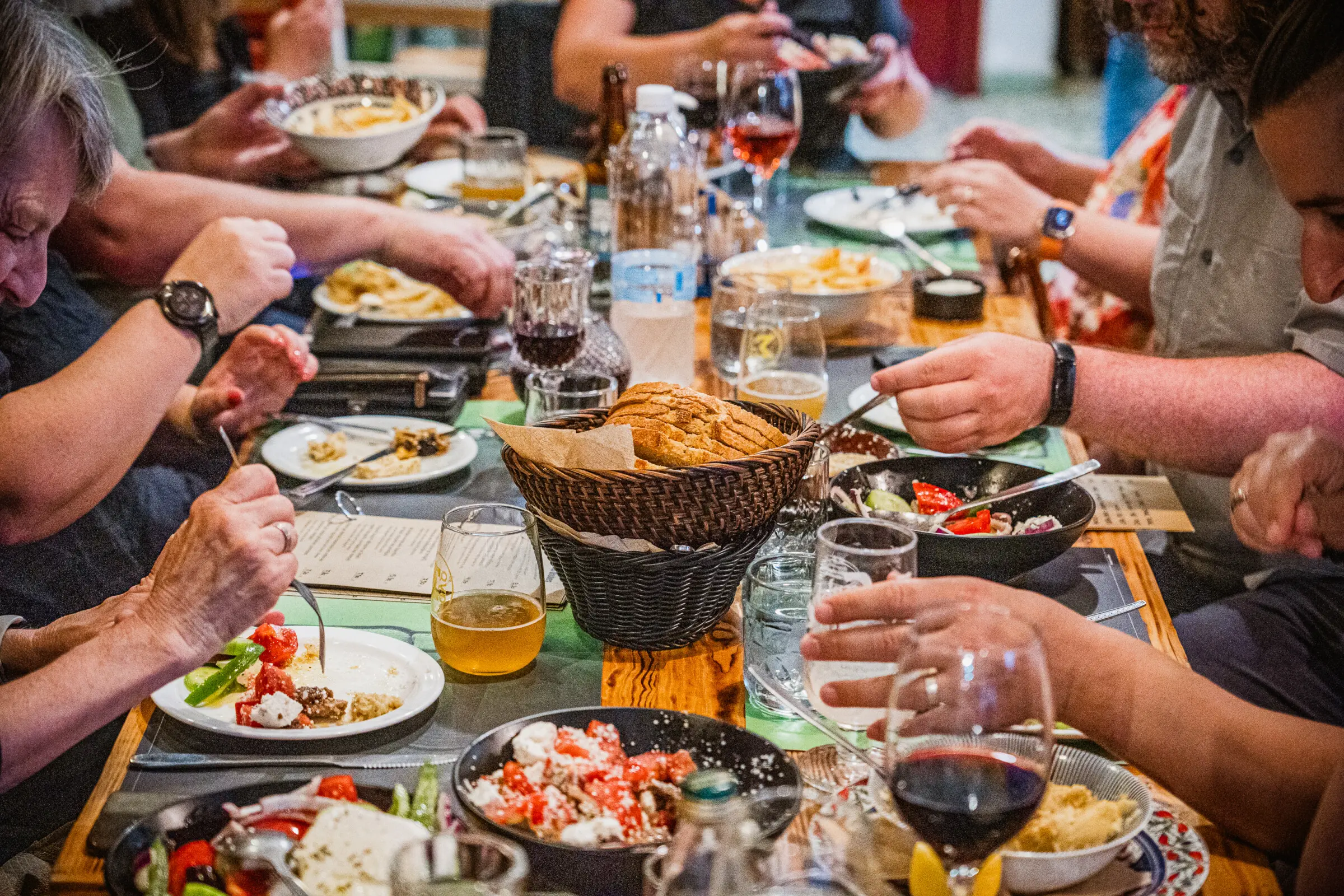
Greek dinner starts at 21:00 at the earliest; 22:00 tables are completely normal, and in August families with grandparents and toddlers are ordering at 23:00. Tavernas are built around this: the room warms up slowly through the evening, plates arrive in relaxed waves rather than regimented courses, and the meal stretches for hours. Nobody brings the bill unasked, and lingering past midnight over the last of the wine is the intended outcome, not an imposition.
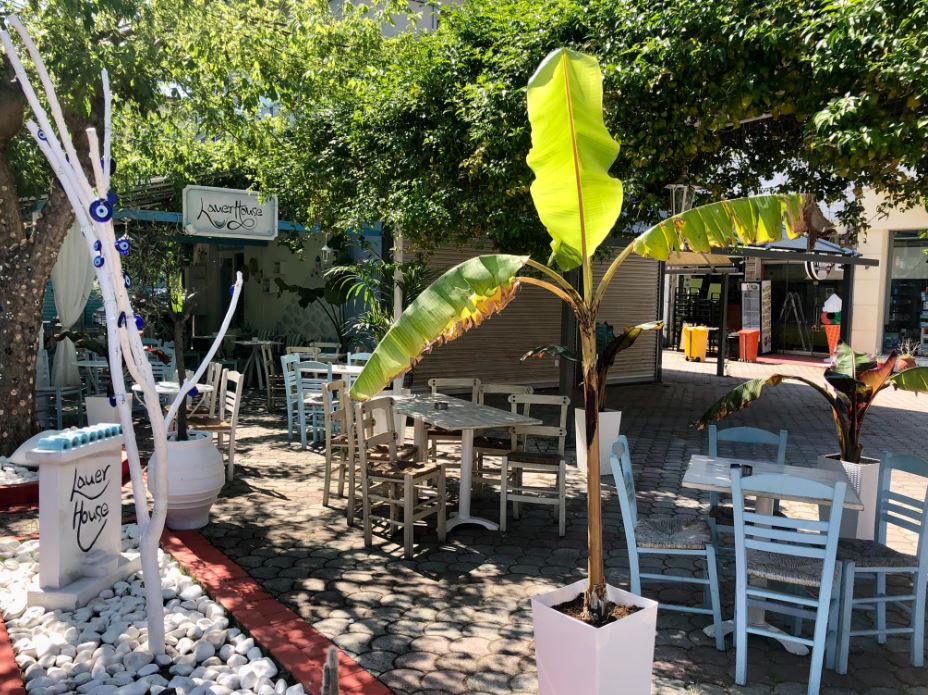
Visitors have two workable strategies. The full adaptation: shift your whole day later - late lunch, proper mesiméri rest, vólta, then dinner at 21:30 with the locals, when the atmosphere is at its peak. The compromise: eat at 20:00, early by Greek standards but late by yours, and enjoy quicker service before the rush. At Lauer House the kitchen runs daily from 10:00 to 24:00 in season, so both camps are covered - though if you come on a Wednesday or Thursday, time dinner around our live Greek music, which starts at 20:00 and makes the strongest possible argument for the long, late table.
Feast Days, Sundays and the Holiday Clock
A few occasions rewrite the schedule entirely, and they are worth planning around rather than against. Sunday lunch is the great weekly family gathering - multi-generation tables from 14:00 that flow on until early evening, which is why Sunday afternoons feel so quiet everywhere else. Name days and panigýria (village festivals) mean feasting that starts in the evening and simply does not stop. And the queen of them all is Easter: the midnight Resurrection service followed by a celebratory meal in the small hours, then whole lambs turning on spits from Sunday morning - a rhythm all its own, described in our guide to Greek Easter traditions in Halkidiki.
- Do eat your main meals at 14:30 and 21:30 for the best food and atmosphere.
- Do respect the mesiméri - plan beach, rest or driving for 15:00-17:30.
- Do join the vólta instead of sitting down to dinner at 19:00.
- Do not judge a taverna by how empty it is at 18:00 - judge it at 22:00.
The Greek clock takes about two days to get used to and roughly forever to give up. If you are testing it in Sithonia, let Lauer House be your practice ground: open daily 10:00-24:00 in season in the heart of Sarti, with fresh seafood for your 14:30 lunch, a slow-braised goat shank worth staying late for, and a table that is yours until the last yamas. Come at the Greek hour - we will still be here.