Coffee in Greece is never simply a beverage - it's a ritual, a social lubricant, and a way of life. Greeks consume coffee slowly, spending hours at a single cup while conversing with friends, reading newspapers, or simply watching the world pass by. Understanding this coffee culture enriches your Halkidiki experience, transforming mundane refreshment stops into authentic cultural participation. From traditional Greek coffee brewed in a tiny pot to the iced innovations that have swept modern Greece, this guide covers everything you need to know about ordering, drinking, and appreciating coffee the Greek way.
Traditional Greek Coffee
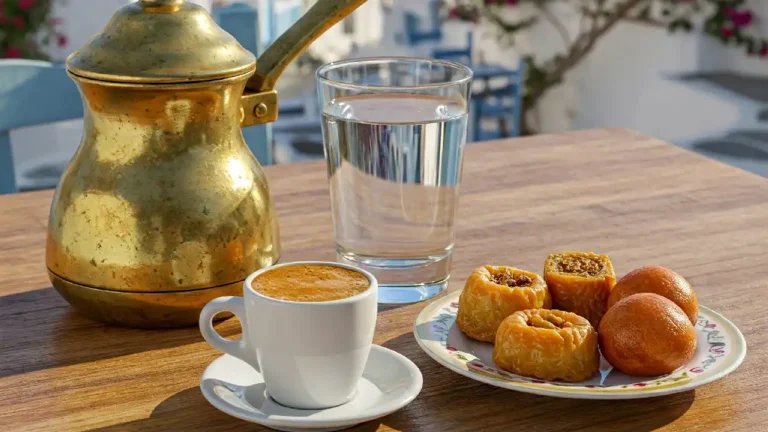
Greek coffee (ellinikos kafes) represents centuries of tradition, brewed in a small pot called a briki and served in tiny cups with grounds settled at the bottom. The preparation is precise: finely ground coffee and sugar are added to cold water, then heated slowly until foam rises to the top. The coffee must never boil - proper brewing produces a thick foam (kaimaki) considered essential to quality. Order it "sketo" (no sugar), "metrio" (medium sweet), or "glyko" (very sweet) - the sugar is added during brewing, not after. Drink slowly, stopping before you reach the grounds at the bottom; fortune tellers claim to read patterns in these grounds, though most Greeks simply leave them. This coffee is strong, thick, and intensely flavored - nothing like the filtered coffee common elsewhere. At village kafeneia (coffeehouses), elderly Greeks still gather for morning coffee and conversation, a tradition stretching back generations.
Frappé: The Greek Original
The frappé was invented accidentally in 1957 at a Thessaloniki trade fair when a Nescafé representative couldn't find hot water for his instant coffee. Shaking the powder with cold water and ice created a foam that became Greece's most popular summer drink for decades. To make frappé, instant coffee, sugar, and a little water are shaken vigorously (traditionally in a cocktail shaker or dedicated frappé mixer) until thick foam forms, then poured over ice and topped with cold water and optionally evaporated milk. Order it with the same sweetness terms as Greek coffee, adding "me gala" (with milk) if desired. While younger Greeks have shifted to espresso-based drinks, frappé remains beloved among older generations and maintains its place at seaside cafes. The drink perfectly suited Greek social habits: a single frappé could last an entire afternoon of conversation.
Freddo Cappuccino and Freddo Espresso
The modern Greek coffee revolution centers on the freddo - espresso drinks served cold that have become ubiquitous since the 2000s. Freddo espresso starts with a double shot of hot espresso, which is immediately shaken with ice until cold and frothy, then served in a tall glass over ice. Freddo cappuccino adds cold frothed milk, creating a layered drink that's become iconic in contemporary Greece. These drinks spread from urban cafes to reach even the smallest villages, and visiting Greeks often consider their availability a marker of acceptable coffee culture. The quality varies enormously - excellent versions use good beans and proper technique, while poor versions taste watery and lack the essential froth. In Sarti and throughout Sithonia, look for cafes where locals gather, as they'll have identified the best freddo makers.
The Coffee Break: A Greek Institution
Perhaps more important than what Greeks drink is how they drink it. The kafenio break is an institution: a pause in the day's activities for coffee, conversation, and simply being present. Unlike grab-and-go cultures where coffee is consumed while doing other things, Greek coffee demands attention and time. Sitting at a waterfront cafe in Sarti, watching boats bob in the harbor while sipping your freddo over an hour or two, isn't laziness - it's participating in a way of life that prioritizes human connection over efficiency. Try it: order your coffee, put away your phone, and simply observe and appreciate your surroundings. The experience enhances every aspect of your holiday, teaching the Greek rhythm of living that transforms visitors into temporary locals. After lunch at Lauer House, move to a nearby cafe for coffee and let the afternoon unfold naturally.
Where to Drink Coffee in Halkidiki
Every village in Halkidiki has multiple coffee options, from traditional kafeneia to modern espresso bars. Kafeneia - the traditional men's coffeehouses found in village squares - serve Greek coffee and spirits in authentic, if sometimes shabby, surroundings; women are welcome though historically these were male spaces. Modern cafes along waterfronts and main streets offer the full range of coffee styles with comfortable seating and often Wi-Fi. Beach bars serve everything from morning coffee to evening cocktails, though quality varies. For morning coffee with view, nothing beats finding a quiet waterfront spot facing Mount Athos as the peninsula catches first light. Prices remain reasonable by European standards, and lingering is not just accepted but expected. Make coffee breaks part of your daily rhythm, and you'll return home with memories not just of sites visited but of time genuinely savored.