Greek dining etiquette is wonderfully forgiving - nobody will scold you for using the wrong fork, because there is no wrong fork. But there are unwritten rules, and knowing them transforms you from a slightly puzzled tourist into a guest who understands the game. Most of them come down to one idea: in Greece, a meal is not a transaction to be completed but an evening to be inhabited. Here is what that means in practice, from when to show up to what to leave on the table when you go.
Mealtimes Run Late - and Long
If you walk into a taverna at 18:30 expecting the dinner rush, you will find staff folding napkins and perhaps one other table of visitors. Greeks eat lunch around 14:00 to 15:00 and dinner from 21:00 onwards; in high summer, families with small children are happily ordering at 22:30. Neither meal is rushed. A proper taverna dinner unfolds over two or three hours: plates arrive in waves, conversation stretches, the jug of wine gets refilled.
You do not have to adopt the full Greek schedule, and in a resort village like Sarti tavernas serve all evening anyway. But shifting even an hour later puts you in the middle of the real atmosphere instead of an empty room - and the kitchen's rhythm, built around the late crowd, will suit you better too.
The Table Is Yours: Lingering Is Expected
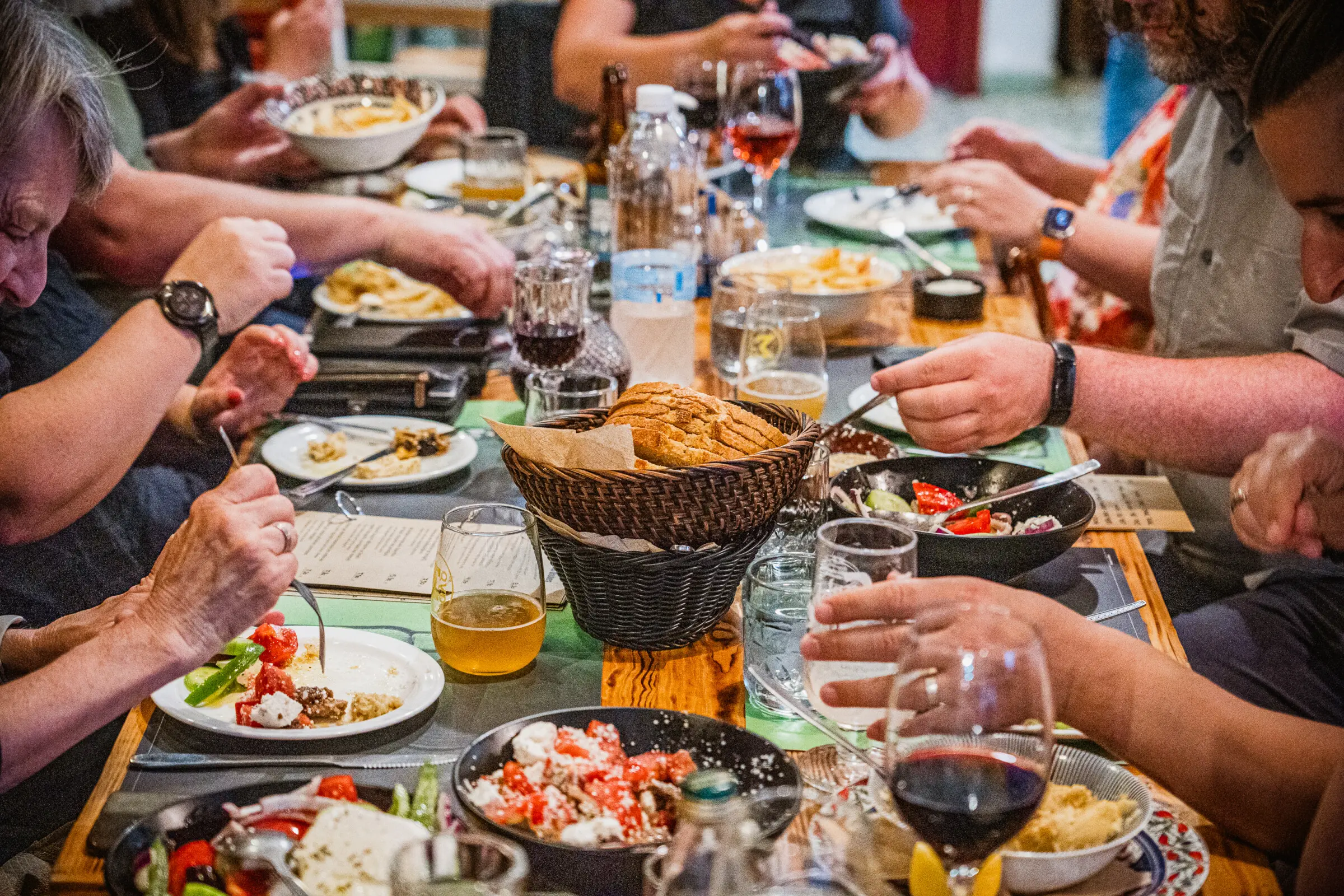
In many countries, a restaurant table comes with an invisible timer. In Greece, the opposite is true: once you sit down, the table is yours for as long as you want it. Nobody will bring the bill to hurry you, nobody hovers, and turning tables is simply not how tavernas think. Finishing your food and then sitting for another hour over wine, coffee or nothing at all is not rude - it is the whole point. The after-dinner stretch even has its own gravity: this is when the extra carafe appears, when someone orders a Greek coffee (a small ritual in itself - see our Greek coffee culture guide), and when the evening properly settles in.
The flip side: service will feel unhurried by northern European or American standards. Waiters are not being inattentive; they are giving you room. If you need something, catch an eye or raise a hand - it is expected, not impolite.
Getting the Bill: You Have to Ask
This is the rule that catches most visitors. In Greece, bringing the bill unasked is considered rude - it says we would like you to leave. So it will never come until you request it. When you are ready, say to logariasmó, parakaló (the bill, please), or use the universal gesture: catch the waiter's eye and mime signing on your palm. Both work everywhere.
The bill usually arrives with a small kerasma - a complimentary dessert, fruit or a little glass of something - so do not be too quick to stand up. Check the bill calmly if you like; the cover charge for bread is normal and legitimate. Most places take cards, but small family tavernas appreciate cash, and it makes the next part easier. A few more useful phrases for the whole evening live in our Greek language basics for travellers.
Tipping in Greece: Appreciated, Not Obligatory
Greece has no tipping culture of obligation. Service staff are paid wages, no percentage is expected, and nobody will chase you down the street. That said, tips are genuinely appreciated, and the local habit is simple: round up the bill, or leave roughly 5 to 10 percent for a good meal. If the bill comes to an awkward number, rounding to the next tidy figure is the natural move. Leave it in cash on the table or in the bill folder - adding a tip to a card payment is often clumsy or impossible in smaller places.
- Casual lunch or coffee: round up, or leave the small coins.
- Full taverna dinner: 5-10 percent for good service is generous and normal.
- Exceptional evening: tip what feels right - warmth matters more than arithmetic.
One more thing: if the owner serves you personally, a warm thank-you and a promise to return can mean as much as the coins. Family tavernas run on relationships.
Toasting, Yamas, and the Courtesies of Sharing
Sooner or later someone will raise a glass and say yamas - short for stin ygeiá mas, to our health. Meet their eyes, clink, answer yamas back. That is the whole ceremony, repeated as often as the mood requires. With tsipouro or ouzo, tiny refills and frequent toasts are part of the rhythm; nobody expects you to drain the glass each time. If you want to know what you are toasting with, our Halkidiki wine guide is a good companion.
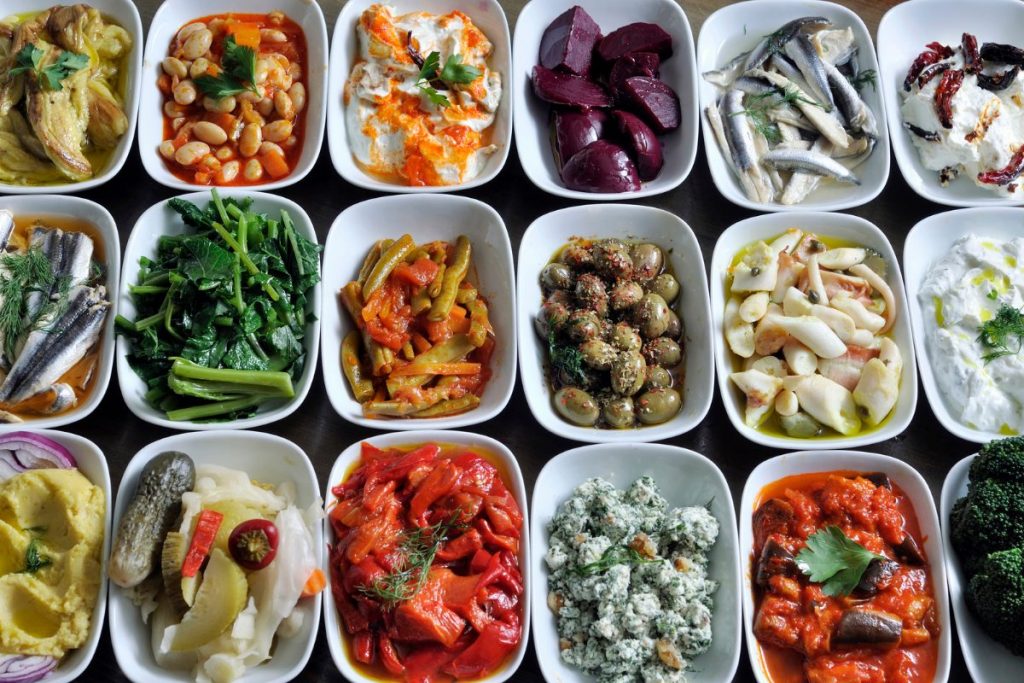
Because taverna food arrives on shared plates - the meze way, explained fully in our guide to Greek meze culture - a few small courtesies apply. Everyone eats from the communal plates with their own fork, and offering the last piece of the saganaki to someone else before taking it yourself is the kind of gesture Greeks notice. Refuse once, accept the second time: a little dance of politeness that everybody enjoys.
Dress Code Reality, and Kids at the Table
Taverna dress code is refreshingly simple: there is not one. Clean and casual is the universal standard - shorts, sandals and a t-shirt are fine everywhere in a seaside village. The one line not to cross is arriving straight off the beach in nothing but swimwear; throw on a shirt or a cover-up and you are welcome anywhere. Evening dressing-up is entirely optional, even where there is music and dancing.
As for children: they are not merely tolerated at Greek tables, they are expected. Greeks bring babies to 22:00 dinners, toddlers nap in pushchairs beside the table, and kids playing between tables is background music, not a disturbance. Tavernas will happily do a simple plate for a child - chips, keftedes (Greek meatballs), a plain piece of grilled chicken - and nobody blinks at a request off the menu. If your family eats out together at home only rarely, Greece is where you make up for it.
Etiquette, in the end, is easier absorbed than memorised - and the best classroom is a good table on a warm evening. If you are in Sarti, come linger with us at Lauer House: we are open daily from 10:00 to 24:00 in season, the table is yours for as long as you want it, and on Wednesday and Thursday evenings from 20:00 there is live Greek music to keep you there. Ask for the bill only when you are truly ready - and not a minute before.