Halkidiki is absurdly generous to photographers. Within a short drive of Sarti you have sculpted orange rocks over turquoise water, a holy mountain rising from the sea as a permanent backdrop, a stone village frozen in amber light, Greece's most sheltered natural harbour and a lagoon scattered with islets. The light is Mediterranean-strong, which means the best shots happen early and late - and the middle of the day is for swimming, which is hardly a punishment. This guide covers the five locations we would send any photographer to first, plus the practical notes on timing, golden hour and drone rules that make the difference between a snapshot and a keeper.
Kavourotrypes: The Sculpted Orange Rocks
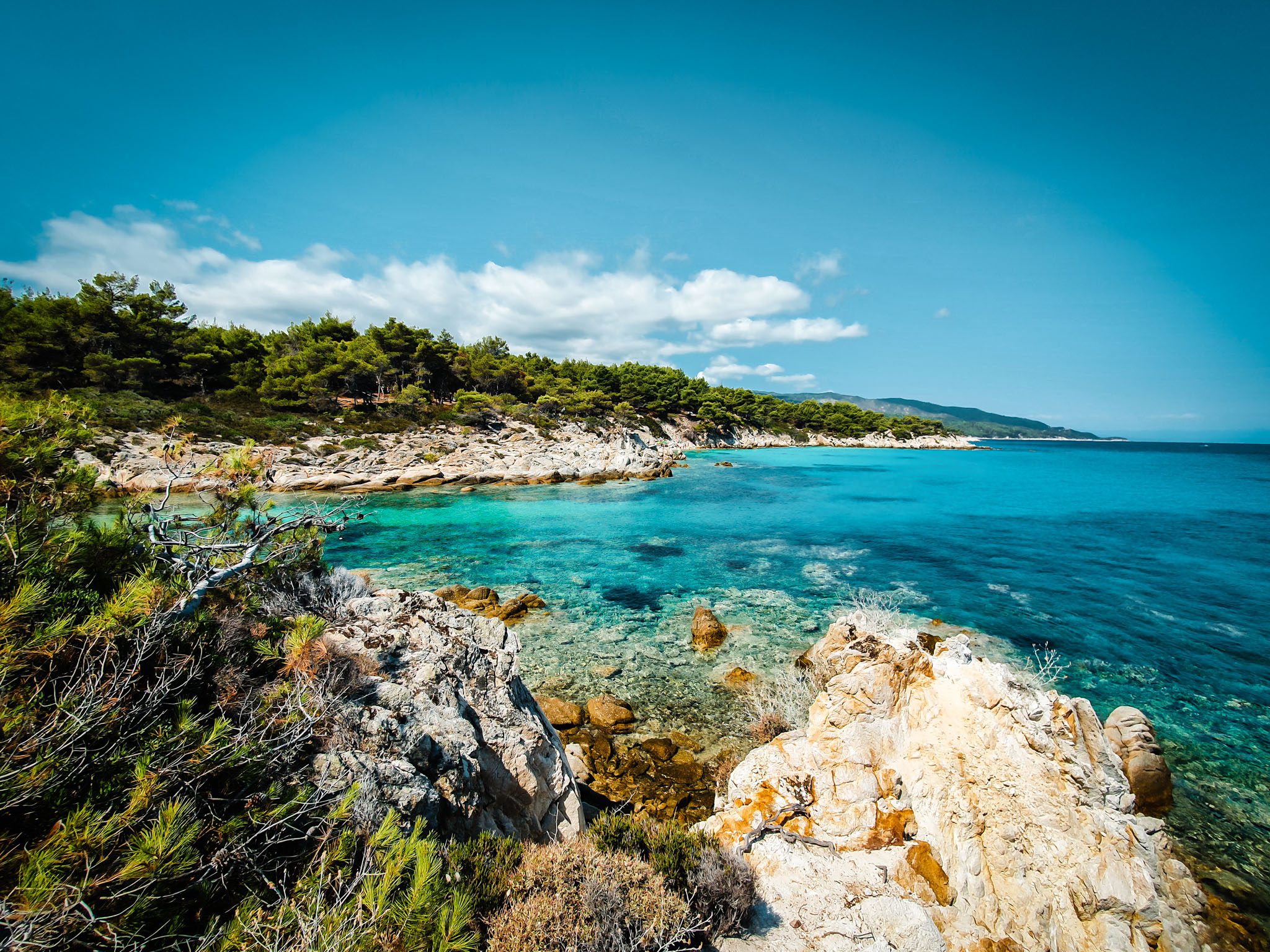
A short drive north of Sarti, Kavourotrypes - also called Orange Beach - is Sithonia's most photogenic stretch of coast: smooth, wind-and-wave-carved rocks in cream and orange tones, dropping into water that shifts from glass-clear to deep turquoise. It is really a series of small coves rather than one beach, connected by paths through the pines, and every cove composes differently. Shoot here in the first two hours after sunrise: the low sun sets the rocks glowing, the water is mirror-still, and you will share the place with almost no one - a genuine miracle given the August crowds that arrive by mid-morning. A polarising filter earns its keep here, cutting glare to reveal the seabed through the shallows. The coves further from the parking areas stay emptier; our hidden beaches guide covers the neighbouring stretches worth exploring with a camera.
Sarti Beach with the Athos Backdrop
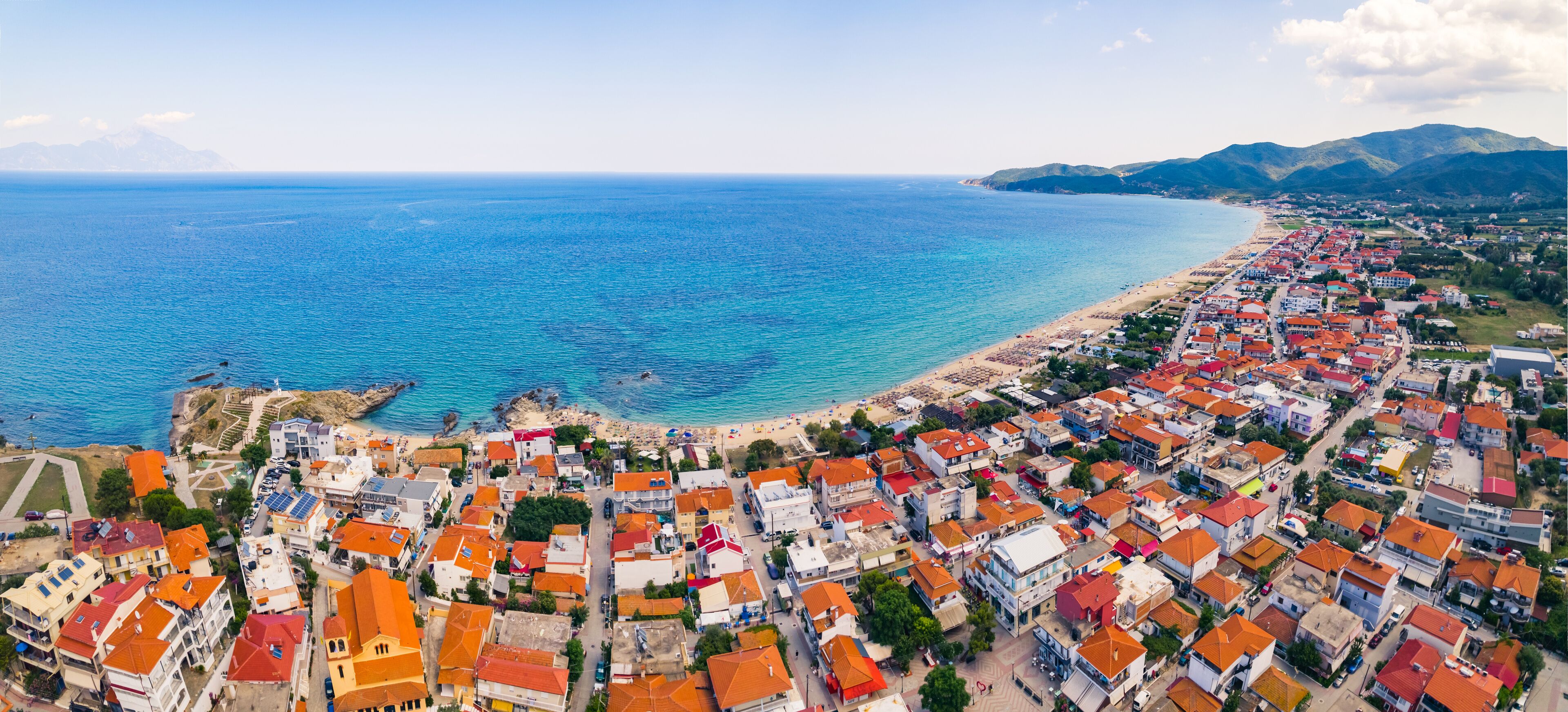
The defining image of eastern Sithonia is made in Sarti itself: the long sweep of the village beach with Mount Athos rising 2,033 metres straight out of the sea across the Singitic Gulf. The mountain's mood changes hourly - hard-edged and blue at midday, dusted pink at dawn, silhouetted black against an orange sky before sunrise. Because Sarti faces east, sunrise is the headline event: arrive in the dark, set up anywhere along the sand, and shoot the sun climbing beside the holy mountain. Fishing boats, beach grass and the curve of the bay all serve as foreground. In the evening the light reverses - the beach falls into soft shade while Athos catches the last warm glow, a subtler but lovely effect. Knowing what you are photographing deepens the shot: our Mount Athos guide tells the story of the monastic republic across the water.
Parthenonas: The Stone Village in the Pines
High on the slopes of Mount Itamos above Neos Marmaras, Parthenonas is a traditional stone village that was nearly abandoned in the twentieth century and has been lovingly revived - which means weathered masonry, wooden balconies, cobbled lanes and almost no modern clutter to spoil a frame. It is a detail photographer's paradise: doorways, shutters, cats on warm stone, bougainvillea against rubble walls. The wider prize is the view - from the village's edge the ground drops away toward the Toroneos Gulf, and at sunset the sea turns to hammered gold below you. Come in the late afternoon, shoot details in the shaded lanes, then catch the sunset panorama and stay for dinner at a village taverna. Spring and autumn add wildflowers and clearer air; our shoulder season guide makes the case for visiting outside peak summer, when photographers get the villages to themselves.
Porto Koufo: The Hidden Harbour
At Sithonia's southern tip, Porto Koufo is one of the most sheltered natural harbours in Greece - a near-enclosed bowl of calm water ringed by steep hills, with a small fishing fleet moored inside. The name means deaf harbour, supposedly because the sea outside cannot be heard within, and the geography is a gift to photographers: from the cliffs near the harbour mouth you can frame fishing boats against towering rock walls, while down at the quay the working boats, nets and tavernas offer classic Greek-fishing-life imagery. Morning is best for the boats and reflections; late afternoon sends dramatic side-light across the cliffs at the entrance. Pair it with the wild capes just south for seascapes, and read our Greek fishing culture guide to understand the scenes you are shooting - this is a real fishing port, not a set.
Vourvourou and Its Islets
On Sithonia's northeast coast, Vourvourou is not one beach but a shallow, sheltered lagoon strewn with pine-topped islets - Diaporos being the largest - where the water glows in improbable bands of turquoise and jade. From the shore, long-lens compositions stack islets against the bulk of Mount Athos on the horizon. Better still, rent a small boat (no licence needed for the low-powered ones) and shoot from the water: the coves on Diaporos hold some of the most tropical-looking scenes in Greece. Midday actually works here - high sun ignites the shallows' colour - making Vourvourou the rare location that fills the gap between golden hours. The viewpoints on the road above the bay give a sweeping overview shot; it is one of several stops worth combining into a loop from our day trips from Sarti guide.
Golden Hour, Blue Hour and the Drone Question
Practical notes that apply everywhere in Halkidiki:
- Golden hour is short here. In midsummer the truly warm light lasts perhaps forty minutes after sunrise and before sunset. Be in position early, composition already chosen.
- East coast at dawn, west coast at dusk. Sithonia's geography is simple: Sarti-side beaches face the sunrise; the Toroneos side and Parthenonas catch the sunset.
- Blue hour is underrated. The twenty minutes after sunset, with taverna lights coming on along a waterfront, produces the most atmospheric village shots.
- Midday strategy: shoot the turquoise shallows (Vourvourou, Kavourotrypes) when the sun is high, and keep people, shade and details for harsh-light hours.
- Drones: Greece follows EU drone regulations, with registration and category rules depending on your drone's weight, and additional restrictions near archaeological sites and sensitive areas - and be aware that Mount Athos is a special jurisdiction that should be treated as off-limits to overflight. Rules change, so check the current requirements with the Hellenic Civil Aviation Authority before you fly, and always ask before launching over a busy beach.
Fill your memory cards, then come and fill a table. Lauer House sits in Sarti with the Athos backdrop just across the water - we are open daily 10:00-24:00 in season, the goat shank braises slowly while you chase the light, and on Wednesday and Thursday evenings from 20:00 the live Greek music gives you one more scene worth shooting. Browse our gallery for a preview of the view that comes with dinner.