Sithonia has some of the clearest swimming water in the Aegean, and you do not need a boat, a licence or even much experience to enjoy what lives beneath it. A decent mask, a calm morning and one of the peninsula's rocky coves will show you octopus gardens, shoals of bream and seagrass meadows glowing green in the sunlight. This guide covers the best snorkeling spots within easy reach of Sarti, what you are likely to see, how diving works on the peninsula, and the safety habits that keep a water day relaxed.
Why Sithonia's Water Is So Clear
The east coast of Sithonia faces the deep Singitic Gulf with no major rivers emptying into it, so there is very little sediment to cloud the water. Add a rocky, granite-boulder coastline that drops quickly to clean sand, and you get visibility that regularly reaches ten to fifteen metres on calm days. The other half of the story is Posidonia oceanica, the native Mediterranean seagrass that carpets the shallows in dark green meadows. Posidonia is a protected species, not a weed: it oxygenates the water, stabilises the seabed and shelters juvenile fish, which is precisely why the snorkeling is so lively here. Treat the meadows as you would a coral reef: float over them, never stand on them, and never anchor in them if you rent a boat.
Morning is almost always the best window. The gulf tends to be glassy before midday, before the afternoon breeze arrives and stirs up chop. If the wind has been blowing from the east overnight, pick a west-coast spot such as Porto Koufo instead, and vice versa.
Kavourotrypes: Sculpted Rocks and Easy Entries
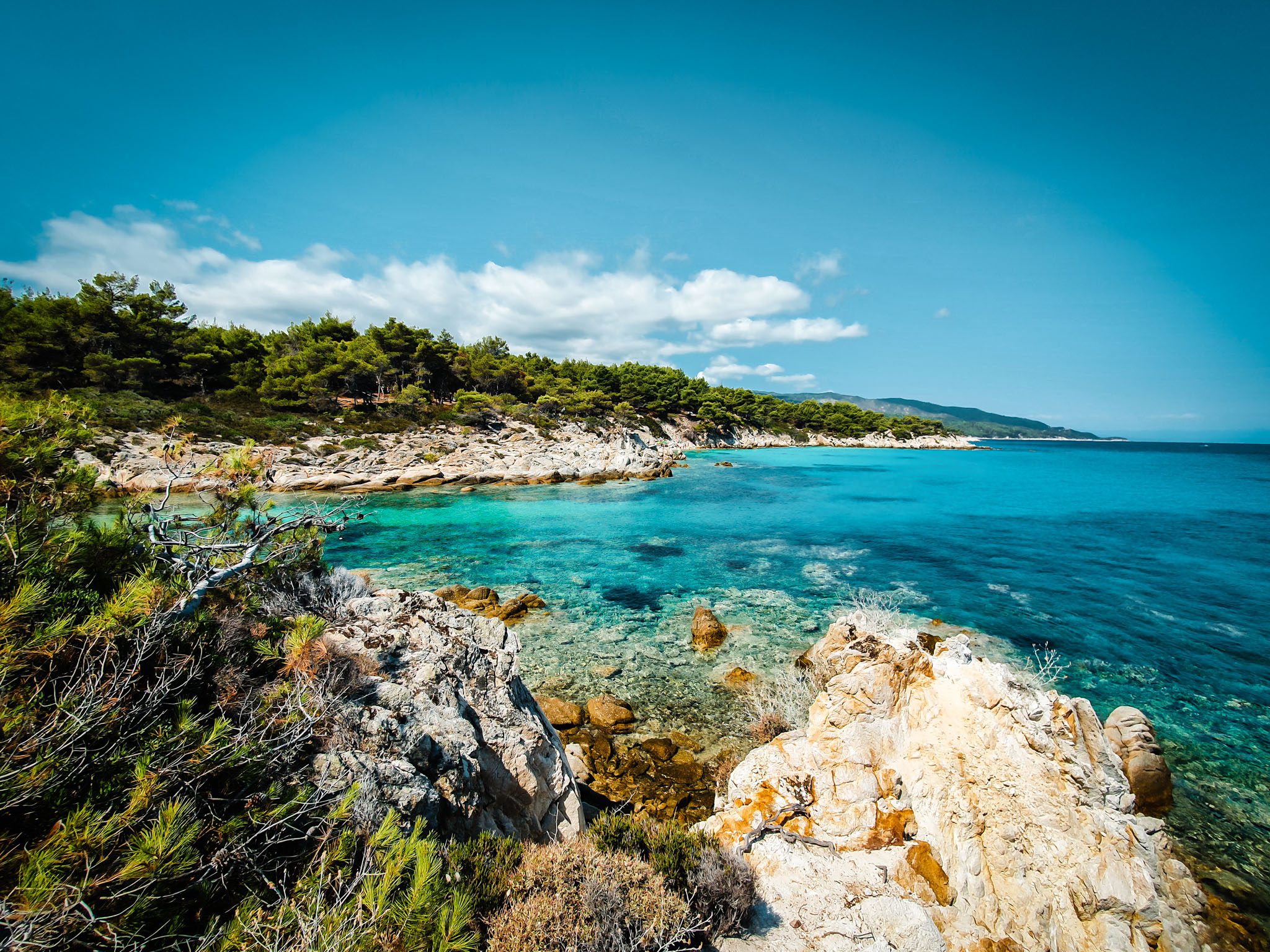
A short drive north of Sarti, Kavourotrypes is a string of small coves where smooth white-orange granite slides straight into turquoise water. The name means crab holes, which tells you what to look for at the waterline. For snorkelers, the attraction is the rock architecture: boulders, mini-canyons and swim-throughs at two to five metres, all shallow enough for beginners but interesting enough for experienced swimmers.
Work the edges where rock meets sand. Octopus den in the crevices, marked by little piles of shells outside their holes; wrasse patrol the boulders; and damselfish hang in midwater clouds. Each cove has its own character, so if one is busy, walk on to the next. Kavourotrypes features heavily in our hidden beaches of Sithonia guide, and it earns the hype underwater as much as above it.
Porto Koufo: Cliffs, Depth and Big-Fish Territory
At the southwestern tip of the peninsula, Porto Koufo is the largest natural harbour in Greece: a nearly enclosed bay guarded by high limestone cliffs. Inside the bay the water is calm and family-friendly, with easy snorkeling along the edges. The serious drama is at the mouth, where the cliff walls continue underwater and the bottom falls away fast. Confident snorkelers who stay close to the rock can watch the blue turn deep and see larger fish cruise past: this is a working fishing port famous for its tuna landings, and the food chain shows.
Respect the geography here. The harbour mouth sees fishing-boat traffic, currents are stronger outside the bay, and cliff edges offer few exit points. Stay inside or near the entrance unless you are experienced, swim with a buddy, and keep well clear of moving boats. If you are curious how the local fleet works, our guide to Greek fishing culture in Halkidiki is a good companion read before you visit the harbour tavernas.
Diaporos and the Vourvourou Shallows
North of Sarti, the Vourvourou lagoon area is a different underwater world: shallow, sheltered and warm, with the pine-covered island of Diaporos sitting a few hundred metres offshore. Rent a small self-drive boat, as no licence is required for the low-power category typically offered in season, or join a group trip, and you can anchor over sand in water so clear the boat appears to float on air. The channels between Diaporos and the mainland hold extensive Posidonia meadows, seahorse-friendly shallows, pipefish, hermit crabs and huge numbers of juvenile fish.
Nearby Karydi beach is the best shore-entry option in the area: a shallow, sandy bay with rounded rock outcrops at each end. The rocks host the usual cast of wrasse and blennies, and the calm, waist-deep water makes it the single best spot on this list for children with their first mask. Because the whole area is protected from open swell, Vourvourou is the reliable fallback on days when the east coast beaches near Sarti are choppy.
What You Will See Underwater
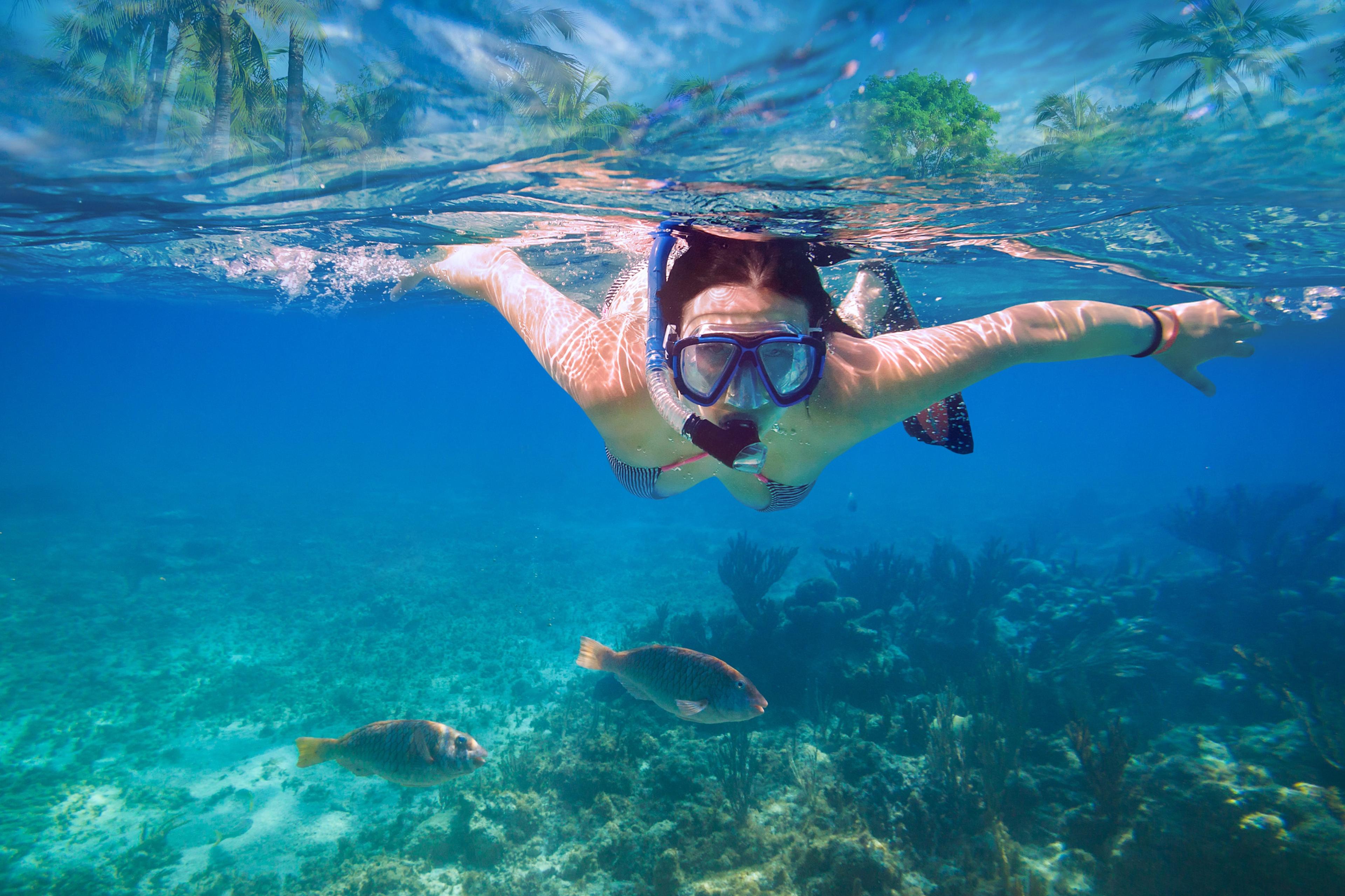
Sithonia's rocky coast supports a classic Mediterranean cast. On a typical morning snorkel you can expect:
- Octopus: the star attraction, usually holed up by day; look for shell middens outside crevices.
- Wrasse: ornate and rainbow wrasse flash green, orange and blue around the rocks.
- Bream: saddled bream, white bream and painted comber over the sand edges; shoals of salema grazing seagrass.
- Damselfish: dark clouds hovering above boulders, unmissable everywhere.
- Invertebrates: red starfish, sea urchins on rock, hermit crabs, occasional cuttlefish at dusk.
Look but do not take: urchin harvesting and octopus hunting are regulated activities, and spearfishing has its own rules entirely. If seeing all that seafood works up an appetite, that is what tavernas are for; our guide to Greek seafood explains what you will find on menus, and a plate of grilled octopus tastes different once you have watched one rearrange its den.
Gear, Dive Centres and Safety Flags
You do not need to bring equipment from home. Beach and souvenir shops in Sarti and every sizeable village stock masks, snorkels and fins all season, from cheap kids sets to decent tempered-glass masks; buying locally is standard practice here. Test the mask seal in the shop by pressing it to your face without the strap and inhaling gently through your nose.
For scuba, the pattern on the peninsula is a handful of dive centres operating out of the larger resort areas, offering guided shore and boat dives, try-dives for beginners and certification courses. Book a day or two ahead in July and August, and always dive with a licensed operator rather than freelancing. Whether snorkeling or diving, follow the basics: use a bright surface buoy or flag so boats can see you, never swim alone at remote coves, avoid the midday hours when boat traffic peaks, and know your limits with depth and breath-hold. Our safety and health tips for Halkidiki and the wider water sports guide cover the details.
The best snorkeling days end the same way in Sarti: salt-crusted, sun-tired and hungry at a taverna table. Lauer House is open daily from 10:00 to 24:00 in season with fresh seafood straight from these same waters, traditional Greek cooking and a slow-braised goat shank for anyone who has had enough fish for one day. Check the menu at menu.lauerhouse.gr, and time your visit for Wednesday or Thursday evening to catch live Greek music from 20:00.