Halkidiki's sea is famously calm, clear and warm - which makes it one of the most forgiving places in Greece to try a water sport for the first time, and one of the most beautiful places to practise one you already love. Sithonia in particular offers the full spread: glassy lagoons for kayaks and paddleboards, breezy bays for windsurfers, and organized beaches where jet skis, water skiing and parasailing run all summer. This guide covers what is available, where to find it on the peninsula, when conditions are best, and the safety basics - including Greece's beach flag system - that every visitor should know before getting wet.
Sea Kayaking in Vourvourou: The Headline Act
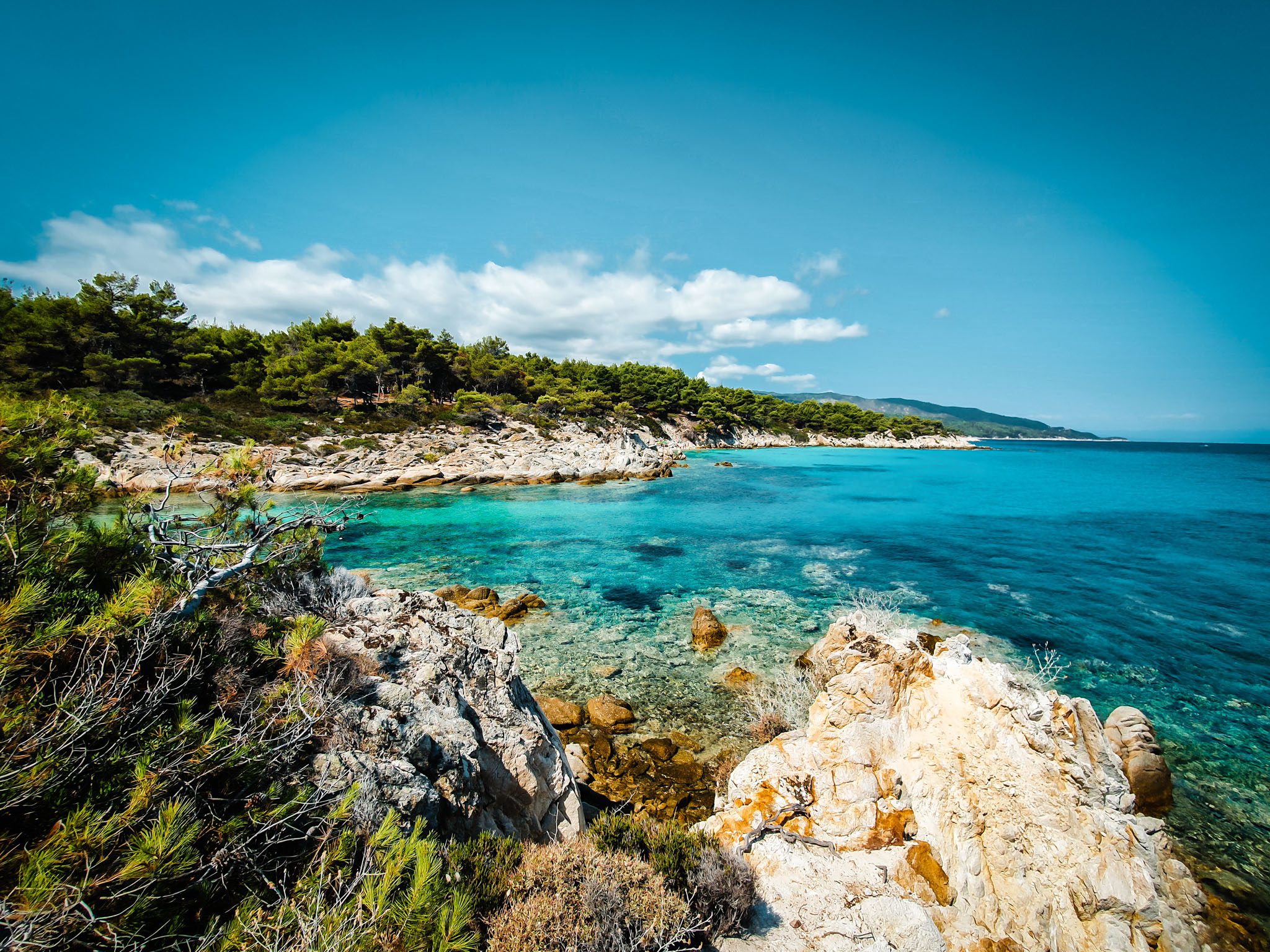
If Sithonia has one world-class paddling destination, it is Vourvourou. This shallow, sheltered bay on the east coast - about half an hour north of Sarti - is scattered with low green islets, the largest of which, Diaporos, hides a chain of turquoise, lagoon-like coves on its inner shore. The water between the islands is calm, warm and rarely more than a few metres deep, with sandy channels that glow an implausible Caribbean blue. Paddling out to Diaporos, circling its bays and stopping to swim from a deserted beach is, for many visitors, the single best day of their holiday.
In season, operators in Vourvourou rent single and double sea kayaks and run guided trips ranging from a few hours to a full day; guided options are worth it for first-timers, since guides know the sheltered lines when an afternoon breeze picks up. Go in the morning for the calmest water and best colours, take drinking water and a hat, and use a dry bag for phones. The crossing to Diaporos is short, but it is still open water - keep to the inside channels if you are inexperienced.
Stand-Up Paddleboarding: Calm Mornings Are Everything
SUP has spread to virtually every organized beach on Sithonia, and the peninsula suits it perfectly - most mornings the sea is a mirror. Rental boards appear at the larger beaches in season, including Sarti's long sweep of sand, and the routine is simple: rent by the hour, paddle the shoreline, fall in, laugh, repeat. Beginners find their balance within minutes on flat morning water.
The one rule that matters: respect the afternoon breeze. A thermal wind typically builds after midday in summer, and a breeze blowing offshore - from the land out to sea - is the classic SUP trap, because the water near the beach stays deceptively flat while you drift steadily away from shore. Paddle in the morning, stay within comfortable swimming distance of the beach, always use the leash, and get off the water when the wind arrives. Paddling along the coast is also a fine way to peek into the small coves featured in our hidden beaches guide - just beach the board and swim.
Windsurfing and Dinghy Sailing
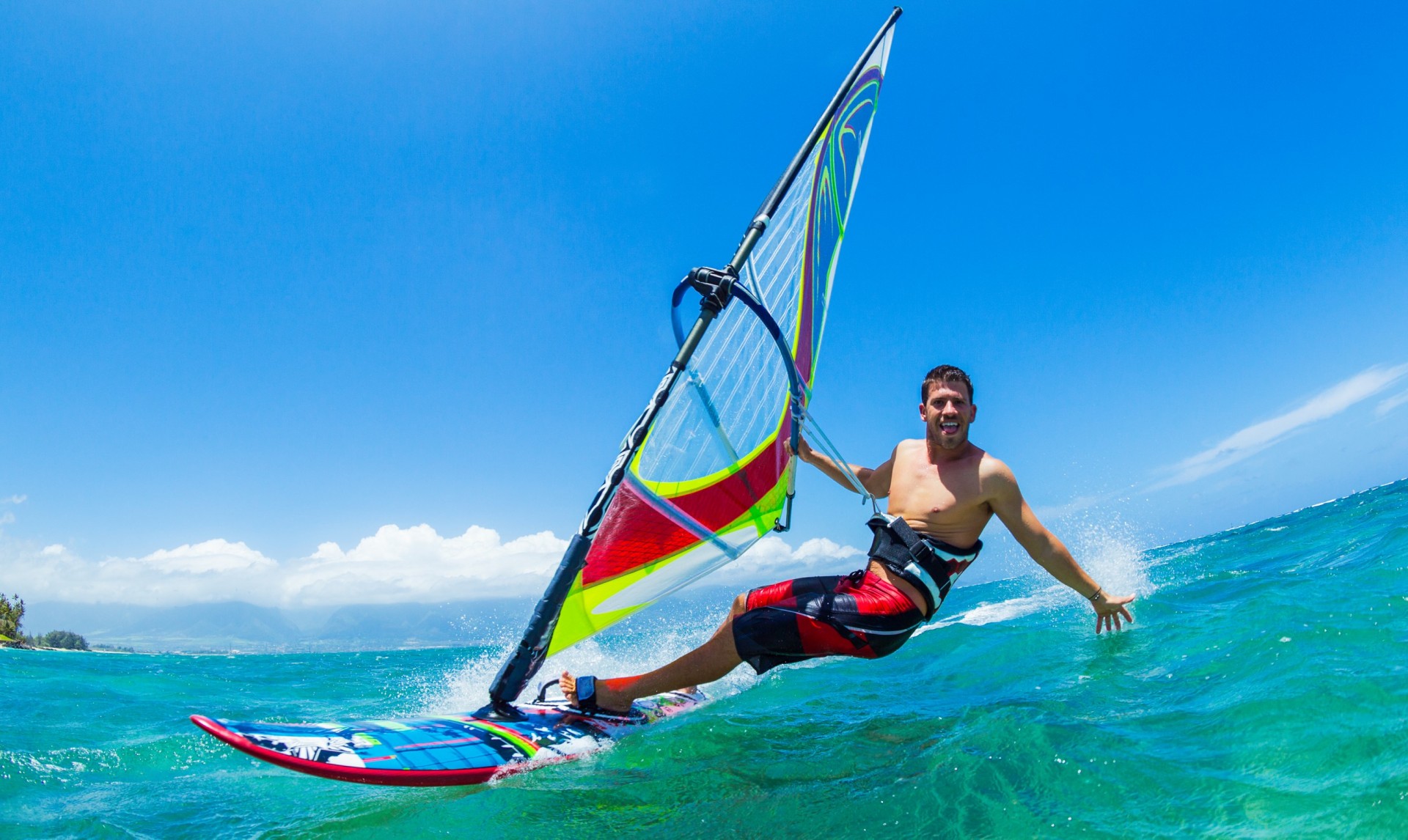
That same afternoon thermal breeze is exactly what windsurfers come for. Sithonia's pattern in summer is kind to learners: light or calm mornings, then a steady, moderate sea breeze building through the afternoon and fading around sunset - strong enough to be fun, rarely strong enough to be frightening. Several organized beaches on the peninsula have watersports centres offering board and rig rental plus beginner lessons, typically in wide, sandy-bottomed bays where you can stand up when things go wrong. The same centres often rent small sailing dinghies and catamarans by the hour.
If you are already competent, bring or rent kit and chase the breeze in the more open bays; if you are learning, take at least one lesson rather than fighting the basics alone - rig handling clicks ten times faster with instruction. Wind is weather, and weather varies: some weeks deliver textbook afternoons, others stay stubbornly calm. Treat windsurfing as a happy possibility on a Halkidiki holiday rather than its guaranteed centrepiece, and check conditions locally each morning.
Jet Skis, Water Skiing and Tube Rides
The louder end of the spectrum lives at the busiest organized beaches - around the larger resort villages and the most popular stretches of sand, where licensed operators run jet skis, water ski and wakeboard boats, and the inflatable menagerie of ringos, bananas and sofas that fling shrieking families across the bay. Sarti's main beach and the bigger west-coast resorts are where you will most reliably find them in July and August; outside high season the offering thins quickly.
A few things to know. Jet ski rental in Greece comes with rules: operators will brief you on the marked corridor for leaving and returning to the beach, the minimum distance you must keep from swimmers and the shore, and age and licence requirements - reputable outfits handle the paperwork and take it seriously. Water skiing and wakeboarding are usually bought as short boat sessions with an instructor. Tube rides are the easy crowd-pleaser for kids, but say clearly beforehand how wild you want the driver to be. Life jackets are non-negotiable for all of it, and operators supply them.
Parasailing: Sithonia From Above
For the price of a few minutes' courage, parasailing delivers the single best view available to a beach tourist: the whole ribbon of coast, the pine hills behind it, water shading from turquoise to deep blue, and on clear days the grey pyramid of Mount Athos floating on the horizon. Flights run from the larger organized beaches in high season, usually as tandem or triple flights from a boat-mounted platform - you take off and land dry on the deck, which surprises most first-timers expecting a soaking.
It is genuinely gentle: the sensation is closer to hanging in a quiet armchair than to any adrenaline sport, and children above the operator's minimum age routinely fly with a parent. Go in the morning or early evening for the calmest air and kindest light, and hand your phone to whoever stays on the boat - photos from deck level are better than anything you will manage mid-air. As with all powered sports here, this is a July-and-August-certainty that becomes hit-and-miss in the shoulder months.
Safety, Flags and Sea Sense
Halkidiki's sea is benign by Mediterranean standards, but water deserves respect everywhere. The essentials:
- Know the flags. On lifeguarded beaches, a red flag means dangerous conditions - stay out of the water. No flag usually just means no lifeguard service, which is common on small coves: swim more conservatively there.
- Swim zones are buoyed. Lines of small buoys mark swimmer-only areas; jet skis and boats must stay outside them, and paddlers should cross them carefully.
- Wind changes everything. Flat at 10:00 does not mean flat at 15:00. Plan paddle sports for mornings.
- Tell someone where you are going and when you expect to be back, even for a casual paddle.
- Sun and water double up. Reflection accelerates sunburn; wear a rash top or reef-safe sunscreen on long sessions.
For broader guidance, from urchins to emergency numbers, see our safety and health tips for Halkidiki, and browse our full activities guide for everything to do on dry land between sessions.
Every water sport shares one universal ending: ferocious hunger. When the boards are stacked and the salt has dried on your shoulders, walk into Sarti and take a table at Lauer House - our family-run taverna serves fresh seafood daily from 10:00 to 24:00 in season, and a plate of grilled octopus after a day on the water is one of Halkidiki's simplest, surest pleasures.