Order a small carafe of clear spirit at a Greek taverna and you have joined one of the country's oldest rituals. But which clear spirit? Ouzo, tsipouro and raki look identical in the glass, and travellers use the names interchangeably - Greeks never do. One is anise-flavoured by definition, one comes in both anise and plain versions, and one is Crete's fiercely plain grape distillate. Each has its own geography, its own glassware habits and its own unwritten rules about food, water and pace. This guide untangles the three, so that when the carafe arrives you know exactly what you are drinking and how to drink it well.
One Family, Three Spirits
All three spirits belong to the same Mediterranean family of grape-based distillates. The quickest way to tell them apart:
- Ouzo - a spirit flavoured with anise (and often other botanicals), always aniseed in taste, turns milky white with water or ice. Associated above all with the islands and coastal Greece.
- Tsipouro - a pomace brandy distilled from the skins, seeds and stems left after winemaking. Made with or without anise; the plain version tastes purely of grape. The pride of northern and central Greece - Macedonia, Thessaly, Epirus.
- Raki / tsikoudia - Crete's version of pomace spirit, distilled once, never anised, usually a touch softer in alcohol and offered with near-ceremonial hospitality.
So: all ouzo tastes of anise; tsipouro may or may not; Cretan raki never does. Get that straight and you already know more than most visitors.
Ouzo: The Anise Classic
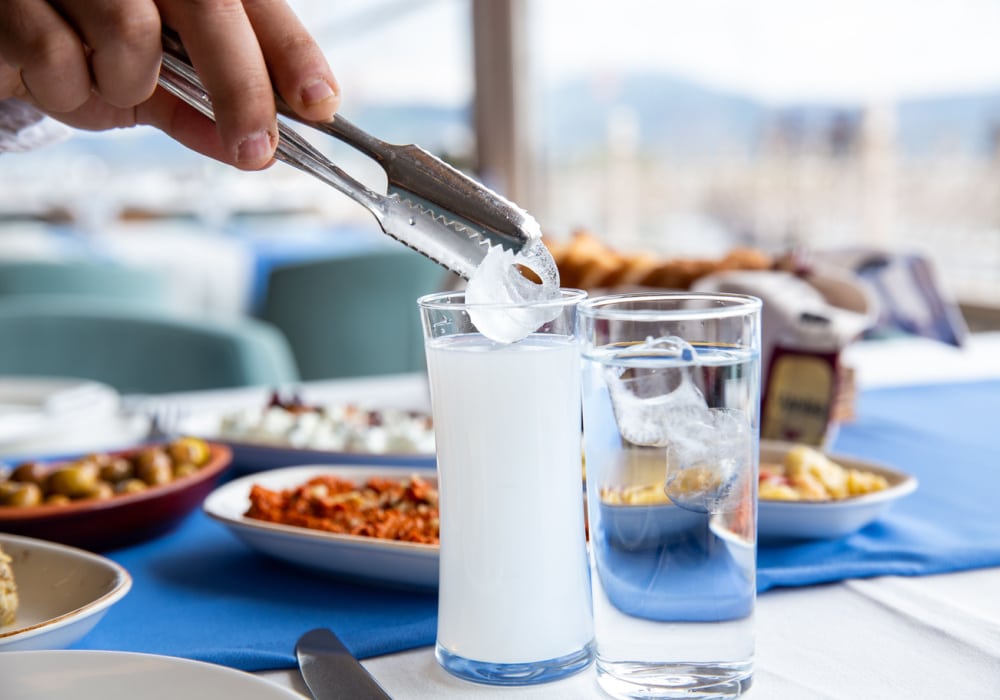
Ouzo is made by flavouring a neutral grape-based spirit with aniseed - often alongside botanicals like fennel and coriander - and redistilling it. Its signature party trick is the louche: add water or ice and the clear liquid blooms cloudy white, as the anise oils come out of solution. That cloudiness is not dilution ruining the drink; it is the drink becoming itself. Ouzo is a protected Greek product and its spiritual home is the seaside table - it has a natural affinity with salt, smoke and seafood, which is why it is the default partner for octopus, sardines and anything from the sea.
Tsipouro: Northern Greece's Pride
Tsipouro starts where wine ends. After the grapes are pressed, the leftover pomace is fermented and distilled, usually twice, into a spirit that carries the grape's character rather than masking it. In northern Greece - our part of the country - tsipouro is not a tourist curiosity but the everyday spirit of choice, and here in Halkidiki you will often be asked a follow-up question when you order it: me glykaniso í horís? - with anise or without? The anised version drinks like a rustic cousin of ouzo; the plain version is cleaner, grapey, closer to Italian grappa. Around Thessaloniki and across Macedonia and Thessaly, whole categories of small taverna - the tsipouradika - grew up around the rhythm of small bottles of tsipouro arriving with successive rounds of meze. If you want to drink like a local in Sithonia, tsipouro is the answer.
Raki and Tsikoudia: Crete's Answer
Travel south to Crete and the pomace spirit changes name and temperament. Tsikoudia - universally called raki on the island - is distilled once, bottled without anise, and treated less like a drink you order and more like a gesture you receive: a small bottle appears unbidden at the end of a meal, on the house, with fruit or a sweet. It is generally a little gentler in alcohol than double-distilled tsipouro but drunk with the same unhurried respect. (Despite the shared name, Cretan raki is a different thing from Turkish rakı, which is anise-flavoured like ouzo.) You will rarely see true tsikoudia in Halkidiki; here, tsipouro rules.
How to Drink Them: Water, Ice and Patience
However the spirit is labelled, the rules of drinking it well are the same, and the first rule is the most important: these are not shots. Knocking back ouzo or tsipouro neat and fast is the surest way to mark yourself as a tourist - and to end the evening early.
- Dilute ouzo. Add cold water, ice, or both, watch it turn cloudy, and sip. Traditionalists add water first, then ice.
- Tsipouro takes ice or nothing. Plain tsipouro is often sipped neat but slowly, or over a cube or two; the anised version behaves like ouzo and loves water.
- Always eat while you drink. These spirits are designed as table companions, not bar drinks. Food is not optional etiquette - it is the entire point.
- Pace by the carafe, not the glass. A 100 ml or 200 ml carafe shared between two, refilled only when the food merits it, is the natural rhythm.
The Meze Table: What to Eat With Them
Ouzo and tsipouro exist to be drunk alongside small plates, and Greece has refined that pairing into a whole social institution - we have written a full guide to Greek meze culture if you want the deep version. The classic partners are salty, smoky and from the sea: grilled octopus dressed with vinegar and oregano is the iconic ouzo meze, taramosalata brings the brine, and a plate of grilled sardines straight off the charcoal is everything the anise wants. Olives, feta, and sharp dips fill in around the fish - for more pairing ideas from the sea, see our guide to Greek seafood. Plain tsipouro, with no anise to negotiate, is even more flexible: it handles cured meats, cheese and slow-cooked dishes as happily as seafood.
Ordering at a Taverna: A Short Script
At a taverna table in Sarti or anywhere in northern Greece, the exchange is simple. Ask for "éna tsípouro" or "éna oúzo"; if it is tsipouro, expect the anise question and have your answer ready. Say "me págo" for ice, "me neró" for water. Order two or three meze plates for the table rather than individual mains, share everything, and let the food set the drinking pace. When the carafe is empty and the plates are clean, you can always order another round of both - that, not a refill of the glass alone, is how the evening extends itself.
Three spirits, one philosophy: drink slowly, drink with food, drink in company. Whether it is milky-white ouzo beside a plate of octopus or a chilled tsipouro carrying you through a long northern Greek lunch, the clear stuff in the little carafe is less about alcohol than about time - the Greek talent for making an afternoon at the table last exactly as long as it should.