Ask anyone who grew up in a Greek village to name the best night of the year and they will not hesitate: the panigiri, the feast-day festival when the whole community eats, drinks and dances in the square until the small hours. We explain what a panigiri is and why it matters in our guide to Greek festivals and celebrations in Halkidiki. This post is the practical companion: when panigiria happen around Sithonia, how the calendar works, what actually goes on during the night, and how you - a visitor - can join in without feeling like a spectator.
How the Panigiri Calendar Works
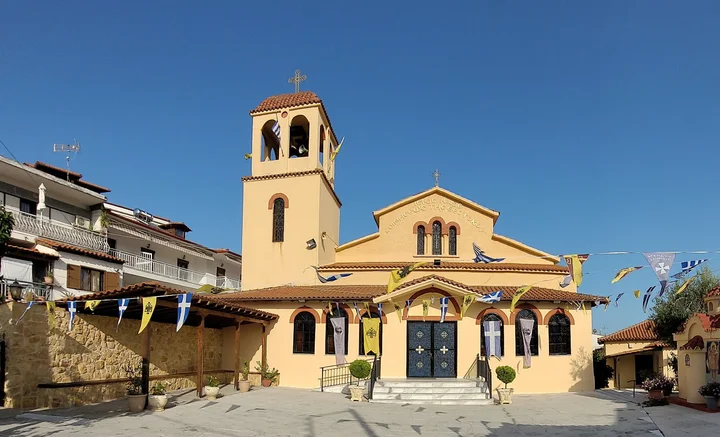
Panigiria are not scheduled by tourist boards; they follow the Orthodox church calendar. Every church and chapel in Greece is dedicated to a saint or a feast, and the community around it celebrates on that saint's day. The celebration usually begins with a vespers service on the eve - the paramoni, often the bigger party night - and continues with a morning liturgy, then food and music on the feast day itself.
This means the dates below are fixed every year, because church feast days are fixed. What varies is which village celebrates which feast - that depends on the dedication of the local church - and how large the festivities are in any given year. There is no official Sithonia-wide programme, and printed schedules barely exist. The reliable method is the local one: ask at the kafeneio, the bakery or your accommodation, and watch for photocopied posters taped to lamp posts and shop windows a few days ahead. Exact dates and details vary by village, so always confirm locally.
Late June: Sts Peter and Paul (June 29)
The feast of the apostles Peter and Paul on June 29 effectively opens the summer festival season. Peter was a fisherman, and the feast carries a natural weight in coastal communities - fitting for a peninsula where nets, caiques and small harbours still shape daily life, as we describe in our guide to Greek fishing culture and traditions in Halkidiki. Late June is an ideal time for your first panigiri: the sea is already warm, the villages are fully awake for the season, and the crowds are a fraction of what August brings, so celebrations feel local rather than staged. If a chapel near you carries the name Agioi Apostoloi or Agios Petros, expect candles, grilled fish and music around this date.
July: Profitis Ilias and the Saints of High Summer
July is thick with feast days, and several of the most atmospheric celebrations of the Sithonian summer fall in this stretch:
- July 17 - Agia Marina. A much-loved saint in rural Greece; villages and chapels bearing her name celebrate with an evening service followed by food and music in the square.
- July 20 - Profitis Ilias. Chapels dedicated to the Prophet Elijah traditionally stand on hilltops, so this feast often involves a walk or drive up to a viewpoint chapel for sunset vespers, with the celebration continuing below in the village. On a peninsula as ridged and pine-covered as Sithonia, it is one of the most scenic feasts of the year.
- July 26 - Agia Paraskevi. Another widely venerated saint whose feast lands squarely in high season, so expect bigger, busier gatherings where her churches stand.
- July 27 - Agios Panteleimon. The healer saint's feast follows the very next day, and in some areas the two celebrations run almost back to back.
Because these dates fall at the peak of the tourist season, panigiria in late July draw locals and holidaymakers alike. Arrive early in the evening if you want a table near the music, and expect the dancing to run very late.
August and Early September: The Big Feasts
August 6 - the Transfiguration of the Saviour (Metamorfosi tou Sotiros) is a major feast of the Orthodox summer; Sithonia even has a village named Metamorfosi after it, up on the peninsula's northwest coast. August 15 - the Dormition of the Virgin (Dekapentavgoustos) is the biggest holiday of the entire Greek summer, celebrated wherever a church is dedicated to the Panagia - which is to say, almost everywhere. It is the one feast you can count on finding within easy reach, and also the most crowded week of the year, so plan tables and travel accordingly. Finally, September 8 - the Nativity of the Virgin closes the season gently: the crowds have thinned, the evenings are softer, and the celebrations feel like the village exhaling after a long summer. If you are visiting in early September, it is a beautiful, unhurried way to experience the tradition.
What Actually Happens at a Panigiri
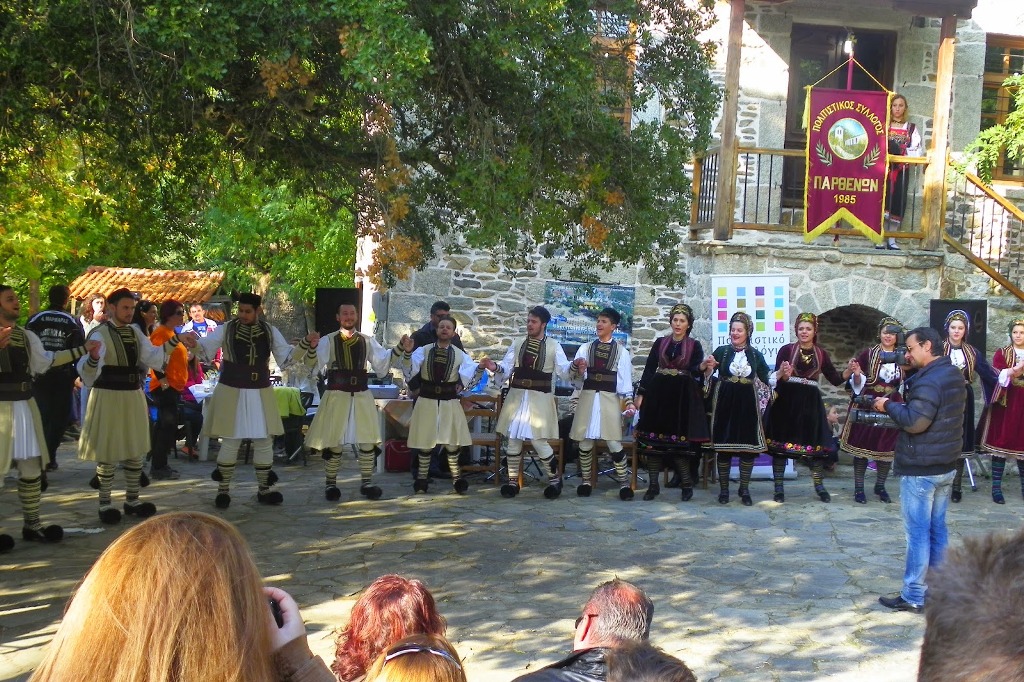
The rhythm is remarkably consistent from village to village. On the eve, bells call the community to vespers; afterwards the icon may be carried in procession through the streets. Then the square or churchyard transforms: long trestle tables appear, grills are lit, and stalls sell roast meat, souvlaki, loukoumades and local wine. A live band sets up - and this is traditional music played for dancing, not for polite listening. Circle dances form and grow as the night goes on, drawing in grandparents, teenagers and eventually anyone within reach. If you want to understand what you are hearing and seeing, our guide to Greek music and dance traditions in Halkidiki covers the instruments, the rhythms and the most common dances, from the stately kalamatianos to the faster Macedonian steps. Children stay up absurdly late, nobody minds, and the last dancers often see the sky begin to lighten over the gulf.
How to Join In: Etiquette and Practical Tips
- Everyone is welcome. A panigiri is a community event, not a private party. Buying food and drink from the stalls is how you support it.
- Bring cash. Village festival stalls rarely take cards.
- Dress respectfully for the church part. Shoulders and knees covered if you step inside for vespers; festival dress is casual otherwise.
- Join the dance at the end of the line. Circle dances are led from the front; newcomers slot in at the tail. Watch the feet for a round or two, then commit. Nobody expects perfection, and enthusiasm is genuinely appreciated.
- Learn a few words. A cheerful 'kalispera' and 'efharisto' go a long way - our Greek language basics for travellers covers the essentials.
- Ask locally, and stay flexible. Programmes shift, bands arrive late, and the best nights are often the ones you stumble into.
Many celebrating villages lie within an easy drive of Sarti; our guide to day trips from Sarti maps out the routes, so you can pair an afternoon excursion with an evening feast.
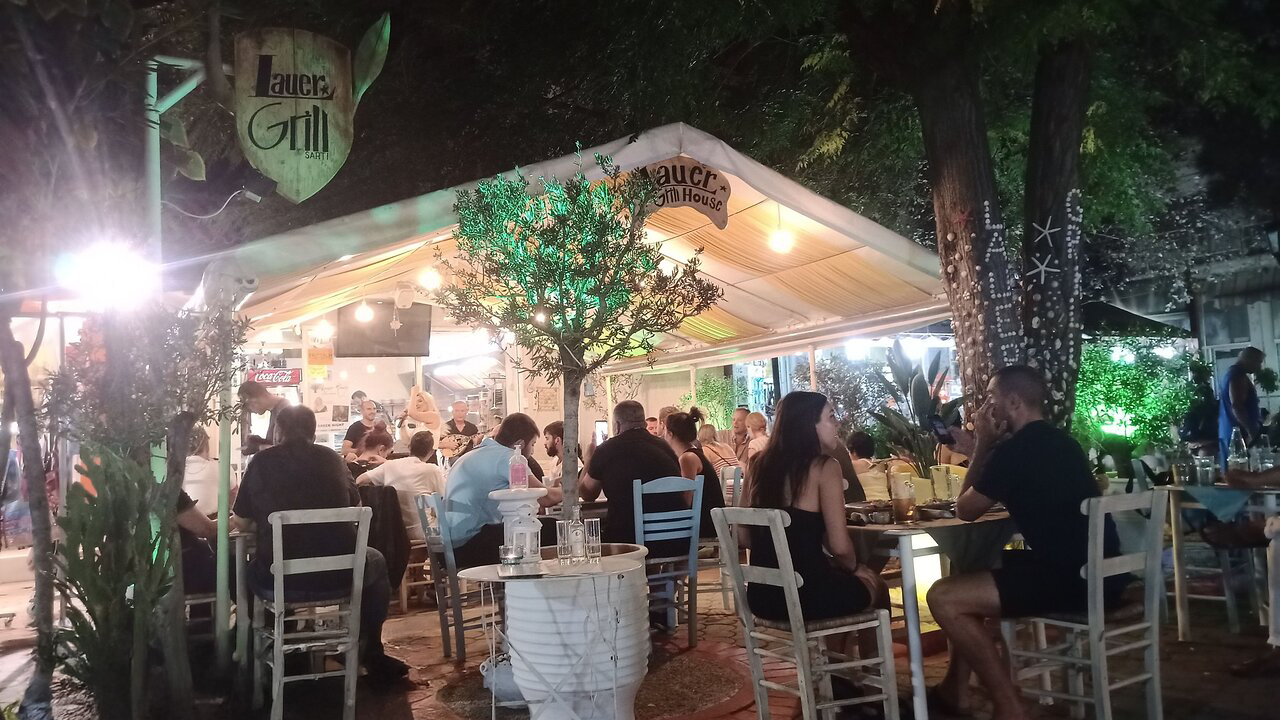
And on the nights when no village happens to be celebrating, you can still hear the real thing: Lauer House in Sarti hosts live Greek music every Wednesday and Thursday evening from 20:00 throughout the season. We are open daily from 10:00 to 24:00, the seafood is fresh from the gulf, and the slow-braised goat shank tastes best when there is music in the air. Come and find your own small panigiri at our tables.