Every stretch of coast has one beach that ends up on the postcards, and on Sithonia's east coast it is Kavourotrypes - known to many visitors simply as Orange Beach. The name Kavourotrypes translates roughly as 'crab holes', a nod to the pitted white rocks that define the place. It sits a short drive north of Sarti, and if you see one photograph of impossibly turquoise water framed by smooth white stone before your holiday, it was almost certainly taken here. This guide covers what makes it special, how to reach it, where to park, and how to enjoy it without the crowds.
What Makes Kavourotrypes Special
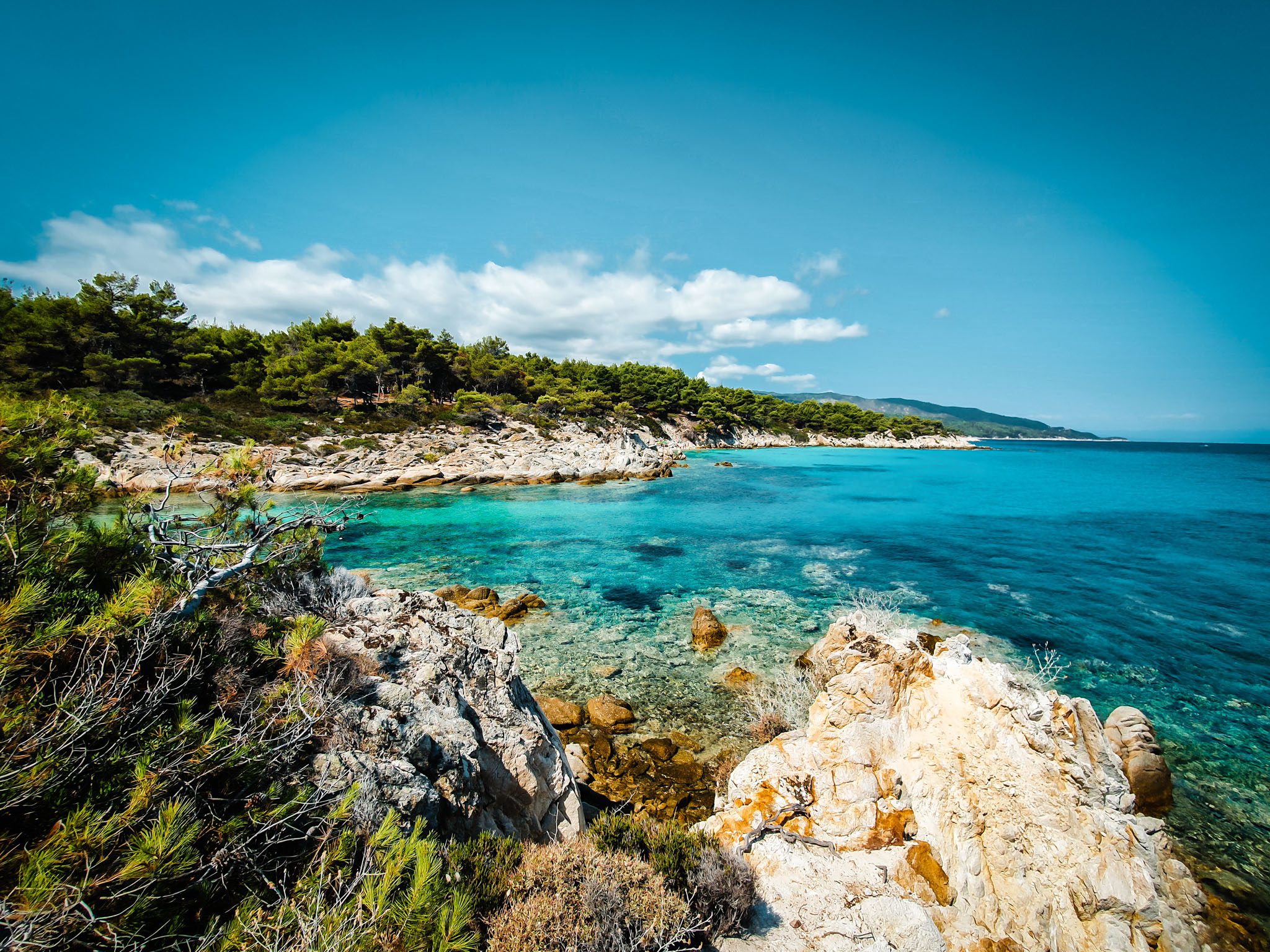
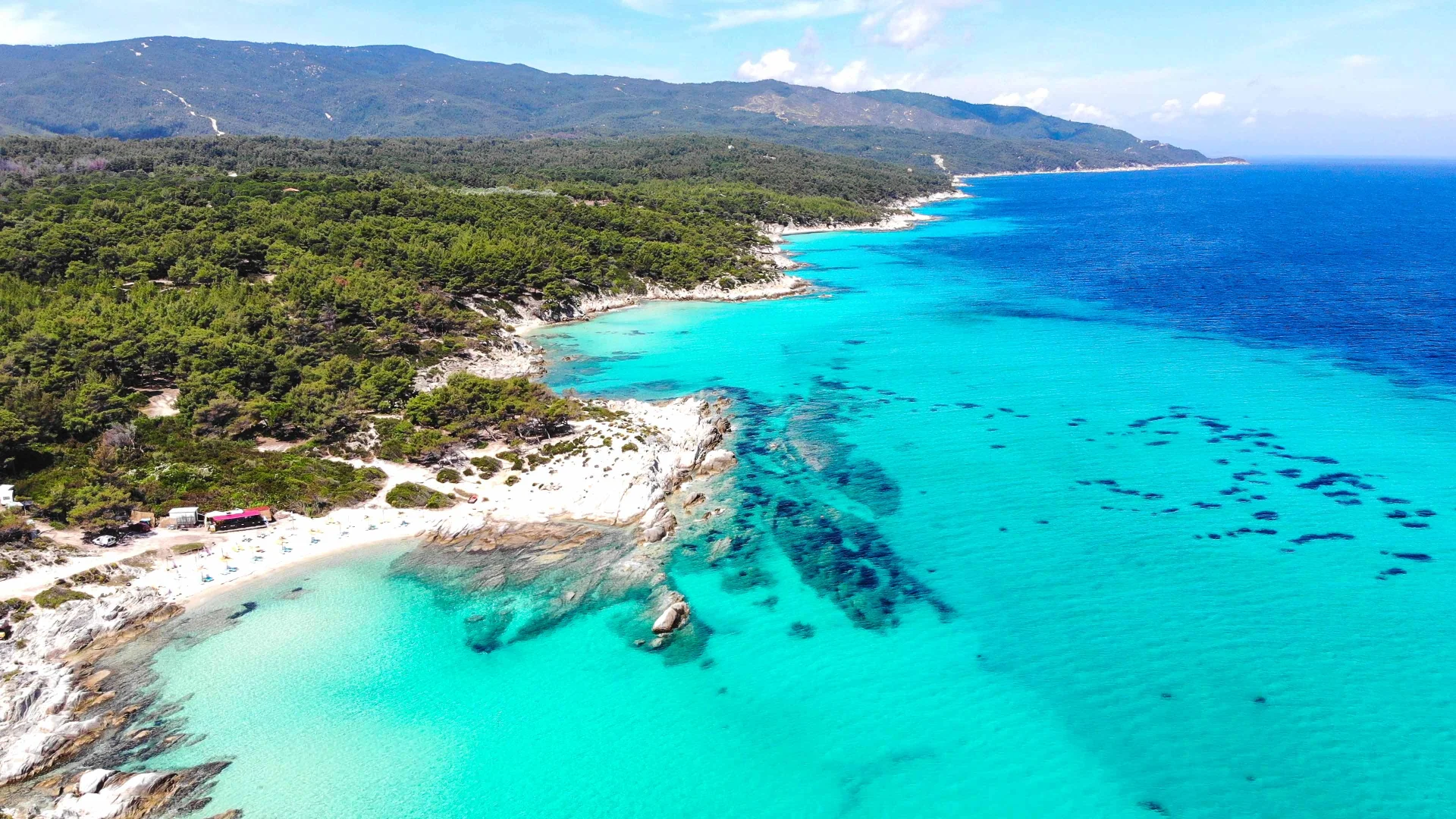
Kavourotrypes is not a single beach but a chain of small coves strung along a headland, separated by outcrops of pale rock that the wind and sea have worn into soft, sculptural shapes. The stone is so smooth and white in places that it looks deliberately carved, and the shallow water over the light seabed produces that luminous turquoise the area is famous for. Pine trees grow almost to the waterline, so the classic Kavourotrypes view stacks three colours - deep green, bone white, electric blue - into a single frame.
Because the coves are small, the experience is intimate rather than expansive. You claim a patch of sand or a shelf of warm rock, swim ten metres out to look back at the coast, and understand immediately why this modest headland has become one of the most photographed spots in Halkidiki.
The Coves: What to Expect at Each
The main cove is the largest and busiest, with a proper crescent of sand and the easiest access down from the road. Look around the rocks here and you will find carved figures worked directly into the stone by a local sculptor over the years - the mermaid is the most famous, and half the visitors on any given day are queuing politely to photograph her.
Walk north or south along the headland and the coves get smaller, rockier and quieter. Some are barely wide enough for a handful of towels; several require a light scramble over rocks to reach, which is precisely what keeps them peaceful. The furthest coves have a long-standing informal naturist tradition, so wander with that in mind. Snorkelling is excellent along the rocky edges of every cove - bring a mask, because the visibility on a calm morning is superb. If this kind of coastline is your idea of heaven, our hidden beaches of Sithonia guide lists more coves in the same spirit.
Getting There from Sarti
Kavourotrypes lies a few kilometres north of Sarti on the coastal road towards Vourvourou - around a ten-minute drive. The road climbs and curves through pine forest with regular glimpses of the sea, and it is worth driving slowly for the views alone. There is no grand entrance: the beach announces itself as a series of unpaved turnoffs and clusters of parked cars on the seaward side of the road. If you reach the longer beaches around Platanitsi and Armenistis, you have gone too far north.
Many visitors staying in Sarti come by scooter or quad, which makes the parking question easier, and cyclists do ride it, though the hills and summer heat make that an early-morning project. Walking from Sarti is technically possible but long and shadeless in summer - treat it as a hike, not a stroll. For context on the wider coastline, see our complete guide to Sithonia.
Parking and the Walk Down
Parking is informal: rough clearings and verges among the pines above the coves. In July and August these fill by mid-morning, after which cars line the road itself for a considerable stretch. Arriving early is not just about beach space - it is about not adding a fifteen-minute roadside walk before you even start the descent.
From the parking areas, sandy paths drop through the trees to the water. Most take between two and ten minutes depending on which cove you are aiming for, and some are steep and loose underfoot. Sturdy sandals beat flip-flops here, and this is not terrain for pushchairs or anyone unsteady on their feet - families with very small children usually stick to the main cove, which has the gentlest access. Whatever you carry down, remember you will carry it back up in afternoon heat, so pack light.
Facilities - or Rather, the Lack of Them
Kavourotrypes is essentially undeveloped, and that is the point. A small seasonal canteen has operated near the main area in recent summers, but do not build your day around it - offerings are simple and it keeps its own hours. The smaller coves have nothing at all: no sunbeds, no showers, no toilets, no lifeguards.
Plan accordingly:
- Water and snacks: more water than you think you need, frozen bottles work well.
- Shade: natural shade from the pines is limited on the sand itself, so a beach umbrella earns its place.
- Footwear and mask: rock shelves and snorkelling are half the fun.
- A rubbish bag: everything you bring leaves with you - the coves stay beautiful only because visitors treat them that way.
Our Halkidiki packing guide covers the full beach-day kit in detail.
Best Times to Visit and Beating the Crowds
In August, Kavourotrypes is busy from late morning until early evening, and the main cove can feel genuinely crowded. The solutions are simple. Arrive before 10:00, when the light is soft, the sea is glassy and the parking is easy - or come after 17:00, when day-trippers drain away and the rocks glow in the low sun. Photographers should note that the white stone and turquoise water are at their most vivid in strong midday light, but the most atmospheric shots come in the golden hour; our photography guide to Halkidiki has more on timing. June and September offer the same scenery with a fraction of the people, and even in peak season a weekday morning feels entirely different from a Sunday afternoon. Sea state matters too: after a day of strong northerly wind the coves can carry chop and seaweed, while a calm morning delivers the aquarium clarity the photographs promise - if the forecast shows still air, that is your Kavourotrypes day.
However long you stay, you will come back to Sarti salty, sun-warmed and hungry - which is exactly the state in which to settle in at Lauer House. The family-run taverna is open daily from 10:00 to 24:00 in season, the kitchen leans on fresh seafood - the grilled octopus is a fitting end to a day spent in that water - and after a morning at the most beautiful coves in Sithonia, a long unhurried dinner in the village is the natural way to close the loop.