Ask around Halkidiki about the best place to watch the sunset and you will get a geography lesson before you get an answer. Sithonia, the middle of Halkidiki's three peninsulas, runs roughly north to south, so its two coastlines face opposite directions. The west coast looks across the Toroneos Gulf towards Kassandra and gets the classic sun-sinking-into-the-sea finale. The east coast - including Sarti - faces Mount Athos and the sunrise. That does not mean the east side misses out at dusk. It gets a different, quieter, arguably stranger show. This guide covers both, so you can plan your evenings on either coast.
Sunrise Coast, Sunset Coast: How Sithonia's Geography Works
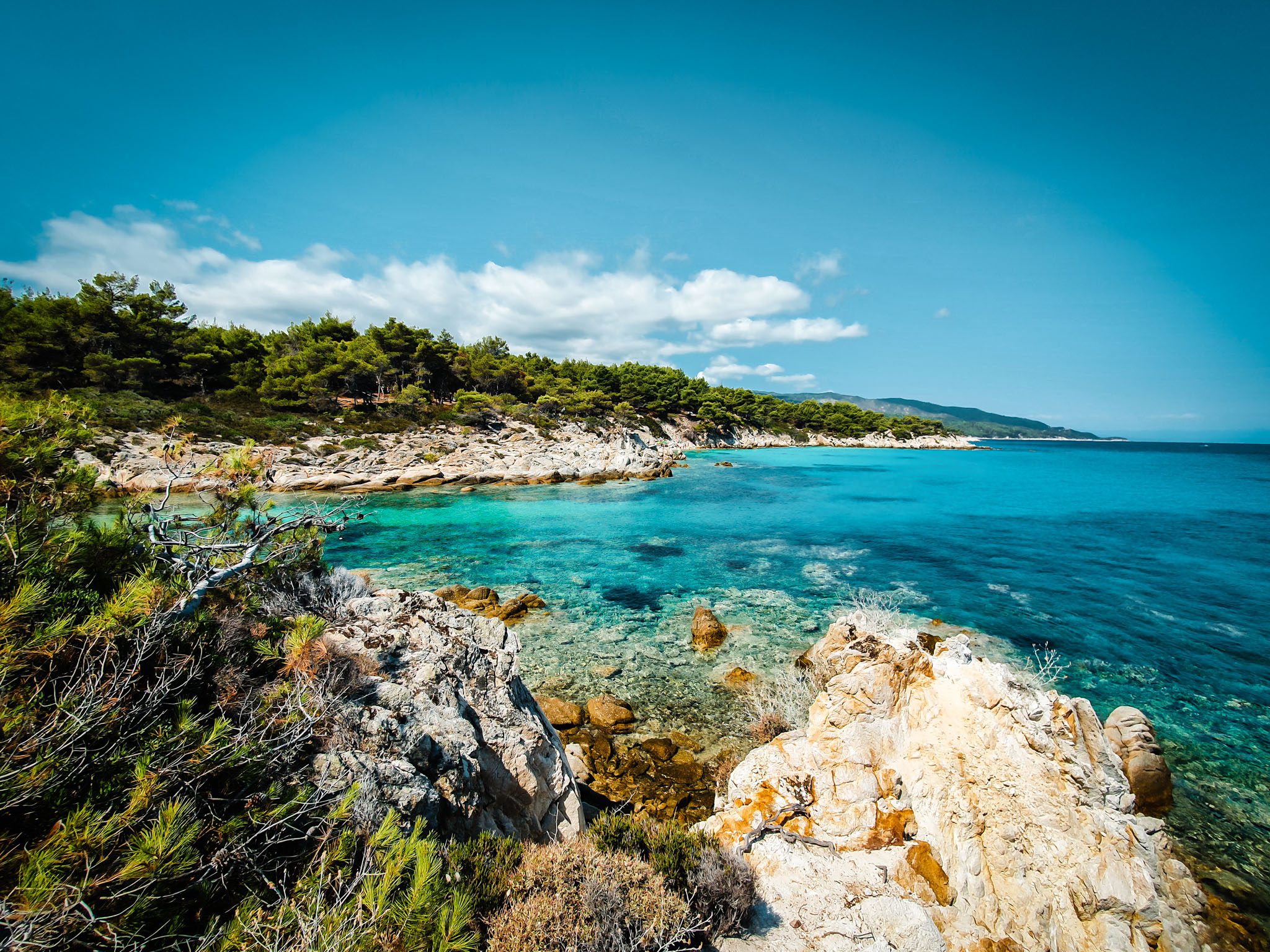
Picture Sithonia as a long ridge of pine-covered hills dropping to the sea on both sides. If you are staying anywhere on the east coast - Sarti, Sykia, Vourvourou - the sun rises out of the Singitic Gulf, often directly beside the silhouette of Mount Athos, and sets behind the hills at your back. On the west coast - Neos Marmaras, Toroni, Porto Koufo - the reverse is true: mornings are shaded and calm, evenings are all about the horizon.
The practical takeaway: if a proper over-the-water sunset matters to you, plan a west-coast evening at least once during your stay. The drive across or around the peninsula is part of the pleasure - the ring road is one of the most scenic in northern Greece, as our complete Sithonia guide explains. And if you are based in Sarti, do not feel short-changed: the east coast's dusk light on Athos is something the west coast cannot offer at all.
Neos Marmaras: The Easy Classic
Neos Marmaras is the west coast's main town, built on low hills around a working harbour, and it is the most comfortable place in Sithonia to watch the sun go down. The waterfront faces almost due west, so from any point along the promenade you can watch the sun drop towards the Kassandra peninsula across the gulf, with fishing boats and sailboats in the foreground.
A few pointers for getting it right:
- Arrive an hour before sunset. The light in the final hour - golden hour - flatters the harbour, the boats and the town far more than the sunset moment itself.
- Walk south along the shore for cleaner sightlines if the harbour front is busy.
- Stay for blue hour. Twenty minutes after the sun disappears, the sky often turns deep violet and the town lights come on - for many people the best part.
Toroni and the Porto Koufo Cliffs: Drama at the Southern Tip
For a wilder sunset, head to the southwestern corner of the peninsula. Toroni's long sandy beach faces west across open water, so the sun sets into an uninterrupted sea horizon - no landmass in the way, just water and sky. In summer the beach empties out towards evening, and watching the last light from the sand with your feet in the shallows is as simple and satisfying as Sithonia gets.
A short drive further south, Porto Koufo offers the dramatic version. Outside the entrance of its deep, enclosed harbour, sea cliffs rise straight from the water, and the headland paths above them give elevated, west-facing views over the open Aegean. The scale of the cliffs against a low sun is genuinely impressive. Two cautions: stay well back from unfenced cliff edges, especially in wind, and bring proper shoes rather than beach sandals for the rocky ground. Both spots combine easily into an afternoon-and-evening outing - see our guide to day trips from Sarti for how to build the route.
The Athos Alpenglow: Dusk on the East Coast
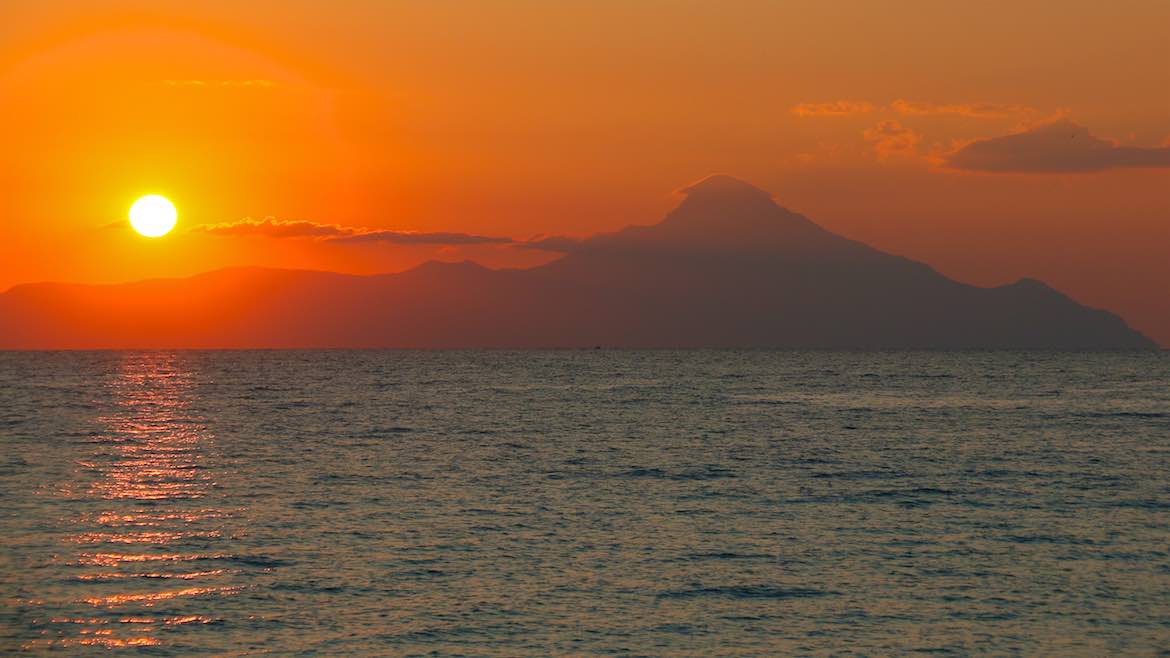
Now for the east coast's secret. From Sarti, the sun sets behind the ridge of Sithonia - but across the Singitic Gulf, Mount Athos, rising over two thousand metres straight from the sea, keeps catching direct sunlight for several minutes after your beach has fallen into shade. The peak and its flanks turn gold, then pink, then a smoky violet before fading to grey. Mountaineers call this effect alpenglow, and Sarti beach happens to be one of the best places in Greece to watch it, because the mountain stands alone on the horizon with nothing but water in between.
The show is short - often ten to fifteen minutes - and it happens after local sunset, exactly when most people have packed up and left the beach. Stay put. On clear evenings, especially in spring and autumn when the air is crisp, the colour on the mountain can be extraordinary. Cloud caps on the summit add drama rather than spoiling it.
Full-Moon Nights: Moonrise Over Athos from Sarti Beach
The east coast's other dusk spectacle comes once a month. Because the moon rises in the east, a full moon seen from Sarti beach comes up out of the Singitic Gulf beside - sometimes seemingly out of - the silhouette of Mount Athos. Around the night of the full moon, moonrise happens close to sunset, so you get twilight sky, the dark pyramid of the Holy Mountain, and an orange moon climbing over it, with a shimmering path of light laid across the water towards the beach.
To catch it, check the moonrise time for the full-moon date during your stay and be on the beach a little beforehand, since the moon is at its most dramatic in its first half hour above the horizon. Nights on either side of the exact full moon work almost as well. It is a slow, quiet spectacle - bring something warm for after dark, even in July.
Golden-Hour Photography: Making the Light Work
Whichever coast you choose, a few habits will improve your photos dramatically:
- Work the hour before, not the minute of. Golden-hour side light on hills, boats and faces beats a bright blob on the horizon.
- Find a foreground. Rocks, an anchored boat, beach grass or a taverna table gives the sky scale and depth.
- Underexpose slightly to keep colour in the sky; on phones, tap the sky and drag exposure down.
- For the Athos alpenglow and moonrise, zoom matters. A telephoto lens (or your phone's longest lens) compresses the mountain and the moon into the same dramatic frame.
- Stay for blue hour - the twenty minutes after sunset often produce the best images of the day.
For specific locations, angles and timing across the whole region, see our Halkidiki photography guide.
However you spend the golden hour, evenings in Sithonia end best at a table. If dusk finds you on the east coast, come and join us at Lauer House, our family-run taverna in Sarti - we are open daily from 10:00 to 24:00 in season, with fresh seafood, slow-braised goat shank and live Greek music on Wednesday and Thursday evenings from 20:00. Watch Athos fade to violet, then come eat. You can browse the full menu ahead of time at menu.lauerhouse.gr.