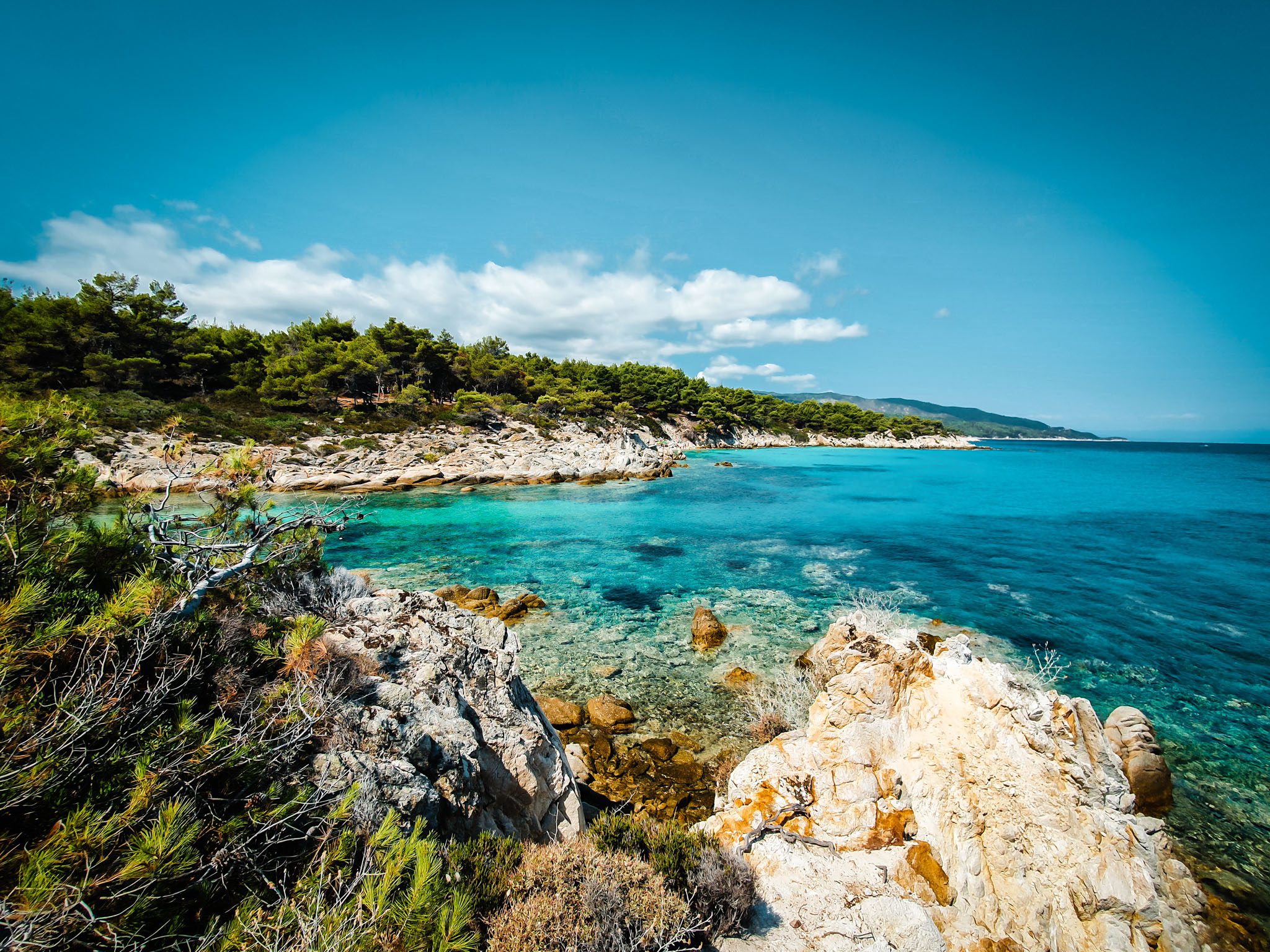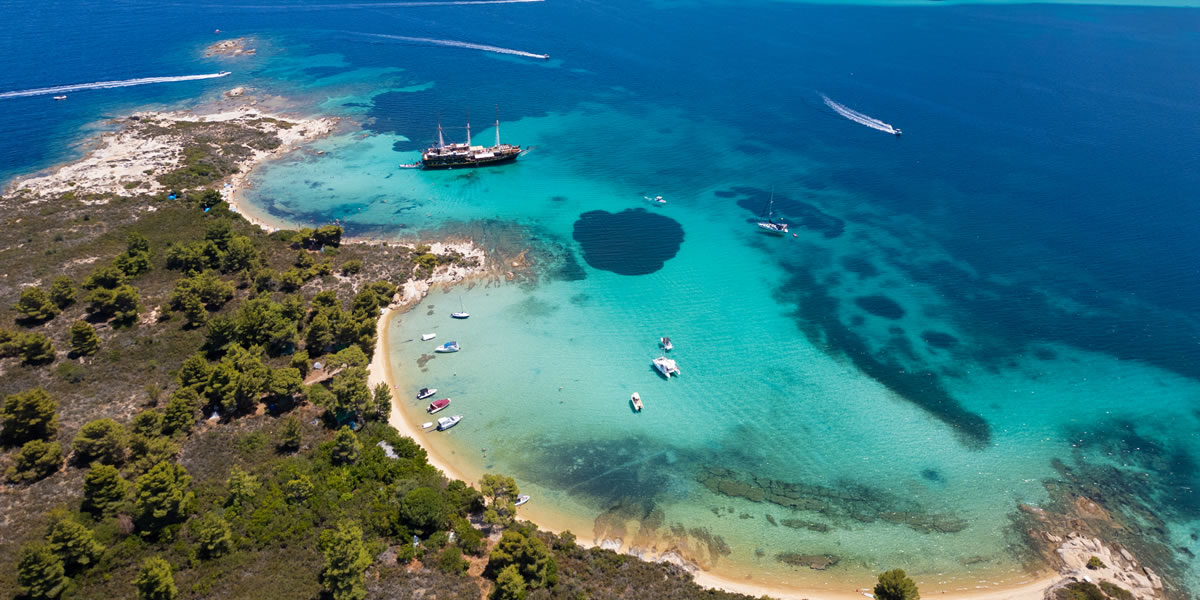
Some of the best moments a Sithonia holiday can offer — a cove with nobody in it, lunch dropped anchor over turquoise sand, the coastline sliding past at your own pace — belong to people in small boats. The good news: you do not need a skipper's licence to join them. Greek rules allow visitors to rent small, low-powered boats after nothing more than a briefing, and rental bases operate all around the peninsula in season. Here is how the system works, what to expect from operators, where to go, and the safety habits that keep a carefree day carefree.
The 30hp Rule: How Licence-Free Rental Works in Greece
Under the rules applied by Greek port authorities, small open boats with engines up to 30 horsepower can generally be rented without any boating licence. The renter must be an adult, the boat must stay within the operating area the rental base defines, and the operator is obliged to give you a proper handover: how the engine, throttle and kill switch work, where you may and may not go, and what to do if something goes wrong. Details of enforcement can vary between local port authorities, so treat the operator's instructions as the rulebook for your specific bay.
These boats are deliberately modest — typically five to six metres, open, with a sun awning and a small outboard. They will not plane across the gulf at thrilling speeds, and that is the point: they are stable, forgiving and hard to get into trouble with in reasonable conditions. For most families and couples, they are also all the boat you need. Anything larger or faster requires a licensed skipper — some bases offer boats with a skipper included if you want to go further afield.
What Rental Operators Provide — and What to Check
A professional rental base will hand the boat over with:
- Life jackets for everyone on board, including child sizes if you ask ahead
- Anchor and line, plus fenders and mooring lines
- A briefing and map of the permitted area, no-go zones and recommended coves
- Basic safety kit as required by the port authority
- A contact number to call if you have engine trouble or the weather turns
Before you cast off, do a two-minute check of your own: confirm the fuel level and what the fuel arrangement is (some bases charge for what you burn, others hand over a full tank), test that the kill-switch lanyard is attached and works, note any existing scratches on the hull, and make sure the anchor line is actually tied to the boat. Ask where the shallows and rocks are — every bay has a spot that catches out first-timers, and the operator knows exactly where it is. Deposit and insurance arrangements vary between bases, so ask what is covered before you sign.
Where to Go from Sarti
From Sarti, the obvious run is north along the coast towards Kavourotripes — the stretch of orange-tinted rocks, sculpted coves and pocket beaches that is one of the most photographed pieces of shoreline in Greece. From the water you can reach corners of it that beach visitors never see, and drop anchor off a cove of your own while the car parks above overflow. Southwards, the coast towards Sykia offers quieter beaches and a more open feel, with Mount Athos standing on the horizon the whole way.
Distances here are short, which suits a 30hp boat perfectly: you are never far from home, and you can spend your fuel on swimming stops rather than transit. Several of the calanques and pocket beaches along this coast appear in our hidden beaches of Sithonia guide — reading it the night before is the best route-planning you can do.
From Vourvourou and Ormos Panagias
Half an hour north of Sarti, Vourvourou is the gentlest place in Halkidiki to skipper your first boat: a shallow, sheltered lagoon enclosed by Diaporos island and its islets, with calm water even when the open gulf is breezy. Circling Diaporos and idling into its turquoise 'blue lagoon' coves is the classic outing. Two local rules matter: anchor only on pale sand, never on the protected dark posidonia seagrass, and respect the private land on the island itself — stay on the beaches.
Nearby Ormos Panagias is another well-sheltered starting point with easy access to the same island scatter. Wherever you start on this coast, one boundary is absolute: the Mount Athos monastic state across the gulf is off-limits, and vessels must keep their distance from its shores — admire the Holy Mountain from mid-gulf and leave the close-up views to the licensed cruise boats.
Weather, Meltemi and When to Stay Ashore
Summer in the northern Aegean means the meltemi — the dry northerly wind that can blow up over hours and turn a friendly sea white-capped. Sithonia's gulfs are better protected than the open Aegean, but the pattern still rules your day: mornings are usually calmest, the breeze typically builds through the afternoon, and a forecast that looks fine at 09:00 can mean a bumpy, spray-soaked slog home at 16:00.
The habits that matter: check the marine forecast the evening before and again at breakfast; ask the operator for their honest read — they will tell you if it is a stay-inshore day, and a good base will simply refuse to send boats out in bad conditions; plan your furthest point for the morning so the afternoon leg runs homeward; and if whitecaps start appearing, head back early rather than 'one more cove'. Our Halkidiki safety and health guide covers sea and sun sense in more depth.
Fuel, Anchoring and Safety Basics
- Fuel margin: plan to turn back with at least a third of a tank. Wind and chop increase consumption noticeably.
- Anchoring: approach coves slowly, drop anchor on sand in two to four metres, let out generous line, and confirm you are holding before everyone jumps in.
- Swimmers: engine off — not just in neutral — whenever anyone is in the water, and keep the boarding ladder down.
- Kill switch: the lanyard stays clipped to the driver, always.
- Sun and water: the sea breeze hides how hard the sun works. Hat, sunscreen, and more drinking water than you think — our packing guide has a boat-day checklist.
- Phone: charged, in a dry bag, with the operator's number saved.
Do it right and a boat day is the one your crew will still be talking about at the airport. It also produces a very specific kind of hunger. Bring it to Lauer House, our family-run taverna in Sarti — fresh seafood, traditional Greek dishes and our signature slow-braised goat shank, daily 10:00–24:00 in season, menu at menu.lauerhouse.gr. If you have spent the day watching fish from above, our Greek seafood guide will help you choose which one to meet at dinner.