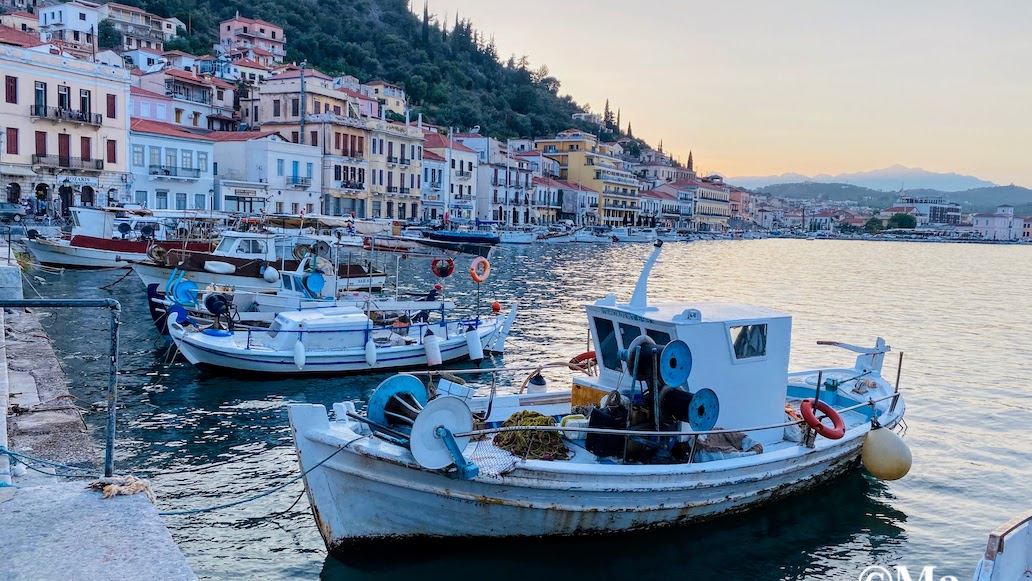
People sometimes ask us what "fresh seafood" actually means on a taverna menu, and it is a fair question — the phrase gets printed a lot and delivered less often. For our family, it means something specific and slightly unglamorous: being at the harbor in the morning, looking at what the boats brought in, and building the day's menu around it rather than the other way round. We run a small kitchen in Sarti, on the eastern coast of Sithonia, and the sea sets our rhythm. This is how that works, from the quay to your table.
The Morning Ritual
The day starts before the taverna opens. While the dining room is still quiet, one of us goes down to see the day's catch — small-scale coastal boats working the waters off Sithonia, the kind of fishing that has fed this coastline for generations. It is not a dramatic scene: crates on a quay, ice, a short conversation about what came up in the nets and what the water was like overnight. But that conversation decides our menu. We look, we ask, we choose — and we buy what is genuinely good that morning, not what a list written last week says we need. Some days that means an abundance of sardines; some days a few beautiful larger fish and not much else. Either way, what we carry back is what we will serve. If you want the wider story of the boats, the nets and the people behind this daily exchange, we have written about Greek fishing culture and traditions in Halkidiki — it is a world worth understanding before you eat from it.
What the Northern Aegean Gives, Season by Season
The northern Aegean is a generous sea, but it gives on its own schedule. Very roughly, this is the year as our kitchen sees it:
- Late spring and summer: the season of the small silver fish — sardines and anchovies at their fattest and finest, exactly when Sarti's visitors are here to eat them. Squid, octopus and the summer's bream and other white fish round out the grill.
- Autumn: the water cools and the fish grow richer. Larger fish come into their own, and octopus that has fed all summer is at its best.
- Winter and early spring: quieter boats, weather-limited trips, but the cold-water catch that does come in is superb — this is soup and slow-cooking season in Greek kitchens everywhere.
Every season has its stars and its gaps. A menu that offers every fish every month is telling you something about its freezer, not the sea. For a fuller tour of what Greek waters produce and how each fish is best treated, see our guide to Greek seafood.
How We Choose a Whole Fish — and How You Can Too
At the quay and in our own kitchen, the checks are the same ones Greek cooks have always used, and we are happy to share them because an informed guest keeps everyone honest:
- The eyes: clear, glossy, convex. Cloudy or sunken eyes mean time has passed.
- The gills: bright red or deep pink underneath the gill cover, never brown or grey.
- The body: firm and springy to the touch, with tight shiny scales and a natural sheen of sea-slick.
- The smell: fresh fish smells of the sea — clean, saline, almost like cucumber. "Fishy" is precisely what it should not smell like.
This is also why we like serving fish whole. A whole fish shows you everything — eyes, gills, skin — and hides nothing. When we bring one to the table before grilling, that is not theatre; it is transparency. Ask to see the fish. Any kitchen proud of its sourcing will be glad you did.
Why the Menu Changes with the Weather
Here is the part of boat-to-table that surprises visitors most: the weather writes our menu as much as the season does. When the meltemi wind blows hard for a few days, the small boats stay in the harbor — and the day's catch simply does not exist. We think the honest response is to say so. On those days our seafood list gets shorter, the octopus and preserved treasures of the larder work harder, and our traditional kitchen — the slow braises, the oven dishes, our signature slow-braised goat shank — carries more of the load. What we will not do is quietly substitute something frozen and call it this morning's catch. A shrinking fish list after a storm is not a weakness in a taverna; it is the strongest evidence that the rest of the time, the fish really did come off a boat. Our menu at menu.lauerhouse.gr reflects what the kitchen is doing, but the day's fish is always a conversation at the table.
Our Kitchen's Simple Approach: Grill, Lemon, Olive Oil
When the raw material is right, the cooking should get out of the way. Truly fresh Aegean fish needs charcoal, coarse salt, good olive oil and a lemon — almost nothing else — and most of our seafood cooking is exactly that. Grilled sardines straight off the fire, eaten with your fingers, are the taste of a Sithonia summer. Grilled octopus, charred at the edges and dressed with oil, vinegar and oregano, is the other pillar. The ladolemono — that simple whisk of olive oil and lemon spooned over grilled fish — is the entire sauce repertoire a great fish needs. Elaborate preparations exist to help mediocre fish. We would rather buy better fish.
Respect for the People Who Fish
None of this works without the fishermen, and we try never to forget it. Small-scale coastal fishing is hard, uncertain work — early hours, real physical risk, and a livelihood that depends on a sea that owes nobody anything. Buying the day's catch at a fair morning price, taking what the sea actually gave rather than demanding what it did not, and cooking it with care is our way of respecting that work. It is also, we believe, what keeps the whole chain sustainable: fishermen who can live from careful coastal fishing have every reason to protect the waters they work. When you order the day's fish at a taverna here, you are the last link in that chain, and an important one. You can read more about who we are and how we cook on our story page.
So that is boat to table, without the marketing gloss: a morning walk to the harbor, a conversation over crates of ice, a menu that obeys the sea and the weather, and a grill that treats good fish with respect. Come by any day between 10:00 and midnight in season, ask us what came in this morning, and let the northern Aegean decide your dinner.